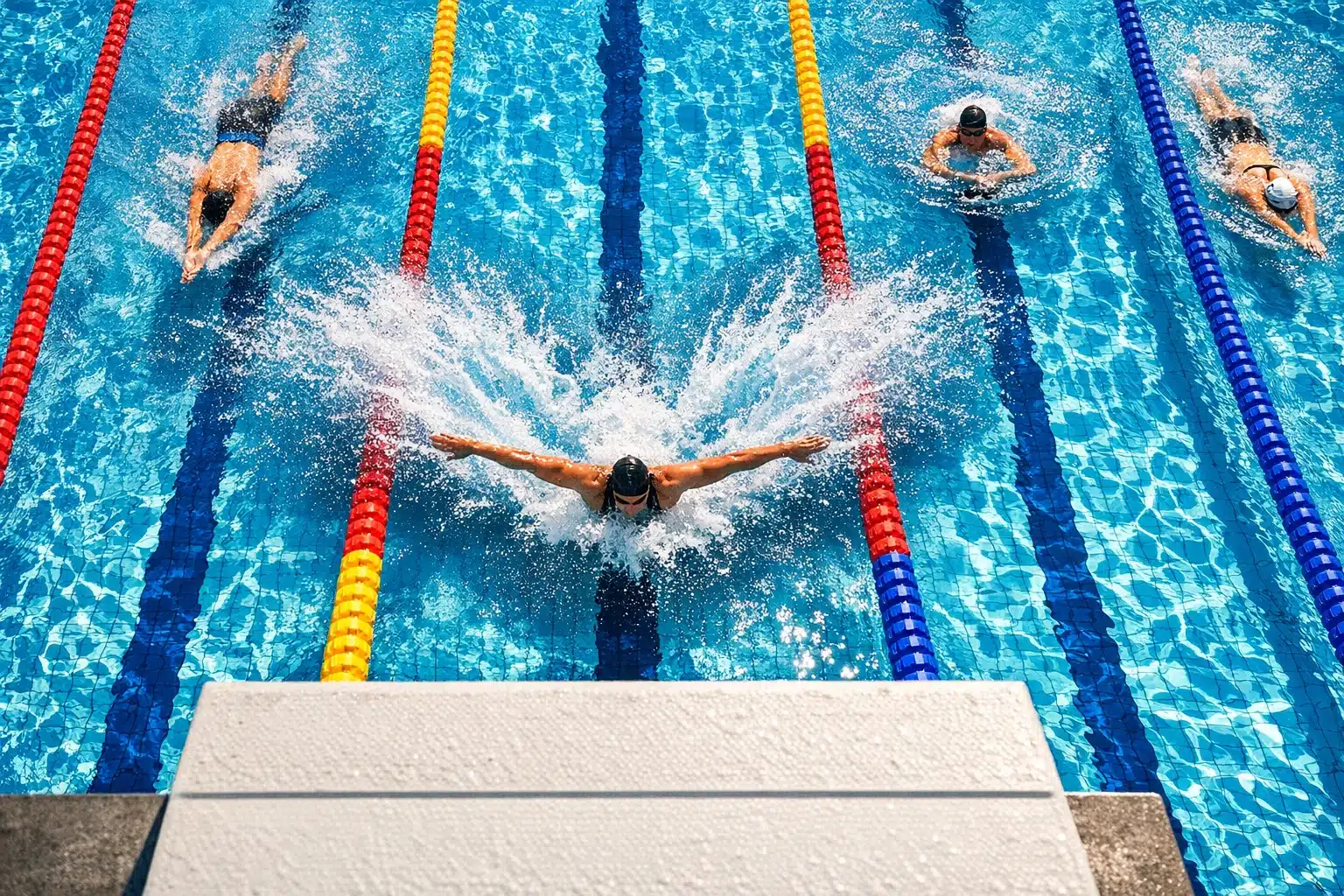
Explore the world of swimming
Swimming is one of those rare activities that feels playful and purposeful at the same time, combining movement, survival skill, sport, and quiet reflection in a single setting. Its relevance stretches far beyond the lane line, touching public health, childhood education, rehabilitation, and lifelong fitness. This article explores how swimming works, why it matters, and how different people can enjoy it with more skill and confidence.
Article Outline
This guide begins with the broad meaning of swimming in history, sport, and everyday life. It then compares the main strokes, explains the physical and mental benefits, examines safety and training environments, and ends with practical advice for beginners and long-term swimmers.
- The place of swimming in culture, recreation, and competition
- The four major strokes and how they differ
- Fitness, health, and mental well-being in the water
- Safety habits, equipment, and pool versus open-water training
- How to start, improve, and keep swimming across the lifespan
Swimming as a Human Skill, Sport, and Cultural Practice
Swimming is much more than a competitive event seen every four years on television. It is one of the oldest physical skills humans have practiced, tied to travel, fishing, military training, rescue, recreation, and eventually organized sport. Ancient civilizations left evidence of people moving through water for practical reasons long before modern coaching existed. Over time, what began as necessity evolved into technique, then into spectacle, and finally into a global activity that fits school programs, public health campaigns, elite athletics, and weekend leisure in equal measure.
Its reach is unusually broad. A child learns swimming for confidence and safety. An adult may choose it because running feels too harsh on the joints. A professional athlete might use it for conditioning or recovery. An older person may return to the pool because the water supports the body and reduces impact. Few activities adapt so gracefully to different stages of life. Water has a democratic quality: it resists everyone, but it also carries everyone. That balance is part of the appeal.
Modern competitive swimming developed standardized strokes, timed races, and formal rules, and it became part of the first modern Olympic Games in 1896 for men, with women’s events added in 1912. Today, the sport includes pool racing, diving, artistic swimming, water polo, marathon open-water events, and masters programs for adults. Yet the cultural meaning of swimming goes beyond medals. In coastal towns, it is often woven into identity. Around lakes and rivers, it becomes seasonal ritual. In cities, public pools can act as social spaces where fitness, community, and skill-building meet.
Swimming also stands out because it combines utility with pleasure. A person can swim to train the heart, to cool off on a hot day, to rehabilitate after injury, or simply to enjoy the curious feeling of moving almost weightlessly. Unlike some sports that require large teams or expensive facilities, swimming can be practiced in different settings, though access still depends heavily on local infrastructure and instruction. That is why community pools, school lessons, and affordable swim education matter so much.
Several broad forms of swimming often overlap:
- Recreational swimming, centered on enjoyment and general movement
- Instructional swimming, focused on confidence, floating, breathing, and safety
- Fitness swimming, usually based on laps, intervals, and endurance
- Competitive swimming, where efficiency, speed, and race strategy dominate
- Therapeutic or rehabilitation swimming, adapted to health and mobility needs
Seen this way, swimming is not a narrow hobby but a flexible practice with social, athletic, and practical value. It teaches respect for the water, sharpens body awareness, and offers a lifelong way to stay active. That combination explains why it remains relevant in schools, hospitals, clubs, beaches, and backyard pools alike.
Understanding the Main Strokes and the Logic of Technique
To an untrained eye, swimming can look like a blur of arms and splashes, but technique is the real engine of movement. Good swimmers are not simply stronger; they are more organized in the water. They align the body, reduce drag, time the breath, and use the kick as support rather than chaos. The four main competitive strokes, freestyle, backstroke, breaststroke, and butterfly, each ask the body to solve a different movement puzzle. Learning those differences helps beginners choose where to start and gives experienced swimmers a better sense of why one stroke feels smooth while another feels exhausting.
Freestyle, usually swum as front crawl in races, is widely considered the fastest and most efficient stroke for distance. The body stays long and relatively flat, the legs flutter in a narrow kick, and the arms alternate in a continuous rhythm. Breathing happens by turning the head to the side, ideally without lifting it too high. This stroke rewards streamlined posture. A small head lift or dropped elbow can create enough drag to slow a swimmer noticeably. Because of that, freestyle often becomes the foundation for lap training.
Backstroke uses a similar alternating arm pattern, but the swimmer stays face-up. That position makes breathing easier for some people because the mouth remains above the surface more often. On the other hand, swimming on the back requires good balance and spatial awareness. There is no forward view, so swimmers depend on lane markings, ceiling references, or stroke counts to judge distance. Backstroke can feel liberating, almost like floating with intent, yet it punishes a bent hip position because the legs sink quickly.
Breaststroke is slower than freestyle for most swimmers, but it is often easier for beginners to understand because the movements are symmetrical. The arms sweep out and recover forward while the legs perform a whip kick. Timing matters enormously: pull, breathe, kick, glide. When that sequence clicks, breaststroke becomes calm and economical. When timing falls apart, it turns into hard work with little speed. Butterfly sits at the other end of the spectrum. It uses simultaneous arm recovery and a dolphin kick, demanding coordination, strength, and rhythm. Done well, it looks almost musical, as if the swimmer is riding a pulse through the lane. Done poorly, it feels like wrestling the pool.
A simple comparison helps:
- Freestyle: fastest, efficient, best for endurance and fitness work
- Backstroke: good for posture and shoulder balance, easier breathing pattern
- Breaststroke: slower, technical timing, often comfortable for recreational swimmers
- Butterfly: powerful and demanding, excellent for strength and rhythm
Across all four strokes, the essentials remain similar. Body position should stay balanced, breathing should fit the movement rather than interrupt it, and propulsion should come from coordinated whole-body action. Water gives immediate feedback. If the stroke is rushed, the swimmer feels it. If the line is clean, progress becomes surprisingly quiet, like slipping through a doorway that was there all along.
Health, Fitness, and Mental Benefits of Regular Swimming
Swimming earns its reputation as an excellent full-body exercise because it blends aerobic work, muscular effort, breath control, and coordination without the repetitive impact found in many land-based activities. Every stroke asks the arms, shoulders, back, core, hips, and legs to contribute. Even staying balanced in the water requires subtle engagement from the trunk. As a result, a swim session can strengthen multiple regions at once while also training the heart and lungs. For people who dislike the pounding of pavement or the monotony of stationary machines, the pool offers a different kind of challenge.
Public health guidelines in many countries recommend at least 150 minutes of moderate aerobic activity each week for adults, and swimming can count toward that target very effectively. Depending on pace, stroke, body size, and rest intervals, lap swimming can demand substantial energy. Freestyle intervals, kick sets, and pull work all stress the cardiovascular system in different ways. Because water is denser than air, every movement meets resistance. That means even controlled training can feel productive. A swimmer does not need to sprint endlessly to benefit; steady laps, drill work, and mixed-intensity sessions still build capacity.
Another major advantage is joint friendliness. Water supports body weight, which reduces impact on knees, ankles, and hips. That is one reason swimming is often recommended as part of rehabilitation or return-to-fitness plans, though medical guidance matters in individual cases. For people with arthritis, injury history, or deconditioning, the pool can provide room to move when other settings feel limiting. This does not make swimming easy, only different. The effort is real, but the body experiences it through pressure and resistance rather than collision.
The mental side deserves equal attention. Many swimmers describe a session as both demanding and calming. The repetitive rhythm of strokes, turns, and breathing can sharpen focus in a way that resembles moving meditation. There is less visual clutter than in many gyms. Sound is muffled. The world narrows to bubbles, lane lines, and the next wall. That stripped-down environment can reduce stress for some people and provide a structured escape from screens and noise. Group training also adds social benefits, especially in clubs, masters teams, and community classes where accountability and encouragement grow naturally.
Swimming compares well with other forms of exercise, though each has trade-offs:
- Compared with running, swimming is usually lower impact but less convenient because it requires a facility or safe body of water.
- Compared with cycling, swimming trains the upper body more directly and demands greater breath timing.
- Compared with gym circuits, swimming often feels less repetitive while still improving endurance.
For beginners, one or two sessions per week can improve comfort and stamina. For committed fitness swimmers, structured progression in distance, pace, and technique makes the benefits more measurable. In either case, swimming offers a rare combination of conditioning and recovery, effort and ease, challenge and refreshment.
Safety, Training Environments, and the Skills Behind Confidence
No discussion of swimming is complete without safety, because skill in the water is partly about performance and partly about judgment. The World Health Organization has long identified drowning as a serious public health issue around the world, which is why basic swim education matters far beyond sport. Knowing how to float, tread water, control breathing, and exit the water safely can be as important as learning how to swim a fast lap. Confidence should never be confused with carelessness. In fact, the most capable swimmers are often the most respectful of conditions.
Pools are usually the best place to begin because they provide controlled depth, marked lanes, predictable temperature, and supervision. Lessons in a pool allow instructors to isolate fundamental skills such as submerging the face, exhaling underwater, pushing off the wall, and gliding in a streamlined shape. They also make it easier to repeat drills. Open water, by contrast, adds variables that even strong pool swimmers must learn to handle: waves, currents, cold, visibility limits, changing weather, and the absence of walls for rest. A person who swims confidently indoors may feel surprisingly unsettled in a lake or the sea, and that reaction is normal.
Equipment can help, but it should support learning rather than replace it. Goggles improve comfort and allow better body alignment because swimmers can keep the head in a natural position. Swim caps reduce drag and keep hair out of the face. Kickboards, pull buoys, fins, and paddles can sharpen specific skills when used thoughtfully. None of them substitute for breathing control or sound technique. The water exposes shortcuts very quickly.
Several habits consistently improve safety:
- Swim in supervised areas whenever possible, especially if you are inexperienced.
- Learn the depth, entry points, and rules before getting in.
- Never overestimate your ability in open water, cold water, or strong surf.
- Use visible safety gear for open-water swims, such as a bright cap or tow float, where appropriate.
- Stop early if fatigue, cramping, or dizziness changes how the stroke feels.
Training itself becomes safer when it is structured. Warm-ups raise body temperature and loosen the shoulders. Drills can build efficiency before speed work begins. Rest intervals prevent sloppy movement from taking over. Coaches often emphasize that technique should not vanish the moment intensity rises. A tired swimmer who keeps form is learning; a tired swimmer who thrashes is rehearsing bad habits.
There is also a psychological aspect to safety. People who fear water often improve most when instruction is patient, progressive, and specific. Small wins matter: holding the wall while exhaling underwater, floating with support, gliding for two seconds longer than before. These are not minor achievements. They are the building blocks of trust. Once trust develops, the pool stops feeling like an obstacle and starts acting more like a teacher.
Getting Started, Building Progress, and Making Swimming a Lifelong Practice
One reason swimming stays relevant across decades is that it can be shaped around almost any goal. Some people want basic water competence for family outings and holidays. Others are chasing fitness, triathlon preparation, weight management, rehabilitation, or competitive times. The starting point may differ, but progress follows similar principles: learn body position, make breathing steady, practice regularly, and increase challenge gradually. Improvement in swimming is rarely dramatic from day to day. It tends to arrive as a collection of small adjustments that suddenly make the whole stroke feel easier.
Beginners often benefit from narrowing their first objectives. Instead of aiming vaguely to “become a swimmer,” it is more useful to define milestones such as floating comfortably, swimming one pool length without stopping, or completing ten minutes of relaxed movement. Adult learners especially may need permission to start modestly. Pride can be heavy on deck. Once in the water, though, patience usually outperforms ego. A technically neat 25 meters teaches more than an exhausting 200 meters full of rushed mistakes.
Children usually progress best through a blend of play, routine, and clear instruction. Games can build breath control and balance, while repetition turns unfamiliar motions into instinct. Older adults may prioritize joint comfort, circulation, and confidence. Fitness-focused swimmers often organize sessions around warm-up, drills, main set, and cool-down. Competitive swimmers add race pace, stroke counts, starts, turns, and detailed periodization. The path changes, but consistency remains the common thread.
A simple weekly plan for a newer swimmer might look like this:
- Session 1: easy warm-up, floating and kicking drills, short freestyle repeats with plenty of rest
- Session 2: breathing practice, backstroke balance work, relaxed continuous swimming
- Session 3: mixed strokes, technique drills, and one slightly longer effort at comfortable pace
Progress becomes easier to notice when swimmers track a few useful markers:
- How many lengths can be completed with calm breathing
- Whether the stroke feels smoother at the same pace
- How much rest is needed between repeats
- How confident the swimmer feels in deeper water or new environments
Motivation also deserves practical attention. Joining a class, arranging sessions with a friend, or signing up for a beginner event can create structure. Some people enjoy the numbers of training logs and watches. Others stay engaged through variety, mixing strokes, drills, and occasional open-water swims. There is no single perfect way to keep going, only a better fit between the swimmer and the routine.
At its best, swimming becomes less of a task and more of a durable habit. It can accompany a person through school, parenthood, stressful work years, recovery periods, and older age without losing usefulness. The pool may be tiled and ordinary, but the experience is not. Few places let effort feel this clean, or progress this quietly satisfying.
Conclusion for Beginners, Fitness Swimmers, and Curious Readers
Swimming deserves attention because it combines practical safety, athletic challenge, and long-term health value in one activity. For beginners, the most important lesson is that comfort in the water grows step by step, not all at once. For fitness swimmers, technique is often the shortcut to better endurance and enjoyment. For families and lifelong learners, regular time in the water can build confidence that reaches far beyond exercise. Whether you enter the pool for skill, strength, recovery, or simple pleasure, swimming offers a rewarding path that stays relevant year after year.