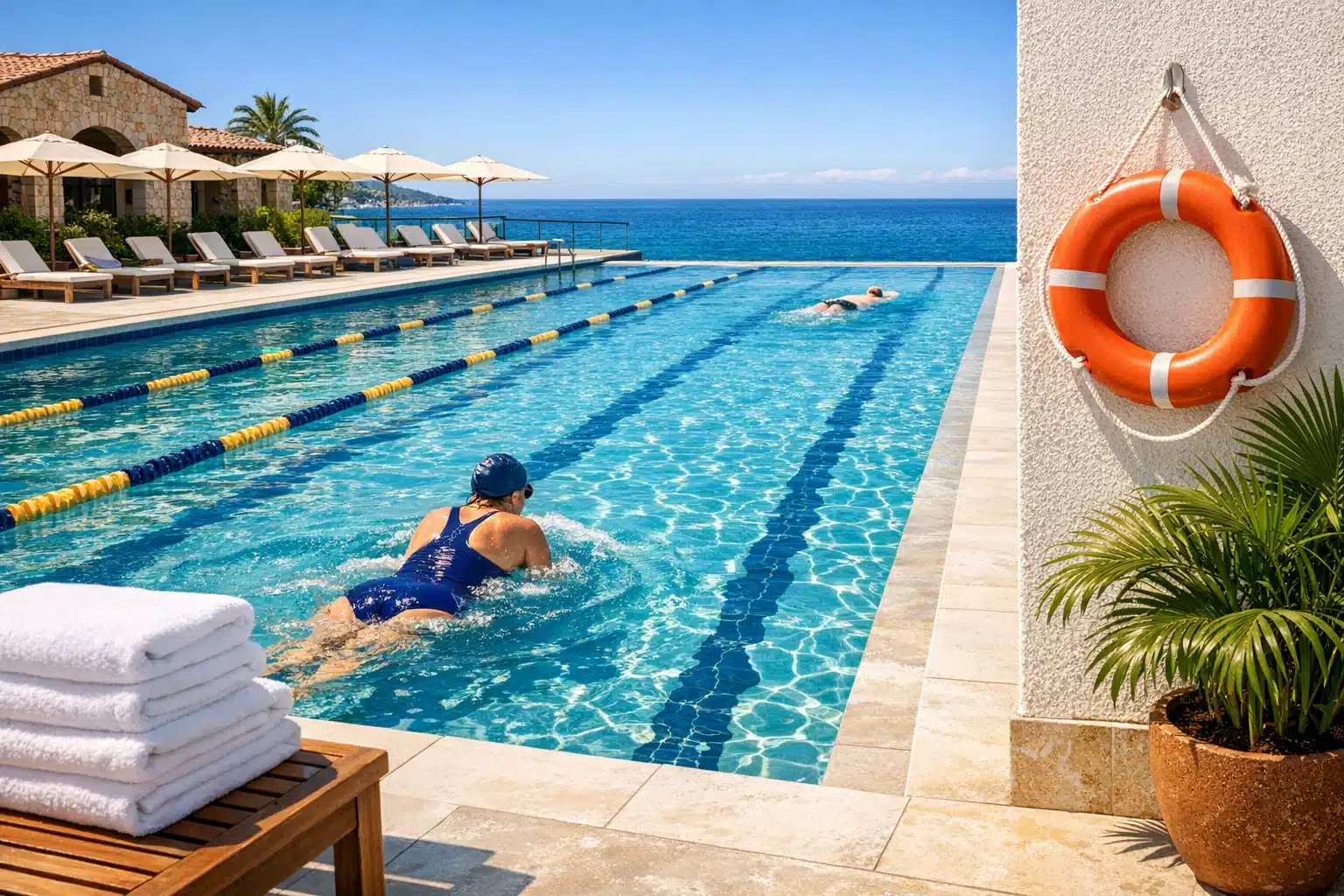
Explore the world of swimming
Swimming asks the body to work against resistance while the mind learns calm, timing, and trust in a moving element. That unusual mix makes it relevant far beyond sport, touching fitness, safety, recovery, and recreation in daily life. Whether you are curious about lap training, teaching a child to float, or simply enjoying the freedom of water, the subject rewards a closer look. A closer view reveals why form and confidence develop together, often reshaping how people train, relax, and stay safe for years.
Outline: 1. Why swimming matters as a life skill, a sport, and a cultural practice. 2. The major strokes and the strengths, limits, and uses of each one. 3. The physical and mental benefits of time spent in the water. 4. Learning methods, training ideas, and safety principles for pools and open water. 5. A conclusion for beginners, fitness seekers, parents, and lifelong swimmers who want to make the most of the sport.
Why Swimming Matters: More Than a Sport
Swimming is one of the oldest physical skills practiced by human beings. Long before stopwatches, lane ropes, and Olympic finals, people entered the water for survival, fishing, travel, military training, and ritual. Ancient artwork from Egypt and references from Greece and Rome suggest that organized forms of swimming existed thousands of years ago. That deep history matters because it reminds us that swimming did not begin as a pastime for the already athletic; it began as a way of adapting to an environment humans could not dominate without learning. Even today, that original purpose still shapes the activity. A person who can swim gains not only a fitness option, but also a practical form of water confidence.
Modern swimming sits at an interesting crossroads. It is part public health, part recreation, part technical discipline, and part competitive sport. Few activities can make that claim so convincingly. The World Health Organization has repeatedly noted that drowning remains a major global safety issue, especially in places where supervision, barriers, or instruction are limited. That does not mean every swimmer becomes a rescuer, but it does show why basic aquatic skills have value beyond exercise. Learning to float, breathe calmly, and move efficiently in water can be as important as learning to ride a bicycle or cross a street safely.
Swimming also stands apart because water changes the rules of movement. On land, gravity dominates every jump, stride, and landing. In water, buoyancy helps support body weight while drag resists every action. This makes technique unusually important. A strong but uncoordinated swimmer may move less efficiently than a lighter person with better timing and alignment. That technical nature is part of the appeal. Improvement feels almost architectural, as if small changes in hand position or breathing angle can remodel the whole experience.
There are also distinct environments within the same sport. Pool swimming offers measured distances, stable conditions, and structured practice. Open-water swimming adds currents, temperature shifts, navigation challenges, and a sense of adventure that can feel almost novelistic. Both forms are valuable, but they ask for different skills. In that sense, swimming is not just one activity. It is a family of related experiences joined by the same basic truth: once people learn to move well in water, a very large world opens.
The Main Strokes and What They Teach
To an observer on deck, the major swimming strokes can look like variations on a single idea: move your arms, kick your legs, and keep going. In practice, each stroke teaches a different relationship between efficiency, rhythm, breathing, and body position. The four competitive strokes are front crawl, backstroke, breaststroke, and butterfly, and each one has a distinct personality. Learning them is a little like learning musical styles. The notes may overlap, but the timing and feel are not the same.
Front crawl, often called freestyle in everyday conversation, is usually the first stroke associated with speed. It is the fastest competitive stroke because its alternating arm action and continuous flutter kick create relatively steady propulsion. The face is mostly in the water, so breathing must be timed with rotation rather than lifted straight upward. That makes the stroke efficient, but not always beginner-friendly at first. Many new swimmers discover that front crawl is less about splashing harder and more about staying long through the body, exhaling underwater, and rotating from the hips and shoulders together.
Backstroke is the only competitive stroke swum on the back, which immediately changes the breathing experience. Because the face stays out of the water, some learners find it more relaxed. At the same time, orientation becomes trickier, since you cannot look forward in the usual way. Good backstroke depends on balance, a steady kick, and smooth shoulder rotation. It often reveals whether a swimmer can hold alignment without relying on visual cues.
Breaststroke is slower than front crawl, but it is widely loved because the head can rise regularly and the pace can feel more controlled. Its arm pull and frog kick happen in a coordinated sequence, with a glide phase that rewards patience. Done well, breaststroke is elegant. Done poorly, it can become exhausting because drag increases quickly when timing falls apart. Butterfly, by contrast, is powerful, demanding, and technical. Both arms recover together, the body moves in a wave-like pattern, and timing is everything. It is often the stroke that exposes tension, because forcing it usually makes it worse.
Here is a simple comparison:
• Front crawl: fastest and widely used for fitness laps.
• Backstroke: excellent for body awareness and easier breathing.
• Breaststroke: approachable for many recreational swimmers, but timing-sensitive.
• Butterfly: explosive and advanced, rewarding strength and precision.
Outside competition, two additional skills deserve respect: floating and treading water. They may not earn medals, but they often matter most in real life. Together, the strokes and these support skills build a more complete swimmer, not just a faster one.
Health, Fitness, and the Mind in Motion
Swimming has a reputation as a full-body workout, and that description is accurate, though it deserves a closer explanation. Because water is far denser than air, the body meets resistance in every direction. That means propulsion requires coordinated effort from the shoulders, back, chest, core, hips, and legs. Unlike some forms of exercise that load one area heavily while neglecting another, lap swimming tends to distribute work across the body, especially when multiple strokes are practiced. It is not a magic solution and it does not automatically build strength the way heavy resistance training can, but it offers a valuable blend of cardiovascular work, muscular endurance, and mobility.
One reason swimming appeals to such a wide audience is its lower-impact nature. Buoyancy reduces the stress that body weight places on joints, which can make the water more comfortable for older adults, people returning from certain injuries, or those who find running unpleasant on knees, hips, or ankles. This does not mean everyone with pain should immediately start a pool routine without guidance, but it does explain why aquatic exercise appears so often in rehabilitation and wellness settings. The water supports, slows, and resists all at once, creating a training environment that is both forgiving and demanding.
Swimming also compares interestingly with land-based cardio. Running often develops strong impact tolerance and straightforward pacing. Cycling can build sustained endurance with low impact, but it depends on equipment and terrain. Swimming adds breath control to the equation. Because the face enters the water and inhalation is limited to specific moments, the swimmer becomes unusually aware of rhythm. That awareness can sharpen concentration and help some people feel mentally reset after a session. The pool can be noisy, but the experience is strangely private: bubble, reach, turn, push off, repeat. It is hard to answer emails in the middle of a set.
Regular participation may support several goals:
• Improving cardiovascular fitness through steady or interval work.
• Building muscular endurance, especially in the upper body and core.
• Increasing comfort with controlled breathing patterns.
• Offering a practical exercise option in hot weather, since water conducts heat away from the body more effectively than air.
The mental side should not be overstated, yet it should not be ignored either. Many swimmers describe a calming effect that comes from repetition and sensory immersion. Others enjoy the measurable structure of times, distances, and technique goals. In both cases, the water becomes more than a setting. It becomes feedback. Every hurried stroke, every relaxed exhale, every well-timed turn is immediately felt. That kind of honest response is one reason people keep coming back.
Learning Well: Technique, Training, and Safety
Good swimming rarely begins with speed. It begins with comfort. For beginners, the most important lessons are usually breath control, floating, and body position. Many adults who say they “cannot swim” are not lacking strength so much as familiarity. They tense the neck, hold the breath too long, and try to fight the water instead of organizing themselves within it. Early progress often comes from simple drills: exhaling steadily into the water, gliding with a long spine, practicing kicks while holding the wall, and learning that balance matters as much as effort. Once a swimmer realizes that panic burns energy faster than movement does, the whole process starts to change.
Technique remains essential even after the basics are learned. In front crawl, for example, a dropped elbow or a frantic kick can waste energy over every length. In breaststroke, poor timing between pull, breath, kick, and glide can make the stroke feel heavier than it needs to. Coaches often break skills into small pieces because isolated work helps swimmers notice details that are hidden during full-speed laps. A short drill set can improve efficiency more than a longer, sloppy workout. That is one of swimming’s quiet lessons: smart repetition usually beats mindless mileage.
Training for fitness or competition adds structure. A balanced session may include a warm-up, drills, main sets, and recovery swimming. Distances vary widely, but the principle is consistent. Swimmers improve by combining technique work with controlled intensity. Common tools include goggles, swim caps, kickboards, pull buoys, and fins. These can be useful, yet none replaces sound mechanics. Fancy gear cannot rescue a stroke that collapses under fatigue.
A few practical guidelines make a major difference:
• Beginners benefit from lessons, even a short series, because feedback accelerates confidence.
• Pool swimmers should learn basic lane etiquette, including circle swimming and predictable passing.
• Open-water swimmers should avoid swimming alone, check weather and water conditions, and use visible safety gear when appropriate.
• Everyone should respect fatigue, cold, and changing conditions, since water can magnify small mistakes.
Safety is not a boring appendix to the sport; it is part of the sport. The pool may feel controlled, but slips, cramps, collisions, and overexertion still happen. Open water raises the stakes with currents, waves, visibility issues, and temperature stress. The strongest habit is simple humility. Water is inviting, beautiful, and useful, but it does not care whether a swimmer is experienced or proud. Respect for that fact is what turns practice into sustainable skill.
Conclusion: Making Swimming Work for You
If you are wondering whether swimming deserves a place in your life, the most useful answer is also the least dramatic: it depends on what you need, and that is exactly why the activity remains so relevant. For a child, swimming can be the beginning of water safety and self-trust. For a busy adult, it may become a time-efficient workout that trains the whole body without the pounding of high-impact exercise. For an older swimmer, it can offer movement, routine, and a feeling of freedom that is hard to replicate on land. For an athlete in another sport, the pool may serve as recovery, conditioning, or technical cross-training.
There is also a social side worth noticing. Public pools, swim clubs, school teams, masters groups, and community lessons bring together people who might otherwise never share a space or a goal. Competitive swimming offers measurable progression through times, splits, and rankings, while recreational swimming offers something less formal but equally valuable: regular contact with a skill that can be enjoyed across decades. In that sense, swimming is unusually democratic. A six-year-old learning to kick, a triathlete chasing efficiency, and a retiree doing gentle morning laps all participate in the same broad tradition.
For most readers, the best path forward is simple:
• Start with the level you actually have, not the level you wish you had.
• Focus first on breathing, floating, and relaxed movement.
• Build consistency before volume, and technique before intensity.
• Choose the environment that matches your confidence, whether that is a lesson pool, a lap lane, or eventually open water.
Swimming rewards patience more than bravado. Progress often arrives in subtle ways: a calmer exhale, a smoother glide, a turn that no longer feels chaotic, a distance that once seemed impossible and now feels ordinary. That is part of its charm. The water does not hand out shortcuts, but it does offer clear feedback to anyone willing to learn. For beginners, fitness seekers, parents, and lifelong movers, that makes swimming not just a sport to admire, but a skill to keep and a practice worth returning to.