Explore the world of swimming
Why Swimming Matters and What This Guide Covers
Swimming stands apart because it is exercise, survival skill, sport, and quiet recreation all at once. Few activities can raise the heart rate, train coordination, and reduce stress on the joints while also creating a sense of calm that begins the moment the water closes around the body. From children learning to float to adults returning to fitness, swimming stays relevant across ages and abilities. This guide explores how the pool, lake, or sea can become a place for health, technique, discipline, and enjoyment.
Outline of this article:
• Why swimming matters and how it fits modern life
• The physical and mental benefits of regular swimming
• A comparison of the main strokes and the skills behind them
• Practical guidance on training, safety, and equipment
• How different readers can use swimming for fitness, competition, or lifelong wellbeing
At first glance, swimming can look simple: move arms, kick legs, breathe, repeat. Yet that plain description misses the wonder of it. Water changes everything. Because it is far denser than air, every movement meets resistance, which means the body must work steadily even when the motion appears smooth and graceful. At the same time, buoyancy supports body weight, making swimming attractive for people who want hard cardiovascular work without the pounding that often comes with running or jumping.
Swimming is also unusually flexible as an activity. It can be playful, competitive, restorative, or practical. A toddler splashing at the shallow end, a teenager racing a butterfly set, a recovering patient doing gentle laps, and an open-water swimmer cutting through a cold morning lake are all participating in the same broad discipline. That range helps explain swimming’s lasting popularity in schools, community centers, sports clubs, and travel destinations around the world.
There is another reason swimming matters: safety. Learning to stay afloat, control breathing, and move through water with confidence is not only athletic development but also life education. For many families, that alone makes swimming worth learning. For others, the appeal grows from the sensory experience. Water quiets noise, sharpens rhythm, and turns effort into something almost musical. In a busy age of screens and rushed schedules, swimming offers a rare combination of structure and escape. It asks for attention, rewards patience, and gives back more than a completed workout. That is why the subject deserves a closer look, and why the sections ahead move from broad importance to practical detail.
Health Benefits: Strength, Endurance, and Mental Reset
Swimming has earned its reputation as a well-rounded form of exercise because it trains several systems of the body at once. A steady session asks the heart and lungs to supply oxygen efficiently, so it supports cardiovascular fitness much like brisk walking, cycling, or jogging. At the same time, water resistance makes muscles work throughout the stroke cycle. The shoulders pull, the core stabilizes, the hips rotate, and the legs drive or balance the motion. Unlike many land-based activities that emphasize one dominant plane of movement, swimming spreads effort across the body in a more integrated way.
One of its biggest advantages is low impact. The water supports much of the body, so joints usually experience less force than they do during running or court sports. That is why swimming is often recommended for people managing joint discomfort, returning from certain injuries, or looking for a training option they can sustain for years. It is not effortless, though. A moderate lap session can still be demanding, and vigorous swimming can burn several hundred calories per hour depending on stroke, speed, and body size. Butterfly and fast freestyle generally demand more energy than easy backstroke or relaxed breaststroke, which shows how adjustable the activity can be.
The breathing element matters as well. In daily life, most people breathe without thinking. In swimming, breath becomes part of technique. Swimmers learn timing, exhalation control, and calm under mild stress, especially when the face is in the water. That can improve confidence and help athletes in other sports who need better respiratory control. The mental effects are just as notable. Repetitive laps create rhythm, and rhythm can be deeply settling. Many swimmers describe the pool as a place where scattered thoughts line up and background tension fades.
Useful benefits often reported by regular swimmers include:
• Improved aerobic capacity and general stamina
• Better muscular endurance, especially in the upper body and core
• Reduced joint loading compared with many impact-heavy sports
• A calming, repetitive environment that can ease mental fatigue
• A skill-based challenge that keeps exercise from becoming monotonous
Still, swimming is not a magic solution. Results depend on frequency, intensity, technique, sleep, and overall lifestyle. Poor stroke mechanics can irritate the shoulders, and casual splashing is not the same as structured training. Even so, few activities combine movement quality, cardiovascular demand, and recoverability as effectively as swimming. That balance explains why it appeals to everyone from elite athletes to older adults who simply want to move well and feel better. When practiced consistently and sensibly, swimming can strengthen the body, refresh the mind, and make fitness feel less like punishment and more like craft.
Understanding the Main Strokes and the Skills Behind Them
To understand swimming properly, it helps to look beyond the idea of “doing laps” and examine the strokes themselves. Competitive swimming recognizes four main strokes: freestyle, backstroke, breaststroke, and butterfly. Each has its own rhythm, technical demands, and strategic use. Freestyle, usually performed as front crawl, is the fastest and often the first stroke people associate with lap swimming. It is efficient for covering distance because the body stays relatively streamlined, the kick is continuous, and the alternating arm action allows a smooth transfer of momentum. Good freestyle depends on body position, rotation, a relaxed recovery, and breathing that does not interrupt alignment.
Backstroke shares some traits with freestyle, but the swimmer remains face up. That can make breathing easier for beginners, yet backstroke brings its own challenges. Without seeing the direction of travel clearly, swimmers must develop spatial awareness and trust their line. Hip position is crucial, and a sinking lower body creates drag quickly. Many learners enjoy backstroke because it feels less claustrophobic than face-down swimming, while experienced athletes value it for coordination and posture control.
Breaststroke is often considered more approachable at a recreational level because the head rises regularly and the pace can be gentler. Technically, however, it is tricky. Timing matters more than brute effort. The pull, breath, kick, and glide must work in sequence, and the whip kick requires mobility and control. When done well, breaststroke looks smooth and measured, almost like calligraphy written on water. When done poorly, it becomes tiring and inefficient very quickly.
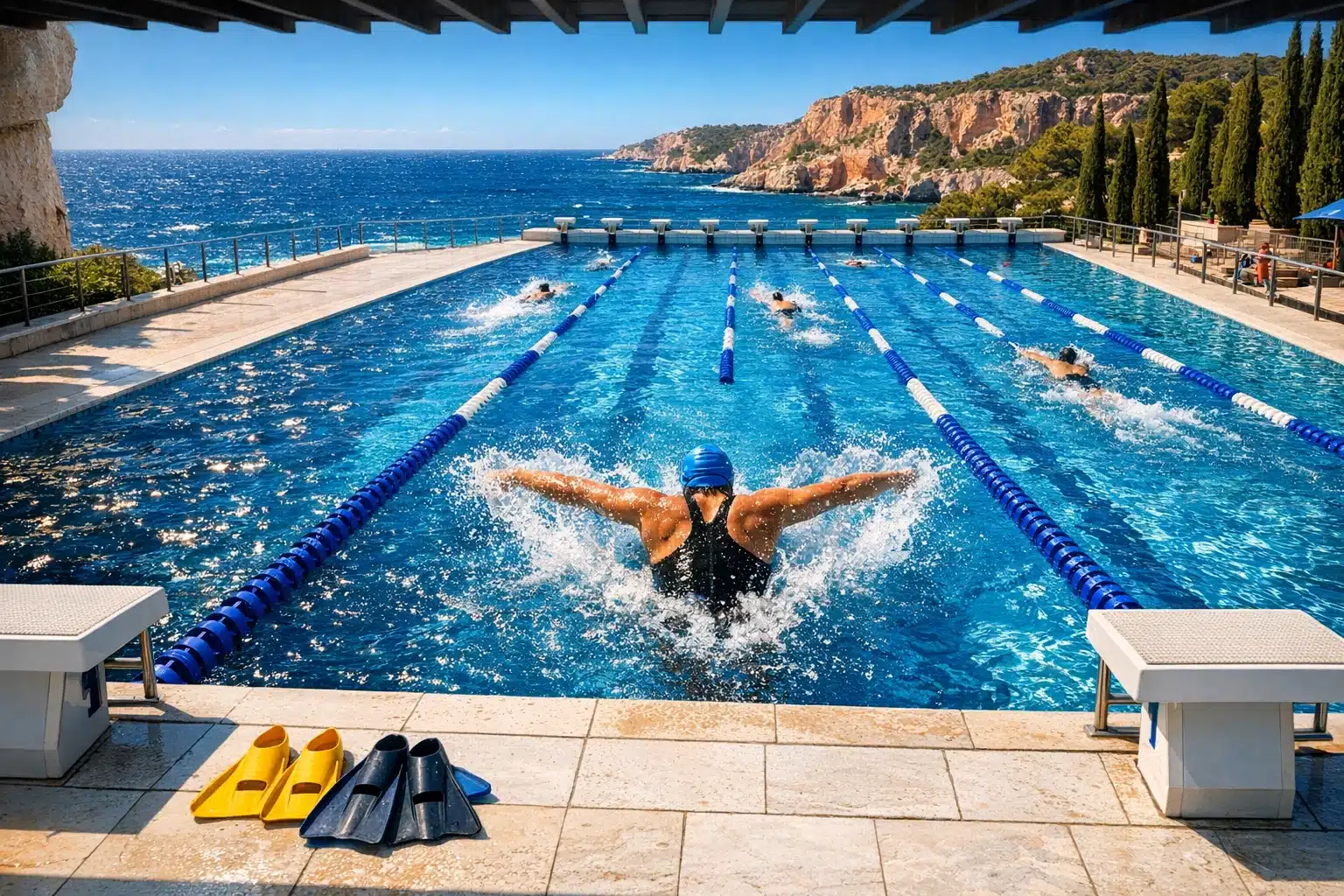
Butterfly is the most dramatic of the four strokes and often the most feared by novices. Both arms recover together, the body undulates, and the kick comes from a dolphin motion through the hips and core. It is powerful, beautiful, and demanding. Butterfly magnifies technical flaws, which is why coaches often use drills before asking swimmers to perform full lengths. Even strong athletes can struggle if they try to muscle through the stroke instead of finding its wave-like timing.
A practical comparison helps:
• Freestyle: fastest, versatile, efficient for fitness and racing
• Backstroke: useful for balance, posture, and easier breathing
• Breaststroke: slower but highly technical and popular recreationally
• Butterfly: most explosive and taxing, rewarding advanced coordination
Beyond the strokes, strong swimming depends on shared skills. Streamlining off the wall reduces drag. A controlled exhale prevents panic. Kicking from the hips rather than only the knees improves propulsion. Sight, pacing, and turns matter in different settings. This is where coaching and drills become valuable. Small corrections can produce outsized results because water magnifies inefficiency. A dropped elbow, a rushed breath, or a tense neck can waste energy over every length. That is why swimmers often say technique is free speed. The point is not merely to move harder, but to move smarter, letting the body slice through water instead of arguing with it.
Training, Safety, and Equipment: Building Good Habits in the Water
Good swimming rarely happens by accident. Even relaxed recreational swimmers benefit from structure, because water can disguise wasted effort. A useful session usually contains four parts: a warm-up, a technical phase, a main set, and a cool-down. The warm-up raises body temperature and eases the shoulders, hips, and ankles into motion. The technical phase focuses on one or two details such as breathing timing, kick position, or body roll. The main set provides the core fitness stimulus, whether that means short fast repeats, moderate aerobic intervals, or steady distance. The cool-down settles the stroke and lets the body recover gradually.
For beginners, training should emphasize comfort and consistency rather than speed. A simple session might include easy lengths with frequent rest, floating practice, kick drills, and short repeats where the swimmer focuses on exhaling underwater. Intermediate swimmers often progress to interval work, such as multiple repeats with a fixed rest period, because it builds endurance without turning the workout into shapeless mileage. Advanced swimmers may split sessions by energy system, race pace, or stroke specialty. In all cases, purposeful training beats random volume.
Equipment can help, but it should support learning rather than replace it. Common items include goggles, a cap, a well-fitted swimsuit, a kickboard, a pull buoy, fins, and occasionally paddles for experienced swimmers. Each tool has a use:
• Goggles improve visibility and reduce irritation
• Caps can limit drag and keep hair out of the face
• Kickboards isolate leg work and help beginners focus on breathing
• Pull buoys reduce leg involvement and highlight upper-body mechanics
• Fins can improve body position and let swimmers feel faster rhythms
• Paddles increase resistance and should be used carefully to avoid shoulder strain
Safety deserves equal attention. In a pool, that means respecting lane etiquette, understanding depth, and never overestimating ability. In open water, the list grows longer: currents, cold shock, visibility, boat traffic, and sudden weather changes all matter. Open-water swimmers are wise to use bright caps, swim with partners or organized groups, and learn local conditions before entering. Even strong pool swimmers can feel humbled by waves, chop, or the absence of wall turns and lane lines. Water has a way of punishing overconfidence.
Recovery and maintenance matter too. Repeated overhead motion can stress the shoulders if technique is poor or training volume rises too quickly. Gentle mobility work, balanced strength training, hydration, and rest all help keep swimming sustainable. The best habit is not heroic intensity but repeatable practice. Showing up two or three times a week with a plan will usually produce more progress than one exhausting session followed by a long gap. In swimming, patience is not glamorous, but it is powerful.
Who Swimming Serves Best and How to Begin
One of swimming’s greatest strengths is that it adapts to different goals without losing its core value. For children, it can begin as play and gradually become water safety, confidence, and coordination. For adults with desk-heavy routines, it offers a way to move the whole body and break the stiffness that accumulates from long hours of sitting. For older adults, it can remain a dependable form of exercise because the water reduces impact while still allowing serious effort. For athletes in other disciplines, swimming often works as conditioning, active recovery, or cross-training that develops lungs and discipline without constant pounding.
People also come to swimming for different emotional reasons. Some want measurable progress: faster times, cleaner turns, a first mile completed without stopping. Others want relief from noise. The pool can feel like a long blue sentence with no unnecessary words, just stroke after stroke until the mind settles. That quiet appeal matters in a culture that rarely pauses. Swimming does not merely occupy time; it can reorganize attention.
If you are new to the water, the best starting point is modest. Begin with lessons if you are uncertain about breathing or body position. Choose consistency over ambition. Focus first on comfort, then on rhythm, and only later on speed. A practical early roadmap might look like this:
• Learn to float, exhale underwater, and recover calmly at the wall
• Build short repeats with rest instead of forcing continuous distance too soon
• Try more than one stroke to discover what feels natural
• Track small wins such as smoother breathing or fewer strokes per length
• Ask for feedback, because simple corrections often unlock progress
For competitive readers, swimming rewards detail. For fitness-minded readers, it provides an efficient full-body workout. For cautious beginners, it teaches a life skill with obvious practical value. That broad usefulness is the real conclusion of the subject. Swimming is not reserved for elite racers with perfect technique or endless stamina. It belongs just as much to the adult learning at forty, the traveler drawn to open water, the rehabilitation patient rebuilding trust in movement, and the weekend lap swimmer who simply feels better after twenty steady minutes in the pool.
So the most relevant takeaway for readers is simple: swimming meets you where you are, but it also asks you to engage honestly with the process. The water reveals tension, impatience, and inefficient habits, then offers a chance to refine them. Few activities teach that lesson so clearly. If you want an exercise habit that can improve fitness, sharpen skill, and remain useful for years, swimming deserves serious consideration. Start small, learn well, stay safe, and let the water teach you the rest.