Explore the world of swimming
Swimming is one of those rare activities that can feel playful, demanding, calming, and technical all at once. It matters because it combines a life-saving skill, full-body exercise, and a form of recreation that suits children, adults, and older swimmers alike. From quiet lap lanes to choppy open water, it teaches efficiency, confidence, and respect for the body. This guide maps the essentials so readers can see how swimming works and why it still holds such a strong place in modern life.
- The first section outlines what swimming includes, from its practical roots to its place in sport and leisure.
- The second section explains technique and compares the major strokes in clear terms.
- The third section explores physical and mental benefits, while also noting limits and useful complements.
- The fourth section covers learning, training structure, and the gear that helps swimmers progress.
- The final section brings the topic together with safety advice and practical guidance for readers who want to begin or improve.
Swimming in Context: More Than a Sport
Swimming is often introduced as an activity, but that simple label barely covers its reach. It is a survival skill, a competitive discipline, a therapy tool, a social pastime, and for many people, a personal reset button after long days on land. Few forms of movement can move so easily between these roles. A child splashing in a lesson, a triathlete drilling intervals, an older adult doing water exercise, and a lifeguard scanning a beach are all connected by the same medium: water. That versatility helps explain why swimming has remained relevant across generations and cultures.
Historically, swimming was tied to necessity before it became organized sport. People crossed rivers, fished coastlines, and traveled through watery terrain long before lane ropes and stopwatches existed. Over time, communities developed techniques that were better suited to speed, endurance, or comfort. Modern competitive swimming eventually standardized the four main strokes: freestyle, backstroke, breaststroke, and butterfly. Each one solves the challenge of moving through water differently, which is part of what makes swimming so fascinating. Water resists every motion, so even small technical differences become visible.
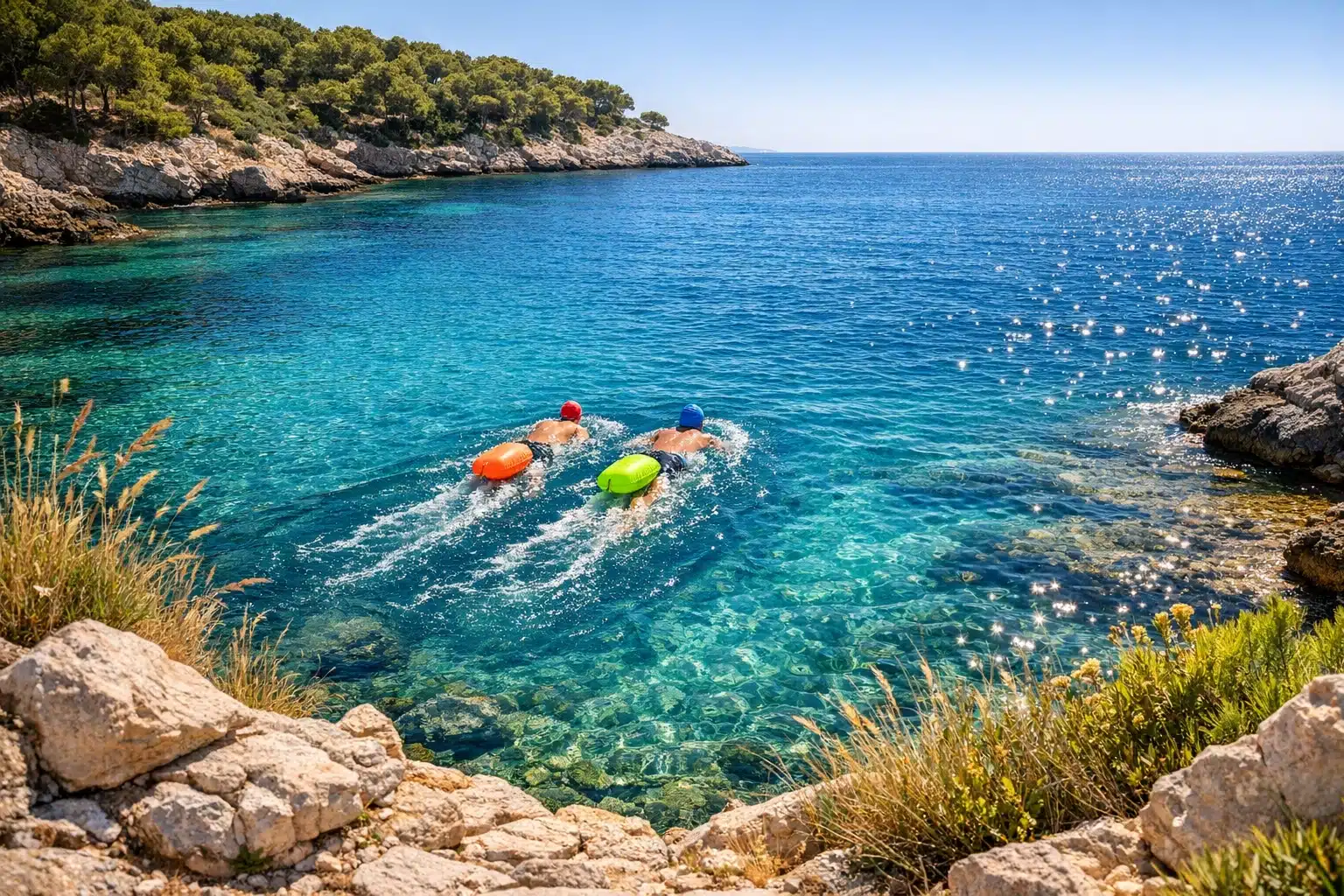
Swimming also spans several environments, and each one changes the experience. In pools, variables are controlled. Distances are measured, water is treated, and turns matter. In open water, the scene becomes less predictable. Temperature, current, waves, visibility, and navigation all shape performance. A strong pool swimmer may feel surprised the first time a straight black line on the floor disappears and the horizon becomes the only guide.
Its broad appeal comes from practical strengths as well:
- It is accessible to many ages and fitness levels.
- It can be done recreationally or competitively.
- It develops coordination as well as endurance.
- It offers a lower-impact option than many land-based activities.
That mix of utility and challenge gives swimming unusual staying power. It is not only about racing from one end to the other. It is about learning how the body behaves in a different element, where gravity feels softer but technique matters more. In that sense, swimming invites both discipline and wonder, which is a rare combination in any sport.
How Technique Shapes Speed, Comfort, and Control
In swimming, effort matters, but technique often matters more. Beginners are sometimes surprised by how exhausting a short distance can feel, especially when they are strong and fit on land. The reason is simple: water punishes inefficiency. If the head lifts too high, the hips may sink. If breathing is rushed, the stroke rhythm breaks. If the kick is frantic, energy disappears without much forward motion. Good swimming is less about fighting the water and more about organizing the body so resistance drops and propulsion improves.
Across all strokes, a few technical themes return again and again. Body position should stay long and balanced, with the swimmer trying to travel through the water rather than press against it. Breathing needs timing, not panic. Rotation matters in freestyle and backstroke because it allows a fuller reach and a stronger pull. The kick supports alignment and rhythm, even when it is not the main source of power. Coaches often remind swimmers to “be tall in the water,” which sounds poetic, but it is really mechanical advice about length and efficiency.
The four competitive strokes reveal how technique changes the feel of swimming:
-
Freestyle is usually the fastest and most economical over distance. It rewards rotation, a steady flutter kick, and relaxed breathing patterns.
-
Backstroke shares many freestyle principles but adds the challenge of swimming face up, where orientation and stroke symmetry become important.
-
Breaststroke is slower but highly technical, using a distinct timing sequence between pull, breath, kick, and glide.
-
Butterfly is the most demanding for many swimmers, relying on coordinated undulation, timing, and upper-body strength.
Comparisons between strokes are useful because they show that swimming is not a single movement skill. Freestyle often suits fitness swimming because it balances speed and sustainability. Breaststroke may feel more approachable to learners because the face comes out of the water more often, although strong breaststroke technique is far from simple. Backstroke is excellent for posture awareness, while butterfly teaches rhythm in a very direct, unforgiving way.
Technique is also what separates comfortable swimmers from frustrated ones. Two people can cover the same distance with very different levels of strain. The smoother swimmer is not always stronger; often, that swimmer is simply better aligned, better timed, and more relaxed. In water, elegance is not decoration. It is efficiency made visible.
Health Benefits: Fitness, Recovery, and Mental Reset
Swimming has earned its reputation as a whole-body workout for good reason. It asks the heart and lungs to support sustained movement, recruits large muscle groups in the upper and lower body, and challenges coordination with every lap. For adults trying to meet general activity targets, such as the widely cited recommendation of at least 150 minutes of moderate aerobic exercise per week, swimming can be a practical way to build those minutes. Depending on pace, body size, and session design, lap swimming can also expend substantial energy, making it a useful option for overall fitness and weight management when paired with sensible nutrition.
One of the strongest arguments in favor of swimming is its lower-impact nature. Water supports body weight, which can reduce stress on joints compared with repetitive land exercise like running. That does not mean swimming is effortless or risk-free, but it can be especially attractive for people managing arthritis, returning from certain injuries, or seeking exercise with less pounding. Water also provides resistance in every direction, so even steady-paced movement creates muscular demand. Unlike cycling, where the rider is supported by a machine, swimming asks the body to stabilize itself continuously.
The benefits go beyond conditioning:
- Cardiovascular endurance can improve through structured swim sessions.
- Muscular endurance often increases because the body works against constant resistance.
- Mobility and coordination may improve, especially with technically varied practice.
- Many swimmers report reduced stress and better mood after time in the water.
The mental side deserves attention. Pools have a strange magic to them. The outside world becomes quieter, breathing takes on a rhythm, and the repeated movement can feel meditative. For some people, swimming is one of the few forms of exercise that clears mental clutter instead of adding to it. This may help explain why it appeals to students, office workers, retirees, and athletes alike.
That said, swimming is not a complete answer to every fitness goal. Because it is not weight-bearing in the same way as running or resistance training, it may not support bone density as effectively on its own. People who want maximal strength, explosive power, or sport-specific performance often benefit from combining swimming with dryland training, mobility work, or gym sessions. In other words, swimming is powerful, but it becomes even more effective when matched thoughtfully to the person’s goals. Its real strength lies in how adaptable it is: hard when you want challenge, gentle when you need recovery, and quietly restorative almost every time.
Learning to Swim, Training Well, and Choosing Useful Gear
Learning to swim can begin with simple comfort in the water, not dramatic strokes. For beginners, the first victories are often small but meaningful: putting the face in, exhaling underwater, floating on the back, gliding from the wall, or moving a few meters without panic. Those steps matter because confidence is the foundation of skill. A swimmer who feels tense will usually struggle to breathe well, and poor breathing tends to disrupt everything else. This is why good instruction often starts with control and familiarity before speed or distance enters the picture.
As swimmers improve, training becomes more structured. Pool sessions are commonly built around a warm-up, drill work, a main set, and a cool-down. Drill work is especially valuable because it isolates one part of the stroke, such as body rotation, catch position, or kick timing. That kind of focused practice may look less exciting than nonstop laps, but it usually delivers better long-term results. A swimmer who understands why a drill exists is far more likely to improve than one who simply accumulates distance without a plan.
Equipment can help, but it works best when used with purpose:
- Goggles improve visibility and comfort, making regular practice easier.
- A swim cap can reduce drag slightly and keep hair out of the face.
- Kickboards help isolate leg work, though overuse may encourage poor body position in some swimmers.
- Pull buoys support the legs and allow attention to shift toward arm mechanics.
- Fins can reinforce body line and ankle flexibility, but they should not replace proper technique.
Training environments also shape progress. A 25-meter or 25-yard pool encourages frequent turns and rhythm changes, while a 50-meter pool rewards sustained pacing. Open water adds another layer entirely, requiring sighting, navigation, and comfort without walls. Even skilled pool swimmers often need dedicated practice before they feel truly efficient in lakes or oceans.
For readers who want a realistic path forward, the best advice is refreshingly simple: learn from a qualified instructor, practice consistently, and build skill before intensity. Improvement in swimming rarely arrives as a dramatic leap. It comes in quieter ways: a smoother breath, fewer strokes per length, a calmer mind, or a set that once felt impossible becoming manageable. In swimming, progress often hides in details, but those details eventually transform the whole experience.
Conclusion: Making Swimming Part of Your Life
For most readers, the real question is not whether swimming is impressive. It clearly is. The better question is whether it fits into ordinary life in a useful, sustainable way. In many cases, the answer is yes. A parent may value it as a safety skill for a child. A busy worker may treat it as efficient exercise. An older adult may appreciate the joint-friendly movement. A competitive athlete may use it to sharpen endurance or support recovery. Swimming meets people in very different circumstances, which is one reason it remains so relevant.
Still, water deserves respect. Enjoyment should never cancel safety. Whether you are new to swimming or returning after years away, a few habits make a major difference:
- Choose supervised locations whenever possible, especially when learning.
- Do not overestimate your ability in deep or open water.
- Use bright, appropriate gear in open water so you are easier to spot.
- Swim with a partner when conditions are uncertain.
- Build endurance gradually instead of chasing distance too soon.
If you are just starting, keep the early goal simple: become comfortable, then become consistent. Short, regular sessions are often more productive than rare heroic ones. If you already know the basics, focus on one technical theme at a time rather than trying to fix everything in a single workout. If you are using swimming for health, think of it as one part of a larger routine that may also include walking, strength work, mobility, and rest.
Swimming has a way of rewarding patience. At first, the water can feel demanding and strangely unfamiliar. Then, little by little, the body learns the language of balance, timing, and breath. A length becomes a set, a set becomes a habit, and a habit becomes a source of strength. For beginners, fitness seekers, parents, and lifelong learners alike, that is the lasting value of swimming: it offers a skill you can carry for years, a workout that can evolve with your needs, and a place where effort often returns as calm.