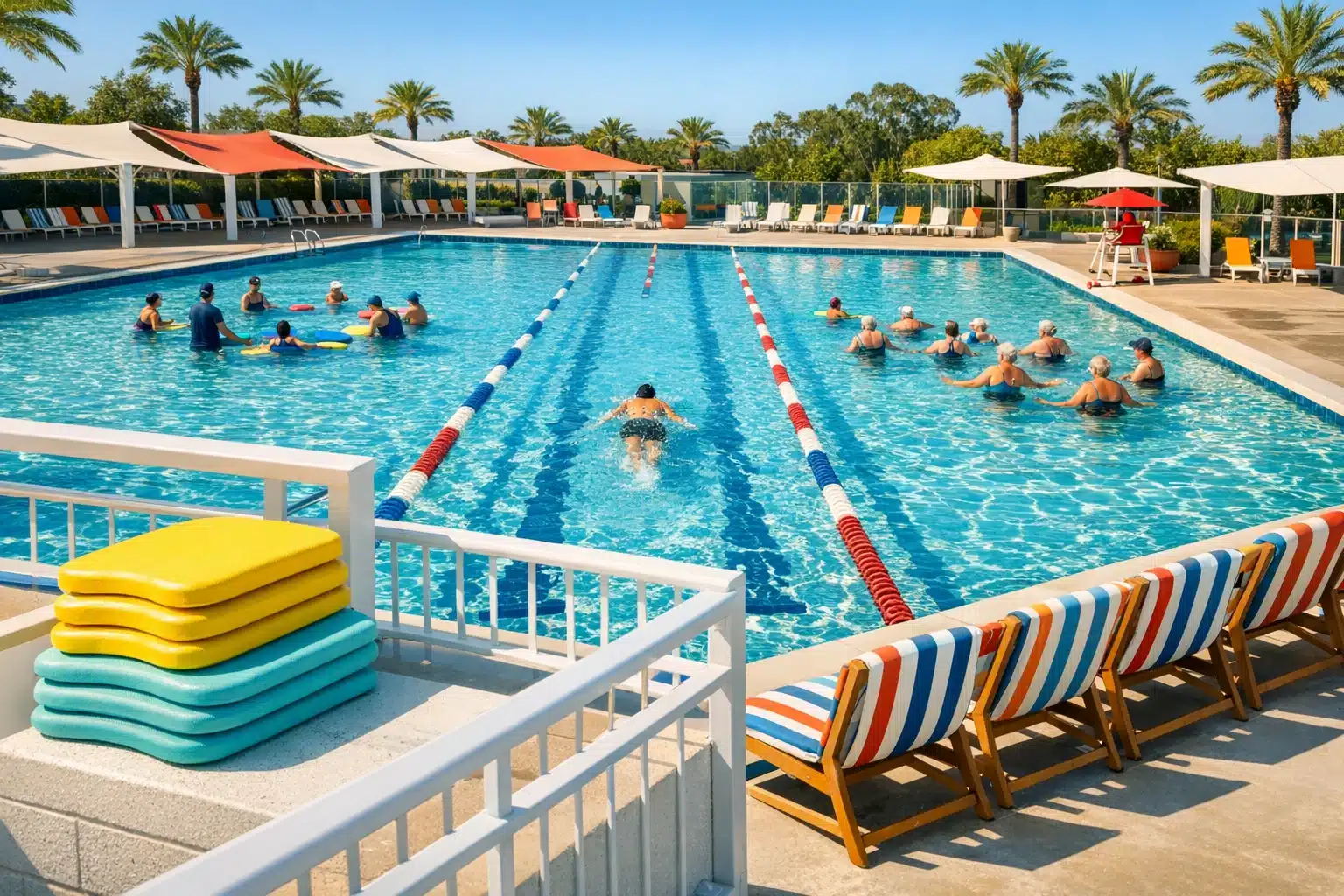
Explore the world of swimming
Swimming is one of those rare activities that feels playful on the surface yet delivers serious benefits underneath. It strengthens the heart, challenges the lungs, and trains the whole body without the heavy impact that comes with many land-based sports. From a child learning to float to an athlete chasing split times, the water offers a skill path that is practical, social, and deeply rewarding. This article maps that world step by step, moving from technique and safety to fitness, competition, and the simple joy that keeps people coming back to the pool.
Outline:
- The value of swimming as a sport, life skill, and lifelong form of exercise
- Core techniques, breathing patterns, and the differences between the four main strokes
- Water safety, learning progressions, and habits that support confident swimming
- Fitness benefits, training methods, and the mental side of regular time in the water
- A practical conclusion for beginners, parents, fitness seekers, and aspiring competitors
Why Swimming Matters in Modern Life
Swimming matters because it sits at the crossroads of health, safety, and recreation. Many sports are excellent for fitness, but few are also basic life skills. Knowing how to move calmly through water can reduce panic, improve confidence during travel or holidays, and make beaches, lakes, and pools far safer places to enjoy. That practical value alone gives swimming a special place among physical activities. A person may never enter a race or count laps, yet being able to float, tread water, and swim a short distance can still be deeply important.
From a fitness perspective, swimming is unusually inclusive. It can suit children, older adults, people returning from injury, and athletes seeking cross-training. Because water supports body weight, swimming places less stress on joints than many high-impact exercises. That is one reason it is often recommended as an option for people who find running uncomfortable. The resistance of water also means that even smooth-looking movement demands effort. Every pull and kick pushes against a denser medium than air, so the body works from head to toe.
Swimming also adapts easily to different goals. One person wants relaxation after work. Another wants to build endurance. A third wants to improve technique for triathlon or competitive racing. The same lane can host all three ambitions, just at different speeds. This flexibility helps explain why swimming remains popular in schools, community centers, hotels, sports clubs, and rehabilitation programs.
Its social role is worth noting too. Pools are often shared spaces where families, retirees, students, and serious competitors coexist. A public swim session can feel like a small portrait of community life: a child clings to a kickboard, a master swimmer glides past with quiet efficiency, and a water aerobics group laughs through a set. Few activities connect generations so naturally.
There is also a mental element that many swimmers describe with almost poetic affection. Water changes the sound of the world. Noise softens. Breathing becomes rhythmic. Attention narrows to movement, timing, and sensation. For some people, this creates a meditative quality that makes swimming feel less like exercise and more like a reset button.
Several key reasons explain its lasting relevance:
- It builds cardiovascular fitness and muscular endurance.
- It offers lower-impact exercise than many land-based activities.
- It teaches practical water competence and confidence.
- It can be recreational, therapeutic, or highly competitive.
- It remains accessible across a wide age range.
In short, swimming is not just another sport on a schedule board. It is a lifelong tool, a safety skill, and for many people, a rare place where effort and ease seem to exist in the same stroke.
Learning the Water: Skills, Breathing, and the Four Main Strokes
For beginners, the hardest part of swimming is often not strength but comfort. Water behaves differently from land, and the body must learn balance before speed. Early progress usually begins with simple foundations: putting the face in the water, exhaling steadily, floating on the front and back, and understanding how the body position affects movement. A tense swimmer sinks and splashes. A relaxed swimmer starts to discover that the water can support more than expected.
Breathing is the hinge on which much of swimming swings. New swimmers often hold their breath underwater and then rush to inhale, which quickly creates fatigue. More efficient breathing follows a simpler pattern: exhale into the water, then turn or lift only enough to inhale. This rhythm matters in every stroke, but especially in freestyle, where good swimmers appear to roll through the water rather than fight it.
The four competitive strokes each have a distinct personality. Freestyle, commonly used to mean front crawl, is usually the fastest and often the first stroke taught for lap swimming. It rewards streamlined body position, a steady flutter kick, and coordinated side breathing. Backstroke is swum on the back and can feel more approachable to some learners because the face stays above the surface, although maintaining direction takes practice. Breaststroke is slower but widely popular recreationally because the head can rise regularly and the timing is easy to separate into pull, breath, kick, and glide. Butterfly is the most demanding of the four, combining a powerful arm recovery with a dolphin kick and precise timing. When done well, it looks like choreography written by a wave.
A useful comparison of the strokes looks like this:
-
Freestyle: most efficient for distance and speed, but strongly dependent on breathing technique.
-
Backstroke: good for posture awareness and shoulder rhythm, though navigation can be tricky.
-
Breaststroke: easier pace control and visibility, but less hydrodynamically efficient.
-
Butterfly: highly technical and physically intense, often learned after the others.
Technique improves faster when swimmers focus on one skill at a time. For example, a learner might spend one session on floating and exhalation, another on kicking with a board, and another on short, calm lengths with rest between attempts. Coaches often stress drills because repetition with intention is more valuable than simply surviving more laps.
Small adjustments can create dramatic gains. A head held too high drops the hips. A wide kick increases drag. A rushed arm entry wastes energy. Swimming teaches this quickly because water gives immediate feedback. If the movement is inefficient, progress feels heavy. If the line of the body improves, the swimmer seems to slip forward with less argument from the pool.
That is one of the beauties of technique-driven sport: improvement is not reserved for the strongest. Sometimes the best breakthrough arrives quietly, in a single length where the body finally understands what the coach has been saying all along.
Safety, Access, and Good Habits Around Water
No discussion of swimming is complete without safety. Water can be joyful, but it also demands respect. Confidence is valuable only when it rests on real skill and sound judgment. Many accidents happen not because people planned to take risks, but because they overestimated ability, underestimated conditions, or assumed someone else was watching. Safe swimming begins long before a person dives in.
For children, supervision is essential. A poolside moment can change quickly, and silence around water is not always a sign that everything is fine. Parents and caregivers benefit from understanding that flotation toys are not substitutes for active attention. Formal lessons help, yet lessons do not remove the need for adult oversight. In fact, structured learning and vigilant supervision work best together. For adults, safety often comes down to honest self-assessment. Can you truly swim the distance? Do you know how to rest and float if you get tired? Are you familiar with currents, depth changes, or cold water effects if you are away from the pool?
Open water introduces challenges that pools do not. Lakes may have poor visibility and uneven temperatures. The sea can add tides, waves, and currents that change by the hour. Even strong pool swimmers sometimes discover that open water feels psychologically different. There are no lane lines, no wall every 25 or 50 meters, and often no easy sense of pace. That is why gradual exposure, local knowledge, and swimming with others are wise choices.
Several habits improve safety in nearly every setting:
- Swim where lifeguards are present whenever possible.
- Learn floating, treading water, and basic self-rescue skills.
- Enter unfamiliar water slowly and check conditions first.
- Avoid swimming alone, especially in open water.
- Use visibility gear such as a bright cap or tow float in open water settings.
- Stop immediately if cold, cramping, dizzy, or unusually short of breath.
Access also shapes who gets to become a swimmer. Not everyone grows up near a pool, beach, or lesson program. Cost, transportation, schedule, and cultural familiarity all matter. Communities that invest in public facilities, affordable instruction, and school-based water education usually expand participation far beyond competitive sport. This is important because swimming should not be treated as an elite activity. It is too useful, too healthy, and too widely beneficial for that.
Good habits around hygiene and etiquette matter as well, particularly in shared pools. Showering before entering, respecting lane directions, allowing faster swimmers to pass, and choosing the right lane speed all make the experience safer and more pleasant. These are small disciplines, but they support a healthier environment for everyone.
At its best, safety is not fear dressed in rules. It is freedom built on preparation. When swimmers understand risk, practice sensible habits, and learn progressively, water becomes less intimidating and far more enjoyable.
Swimming for Fitness, Performance, and Mental Well-Being
Swimming is often praised as a full-body workout, and that description is accurate, though a bit incomplete. It is also a workout that can be shaped with remarkable precision. A gentle recovery swim, a steady aerobic session, a sprint set, and a technique-focused practice may all happen in the same pool, yet they place very different demands on the body. This makes swimming attractive to casual exercisers and structured athletes alike.
From a health standpoint, regular swimming supports cardiovascular fitness, muscular endurance, and mobility. Because the body works against water resistance, the shoulders, back, core, glutes, and legs all contribute. The exact emphasis changes by stroke. Freestyle and backstroke often highlight rotational control and shoulder rhythm. Breaststroke relies more on timing and the kick pattern. Butterfly demands powerful coordination through the core and hips. Energy use also varies by pace and body size, but moderate to vigorous swimming can burn several hundred calories per hour, making it a meaningful option for people managing weight alongside nutrition and broader lifestyle habits.
Swimming also aligns well with general physical activity advice. Health organizations commonly recommend at least 150 minutes of moderate aerobic activity per week for adults, and swimming can satisfy that target while adding strength-related benefits through resistance. For people who dislike pounding the pavement, the pool can feel like a welcome alternative. Instead of impact, there is pressure. Instead of heat building up rapidly, there is often a cooling environment that makes sustained effort more comfortable.
Training structure matters if progress is the goal. Many swimmers improve when sessions include a mix of elements such as:
- Warm-up for mobility and gradual heart-rate increase
- Technique drills to refine body position and catch mechanics
- Main sets for endurance, speed, or threshold work
- Recovery intervals to manage effort and preserve quality
- Cool-down to lower intensity and reinforce relaxed movement
Mental benefits deserve equal attention. The repetitive rhythm of strokes and breathing can reduce stress and sharpen focus. Some swimmers describe the black line at the bottom of the pool as strangely therapeutic, a narrow road that clears mental traffic. Others benefit from the measurable nature of the sport. Time, distance, and stroke count provide immediate feedback, which can be motivating without being chaotic.
Competitive swimming adds another layer. It teaches pacing, discipline, and the patience to improve by fractions of a second. That may sound small, but in swimming, tiny gains are often signs of better technique, smarter turns, and more efficient energy use. Even recreational swimmers can borrow that mindset. Improvement does not always require dramatic transformation. Sometimes it is simply the day when twenty lengths feel smoother than ten did a month ago.
In that sense, swimming offers a rare bargain: a tough workout, a technical challenge, and a mental reset wrapped into the same hour of practice.
Conclusion: A Practical Path for Beginners, Families, and Future Athletes
If you are standing at the edge of swimming and wondering whether it is worth your time, the answer depends less on your starting level and more on what you want from the experience. For beginners, swimming offers something deeply reassuring: progress can begin with small wins. Learning to float for longer, breathe more calmly, or complete a first uninterrupted length may seem modest from the pool deck, but each of those steps builds real confidence. Water respects patience. It rarely rewards panic, yet it responds generously to steady practice.
For parents, swimming is one of the most valuable activities to encourage. It supports fitness, coordination, and social development, but more importantly, it builds water competence that may matter for life. A child who learns safe habits, listens to instruction, and grows comfortable in the water gains more than a hobby. They gain freedom paired with judgment. Lessons, supervised play, and gradual exposure create a foundation that can carry into adolescence and adulthood.
For adults seeking fitness, swimming can be an excellent long-term choice. It allows hard effort without constant impact, making it useful for people returning to exercise or mixing training around busy work schedules. You do not need to love racing or memorize advanced sets to benefit. Two or three consistent sessions a week, even if simple, can improve stamina, movement quality, and stress management. The key is consistency, not theatrical ambition.
For aspiring athletes, swimming offers a rich technical world. There is always another layer to refine: turns, starts, kick timing, pacing, streamlining, or stroke efficiency under fatigue. Progress may be measured in seconds, then tenths, then tiny technical improvements invisible to spectators but obvious to a coach. That challenge is part of the sport’s lasting appeal. It is honest work. The clock does not flatter, and the water does not pretend.
A sensible starting plan might look like this:
- Choose a safe pool or supervised setting.
- Take lessons or seek coaching if technique feels uncertain.
- Set one clear goal, such as confidence, fitness, or endurance.
- Practice regularly enough to build familiarity.
- Respect safety rules and progress gradually.
Swimming can be playful, demanding, calming, and fiercely technical, sometimes all in the same week. That variety is exactly why it endures. Whether you enter the water to learn, recover, compete, or simply feel lighter than gravity usually allows, swimming has room for you. Start where you are, keep your expectations realistic, and let the next length teach you something new.