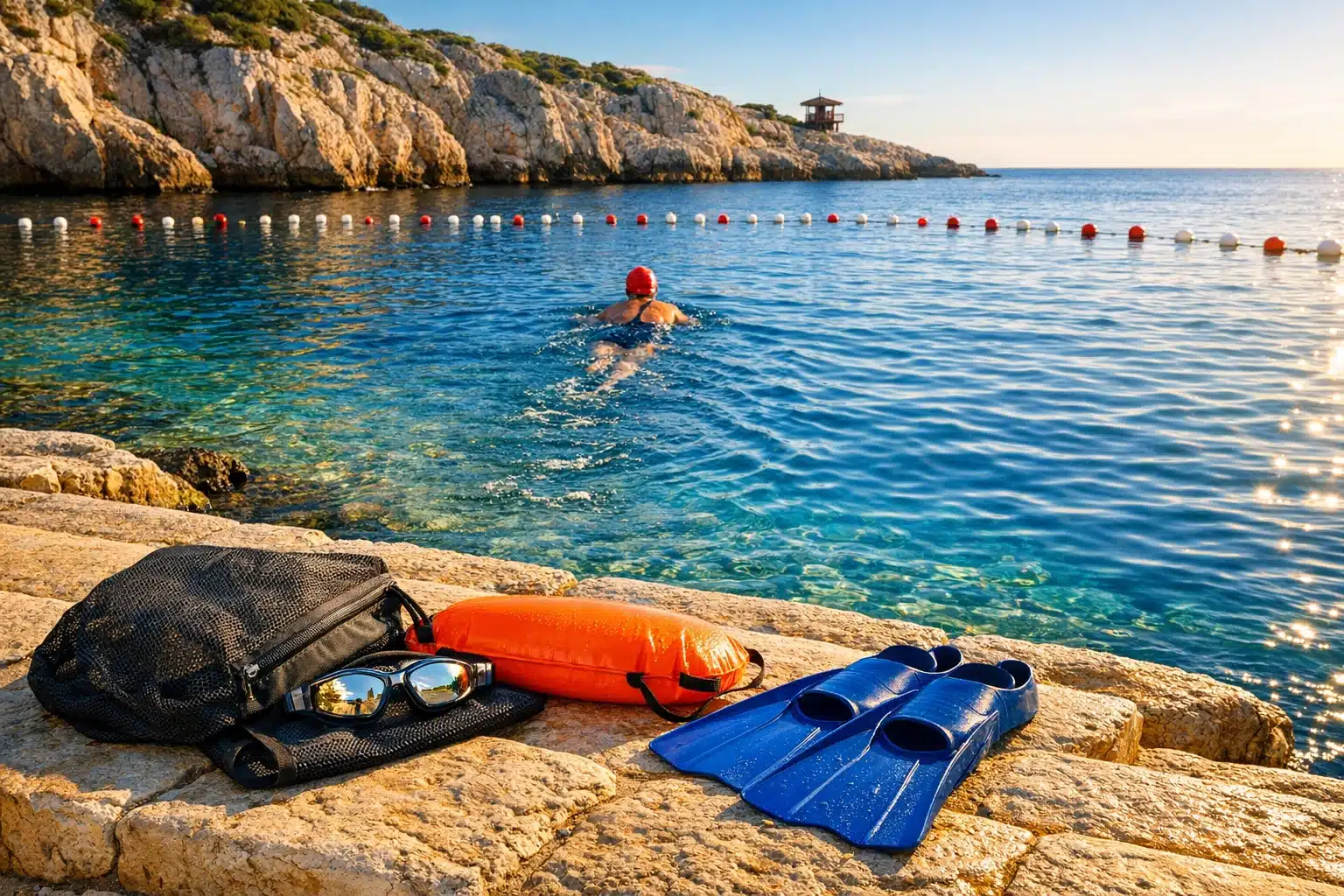
Explore the world of swimming
Swimming occupies a rare place in modern life: it is at once a survival skill, a competitive sport, a therapeutic exercise, and a source of simple joy. In water, the body meets resistance without the jarring impact common in many land-based workouts, which helps explain its wide appeal across ages and fitness levels. From school lessons to Olympic finals, swimming connects health, safety, discipline, and recreation in one continuous lane.
Before moving into the full discussion, here is a clear outline of the article. It begins with what swimming is and why it matters, then examines physical and mental benefits, explains the major strokes and basic technique, looks at safety and smart training, and ends with swimming’s role in sport, leisure, and lifelong wellbeing.
- Section 1: Why swimming matters in health, culture, and daily life
- Section 2: Physical fitness and mental wellbeing in the water
- Section 3: Strokes, technique, breathing, and efficient movement
- Section 4: Safety, access, equipment, and structured improvement
- Section 5: Swimming as a sport, hobby, and lifelong practice
Why Swimming Matters Beyond the Pool
Swimming is often introduced as an activity, but it is more accurate to describe it as a cluster of abilities with unusually broad value. It helps people move confidently in water, stay safe around lakes and pools, develop full-body coordination, and participate in a sport that can be practiced from childhood into old age. That breadth is unusual. Many sports are either highly specialized or strongly tied to a narrow age range. Swimming, by contrast, can be playful at six, competitive at sixteen, restorative at forty, and essential at seventy. A quiet morning swim and an Olympic final may look worlds apart, yet they are built on the same relationship between breath, balance, and forward motion.
Its relevance is not abstract. Water safety alone gives swimming a public health dimension. The World Health Organization has repeatedly identified drowning as a major global problem, with hundreds of thousands of deaths occurring worldwide each year. Learning to swim does not eliminate risk, but it significantly improves a person’s ability to respond in emergencies and make safer choices around water. That matters in communities with beaches, rivers, canals, irrigation systems, hotel pools, or even seasonal flooding. In that sense, swimming is not only recreation; it is practical knowledge.
Swimming also occupies a special cultural position. It appears in school programs, rehabilitation clinics, military training, holiday travel, and elite sport. A pool can feel like a classroom at one end and a stage at the other. For some people, swimming is their first independent movement in an environment that does not reward force so much as rhythm. For others, it is a lesson in humility: water does not care how strong you look on land. It rewards efficiency, patience, and timing.
Compared with many common forms of exercise, swimming offers a different sensory experience. Runners feel impact, cyclists feel momentum, and lifters feel load. Swimmers feel pressure from all sides. Water is far denser than air, so every movement meets resistance. That resistance is both challenge and teacher. Push too hard in the wrong direction and energy vanishes. Align the body well, and the water begins to cooperate. This is one reason swimming fascinates beginners and experts alike: improvement is measurable, but it is also deeply felt.
- It is a life skill linked to safety.
- It supports fitness without constant impact.
- It can be adapted for recreation, therapy, or competition.
- It remains useful across many stages of life.
For all these reasons, swimming deserves attention not only as a sport but as a meaningful human skill. It teaches respect for environment, awareness of the body, and calm under pressure, all while offering the simple satisfaction of moving through water with purpose.
Health, Fitness, and the Mental Benefits of Swimming
One of swimming’s greatest strengths is the way it combines cardiovascular work, muscular engagement, and joint-friendly movement in a single activity. When people describe it as a “full-body workout,” the phrase is not merely promotional language. The arms pull, the shoulders stabilize, the core rotates and balances, the hips align, and the legs kick or streamline depending on the stroke. Because water provides resistance in every direction, even moderate swimming asks the body to coordinate multiple systems at once. At the same time, buoyancy reduces the stress placed on joints. In deeper water, the body bears much less weight than it does on land, which is why swimming and water exercise are often recommended for people managing arthritis, recovery phases, or excess body weight.
From a cardiovascular perspective, swimming can be adjusted to suit a wide range of goals. A slow continuous swim supports endurance and active recovery. Interval training with repeated fast lengths raises intensity and can improve aerobic capacity. Public health guidance from organizations such as the World Health Organization and the Centers for Disease Control and Prevention typically recommends at least 150 minutes of moderate physical activity per week for adults. Swimming can contribute meaningfully toward that target. Depending on body size, stroke choice, and pace, it can also use a substantial amount of energy. Vigorous lap swimming generally burns more calories than casual floating or easy movement, though the exact number varies widely from person to person.
The mental side is just as important. Many swimmers describe the pool as one of the few places where attention naturally narrows. Breath follows stroke, stroke follows wall, and the noise of the day is reduced to bubbles, splashes, and the repeated decision to keep going. This rhythm can lower stress and improve mood for many people, especially when swimming becomes consistent rather than occasional. Exercise in general is associated with better mental wellbeing, and swimming adds a unique sensory environment that some people find calming. The water supports the body while demanding focus; that combination can feel both secure and absorbing.
Swimming also invites sustainable effort. High-impact routines can be effective, but they may not suit everyone long term. A person with knee pain may struggle with running. Someone new to exercise may feel intimidated by gym culture. In contrast, a pool offers several entry points:
- Walking in shallow water
- Gentle kick practice with a board
- Short lengths with rest between each effort
- Structured lap swimming for endurance or speed
There are, of course, limits. Swimming is not magically superior to every other form of exercise, and access can be a barrier due to cost, pool availability, or confidence. Still, its combination of cardiovascular benefit, muscular demand, low-impact movement, and mental refresh makes it one of the most versatile physical activities available. For many people, it is not just exercise they can do; it is exercise they can return to.
Understanding the Strokes, Breathing, and Efficient Technique
To watch skilled swimmers is to see a useful paradox: they are working hard, yet they often look calm. That calm appearance comes from technique. In swimming, fitness matters, but efficiency matters just as much. A beginner may thrash with determination and travel slowly, while a trained swimmer glides farther with fewer strokes. The difference lies in body position, timing, and the management of drag, which is the resistance created as the body moves through water. Good technique is not about elegance for its own sake; it is about wasting less energy.
The four competitive strokes are freestyle, backstroke, breaststroke, and butterfly. Freestyle, usually referring to front crawl in training and racing, is generally the fastest and most energy-efficient stroke for distance work. The body stays long and horizontal, the arms alternate, and the legs provide a steady flutter kick. Backstroke uses a similar alternating pattern but turns the body upward, which changes orientation and breathing demands. Breaststroke is slower for most swimmers, but its timing-based movement can feel more intuitive to learners because the head may rise naturally during each cycle. Butterfly is the most technically demanding for many people, requiring coordinated dolphin kick, powerful arm recovery, and strong rhythm.
Breathing deserves special attention because it is where many beginners lose confidence. On land, breathing is automatic and unconstrained. In water, it must be timed. New swimmers often hold tension in the neck and lift the head too high to inhale, which causes the hips and legs to sink. A better habit is to exhale steadily into the water and rotate or lift only as much as the stroke requires for the next breath. This small adjustment can transform a swimmer’s comfort level. The moment breathing becomes smoother, everything else becomes more teachable.
Several principles apply across all strokes:
- Keep the body long and balanced rather than bent or hurried.
- Use the core to stabilize rotation and alignment.
- Enter each stroke phase with control, not panic.
- Let the kick support position instead of becoming random splashing.
- Practice consistently, because technique improves through repetition.
Comparisons between strokes reveal how varied swimming can be. Freestyle often feels like efficient travel. Backstroke can feel open and spacious but requires trust in direction. Breaststroke resembles a cycle of gather and release. Butterfly, when learned well, feels almost musical, a surge forward every time timing clicks. Each stroke teaches something different about movement. Together they show that swimming is not just propulsion. It is a conversation between the body and the water, and technique is the language that makes the conversation productive.
Safety, Access, Equipment, and How to Improve Step by Step
Any serious discussion of swimming must include safety, because confidence in water should never become carelessness. Knowing how to swim is valuable, but safe swimming also depends on judgment, supervision, environment, and preparation. Conditions vary dramatically between a heated indoor pool and open water. Pools offer clear lanes, visible depth markings, and controlled settings. Lakes, rivers, and oceans introduce currents, waves, cold temperatures, changing visibility, and underwater hazards. A person who feels comfortable in one setting may not be equally prepared for the other. This is why swim instruction often emphasizes not only technique but awareness.
Foundational safety habits are simple, yet they matter:
- Never overestimate your ability, especially in unfamiliar water.
- Swim where lifeguards are present when possible.
- Children should have active, close supervision near water at all times.
- Learn how to float, tread water, and exit safely.
- Use appropriate safety gear when needed, especially in open water or on boats.
Improvement in swimming also benefits from structure. Many adults think they must immediately swim long continuous distances to “count” as swimmers. That belief discourages progress. A better approach is to work in stages. First comes comfort: putting the face in the water, exhaling, floating, and kicking. Then comes coordination: linking arm movement, body position, and breathing. Only after those basics are stable does endurance become efficient to train. This progression is not glamorous, but it works. In fact, skilled swimmers often return to fundamentals because small technical gains produce large results over time.
Equipment can help, but it should support learning rather than replace it. Common items include goggles, caps, kickboards, pull buoys, fins, and training paddles. Goggles improve visibility and comfort, which is often enough to reduce anxiety in new swimmers. Kickboards isolate leg work. Pull buoys help swimmers focus on the upper body by supporting the hips and legs. Fins can make body position easier to feel and allow more productive drill work. Yet none of these tools can substitute for relaxed breathing or balanced alignment. They are aids, not shortcuts.
Access remains a practical issue. Some communities have abundant public pools and school programs; others do not. Cost, transport, time, and cultural familiarity can all affect participation. That reality matters because swimming is often praised as universal while remaining unevenly available. Expanding access through community pools, lessons, adaptive programming, and inclusive scheduling can make a measurable difference. When swimming is presented as only an elite activity, participation narrows. When it is presented as a learnable public skill, more people step in.
The smartest swimmers are not always the fastest ones. They are the ones who understand limits, respect conditions, and keep improving through patient, consistent practice. That mindset turns swimming from a seasonal pastime into a reliable lifelong skill.
Swimming for Sport, Leisure, and Lifelong Wellbeing
Swimming has an unusual ability to satisfy very different ambitions without losing its core identity. For one person, it is a sport of splits, race strategy, and disciplined training. For another, it is a peaceful thirty minutes before work. For a third, it is family time at the local pool or a way to stay active while protecting sore joints. These versions do not compete with one another; they coexist. That flexibility helps explain swimming’s staying power. It can be serious without being exclusive, technical without being inaccessible, and demanding without being harsh on the body.
As a competitive sport, swimming rewards precision. Races can be decided by fractions of a second, and training often revolves around pace control, stroke count, starts, turns, and recovery. Elite swimmers may cover many kilometers in a week, balancing endurance, speed sets, dryland strength work, and mobility. They train in an environment where tiny refinements matter. A stronger underwater push-off, a cleaner hand entry, or a better-timed breath can influence performance. Yet even at that level, the foundations remain familiar: streamline, rhythm, and discipline.
As leisure, swimming offers something equally valuable but very different. It allows people to disconnect from screens, heat, noise, and time pressure. The experience can be social or solitary. In summer, water invites play. In winter, an indoor pool can feel like a bright refuge from gray weather. There is a kind of honest pleasure in it: no engine, no scoreboard required, just the body moving through a different element. Even casual swimming can cultivate confidence, body awareness, and routine. It may start as recreation and quietly become a personal ritual.
For lifelong wellbeing, swimming is especially compelling because it can adapt as the body changes. Younger swimmers may focus on skill development and speed. Adults with crowded schedules may use short sessions for efficient exercise. Older adults may value mobility, circulation, and low-impact movement. Adaptive swimming programs also expand access for people with physical disabilities, sensory differences, or medical limitations. The water does not erase every challenge, but it often creates possibilities that land-based exercise does not.
For readers wondering where to begin, the path does not need to be dramatic:
- Start with one or two sessions per week.
- Choose a realistic goal, such as comfort, endurance, or technique.
- Take lessons if basics feel shaky.
- Track progress by consistency, not only by speed.
- Respect rest and recovery, especially when learning new skills.
In conclusion, swimming is worth exploring because it meets people where they are. It can protect, challenge, restore, and delight. If you are a beginner, it offers a practical skill and a gentle way into exercise. If you already swim, it offers endless refinement and renewed purpose. That is the quiet brilliance of swimming: the water always gives something back to those willing to learn how to move through it well.