Exploring Football: Updates and strategies in football.
Football matters because it turns a simple contest into a shared language spoken in stadiums, schoolyards, and living rooms across the world. One match can carry local pride, national identity, and months of tactical preparation in just ninety minutes. This article explains how the sport grew so influential, what strategies shape results, and why recent changes are altering the way players, coaches, and fans read the game. Read on, and the familiar roar of the crowd starts to make even more sense.
Outline
1. The first section examines football’s global rise, cultural power, and economic significance. 2. The second section breaks down tactics, formations, and in-game strategy. 3. The third section focuses on player roles, training, and skill development. 4. The fourth section looks at recent updates, including technology, analytics, and structural changes in the sport. 5. The final section summarizes the biggest lessons for fans, players, and anyone who wants to understand football more deeply.
Football as a Global Language: History, Reach, and Lasting Appeal
Football is often called the world’s game, and that description holds up under close inspection. The modern version of the sport was codified in England in 1863, yet its roots stretch across older ball games played in different cultures long before formal rulebooks existed. What made football spread so quickly was not mystery or marketing alone; it was accessibility. A ball, a rough patch of ground, and a pair of markers for goals are enough to create a match. That simplicity helped the game travel through schools, ports, factories, colonies, immigrant communities, and eventually global media. Today, FIFA includes more than 200 national associations, and major tournaments draw audiences counted in the billions across television and digital platforms.
The sport’s appeal is also emotional and social. Football can represent a neighborhood, a city, a family tradition, or a whole country. A derby match is never just about three points. It can reflect class history, migration patterns, old rivalries, or competing versions of civic pride. International tournaments amplify that effect. When national teams play, football becomes a stage where memory, politics, joy, and grief can sit side by side, even when the match itself lasts only ninety minutes. That is part of the reason the sport feels larger than its rulebook.
Its structure helps too. Football is easy to understand at a basic level and endlessly complex at an advanced one. The objective is clear: score more goals than the opponent. Yet within that simple aim lie layers of decision-making about space, tempo, pressing, defensive shape, substitutions, and psychological control. This balance makes the game inviting for new fans and rewarding for experienced observers.
Several factors explain football’s unusual scale:
• low equipment barrier compared with many organized sports
• strong club and international traditions that create year-round narratives
• dramatic scoring value, where a single goal can completely reshape a contest
• deep ties to media, sponsorship, and community identity
Football also fuels major industries. Top leagues generate enormous broadcast and commercial revenues, while lower leagues sustain local jobs, youth systems, and regional businesses. At the grassroots level, the sport supports public health, social inclusion, and youth development. Participation can improve fitness, teamwork, and confidence, especially when communities invest in safe facilities and qualified coaching.
There is another reason football endures: unpredictability. In basketball or baseball, scoring rhythms create different kinds of suspense. In football, one well-timed run, one deflection, one set piece can change everything. That scarcity of goals makes each chance feel precious. A ball rolls through a crowded penalty area, and for a second the whole stadium seems to inhale at once. Few sports create that exact kind of shared pause. It is why football remains not only popular, but culturally unforgettable.
The Tactical Chessboard: Formations, Strategy, and Match Control
To the casual eye, football can look fluid and improvised, but at a deeper level it is an organized battle over space. Coaches do not simply choose the best eleven players; they build a structure that decides how a team will defend, progress the ball, create chances, and respond when possession is lost. Formations such as 4-3-3, 4-2-3-1, 3-4-3, or 5-3-2 are useful starting points, yet they are only maps. The real story lies in movement. A full-back may become a midfielder in possession, a winger may defend like a wing-back, and a striker may drop between the lines to pull center-backs out of shape.
Modern tactics often revolve around a few central ideas. One is pressing: how aggressively a team tries to win the ball back. High-pressing sides attempt to disrupt opponents near their own goal, forcing rushed passes and errors. More conservative teams may sit in a mid-block or low block, protecting central areas and inviting crosses or long-range shots. Neither approach is automatically superior. Success depends on player profiles, match context, and execution.
Another core concept is transition. Some of the most dangerous moments in football occur seconds after possession changes hands. Teams that counterattack well exploit disorganized defenses with speed, direct passing, and smart runs. Others prefer controlled possession, using short combinations and patient circulation to move opponents until a gap appears. These contrasting styles often shape elite competitions. One side may value territorial control and passing volume, while the other waits for a single vertical break to punish overcommitment.
Several tactical details frequently decide close matches:
• rest defense, meaning how a team positions itself to prevent counters while attacking
• pressing triggers, such as a backward pass or poor first touch
• overloads, where teams create a numerical advantage in one zone
• set pieces, which remain a major source of goals at all levels
Data has helped clarify these ideas. Analysts track expected goals, field tilt, progressive passes, defensive actions, and pressing intensity to understand not just what happened, but why it happened. A team may dominate possession and still create little if that possession is sterile. Another may have fewer touches yet produce higher-quality chances through better spacing and sharper timing. Numbers do not replace coaching insight, but they do sharpen it.
Good tactics also require adaptation. A successful manager reads the flow of a game: when to widen the attack, when to protect a lead, when to introduce fresh legs, and when to change shape entirely. That is why football often resembles chess played at sprinting speed. The board is enormous, the pieces have personalities, and every move must survive pressure from time, fatigue, and noise. When a tactical plan works, it can make a team look effortless. In truth, that ease is built from hundreds of deliberate choices.
Player Roles, Skills, and the Demands of Development
Football may be a team sport, but matches are still decided through individual actions fitted into collective purpose. Every position carries its own technical, physical, and mental requirements, and the modern game has increased those demands rather than simplified them. Goalkeepers, for instance, are no longer judged only by shot-stopping. At higher levels, they are expected to distribute under pressure, start attacks, claim crosses, and act as an extra defender behind the back line. Center-backs need strength and timing, yet they also need composure with the ball, awareness of pressing angles, and the ability to defend large spaces if their team plays high.
Midfield remains the sport’s busiest classroom. Defensive midfielders screen passing lanes, recover loose balls, and help establish rhythm. Box-to-box players connect phases, cover ground, and often register some of the highest running outputs in a team. Attacking midfielders operate in tighter pockets, where one quick turn or disguised pass can open an entire defense. On the wings, players now balance one-on-one skill with defensive discipline. Full-backs overlap, invert, or underlap depending on the system. Strikers must finish, of course, but many are also asked to press, link play, and occupy defenders in ways that create chances for others.
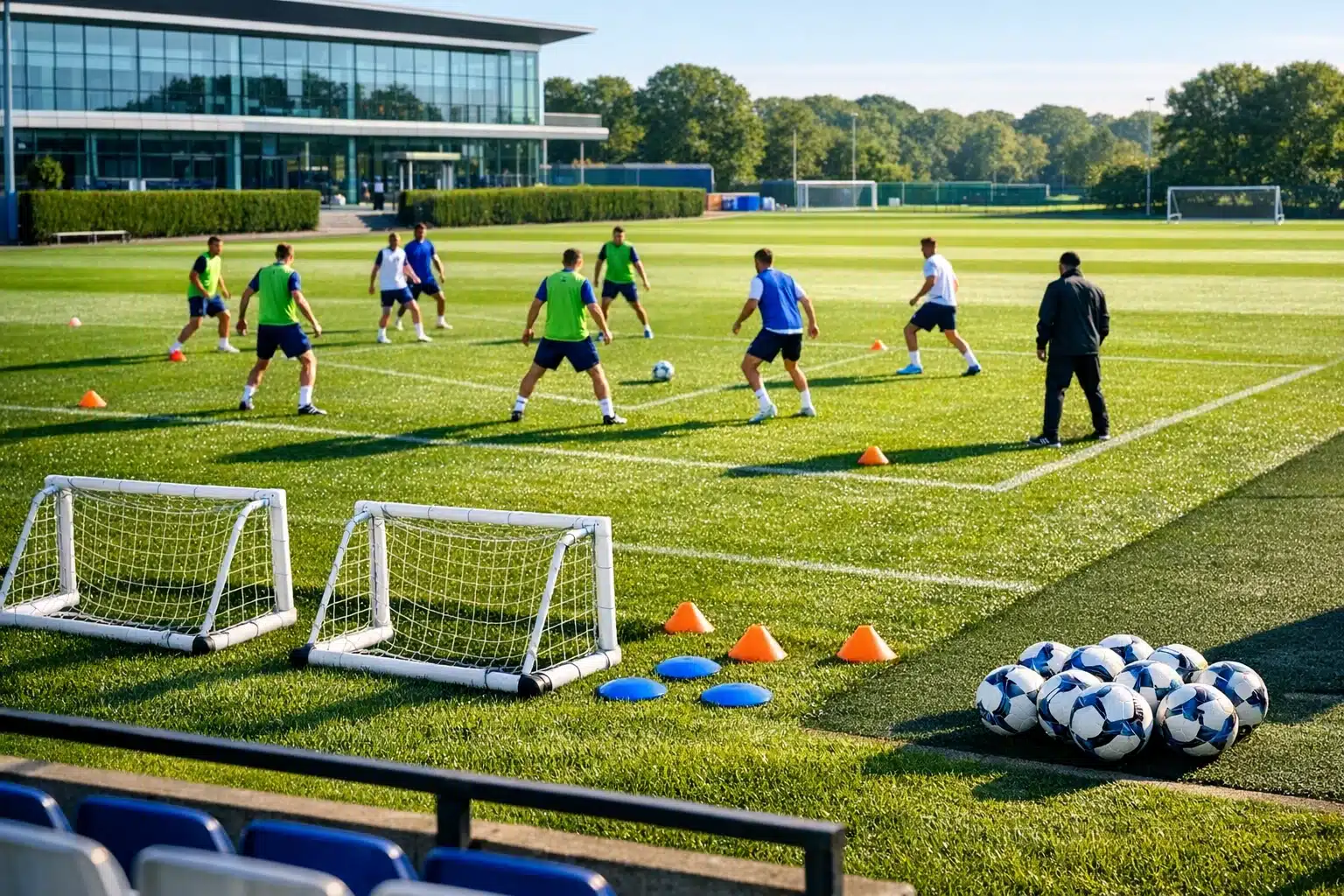
Player development has changed in response. Youth academies emphasize technical repetition, tactical literacy, nutrition, recovery, and psychological resilience. Many professionals begin structured training young, but unstructured play still matters. Street football, playground matches, and small-sided games often develop improvisation, balance, and bravery in possession. The best pathways usually combine both worlds: discipline from formal coaching and creativity from freer environments.
At the performance level, coaches monitor a wide range of indicators:
• first touch and ball security under pressure
• scanning, or how often players check their surroundings before receiving
• sprint capacity and repeat high-intensity effort
• passing range, body orientation, and decision speed
• emotional control after mistakes or difficult refereeing moments
Physical data shows how demanding elite football has become. Teams can cover well over 100 kilometers combined in a match, with repeated accelerations placing heavy strain on muscles and joints. Recovery protocols, sleep monitoring, and individualized conditioning are now routine at top clubs. Even so, football remains unpredictable because the mental side is equally important. A player may have ideal fitness and still struggle if confidence dips or tactical instructions are unclear.
For young players, the biggest lesson is that development is rarely linear. Some peak early, others grow through late physical changes or improved understanding of the game. Coaches and parents often focus too heavily on standout moments, but consistent habits matter more over time. Can the player receive on the half-turn, track runners, communicate, and keep making good decisions after losing the ball? Those quieter details often predict progress better than highlight clips. In football, talent opens the door, but learning, adaptability, and discipline keep it open.
Modern Football Updates: Technology, Analytics, Scheduling, and the Changing Game
Football has always evolved, but recent changes have accelerated the pace of that evolution. One major shift has been the use of technology in officiating. Video Assistant Referee, commonly known as VAR, was introduced to reduce clear and obvious errors in key moments such as goals, penalties, red cards, and mistaken identity. Supporters praise it for correcting some important mistakes, while critics argue that long delays and forensic offside checks can disrupt the emotional rhythm of the sport. Both views contain truth. VAR has increased accuracy in several situations, but it has also changed how fans experience the instant release of a goal celebration.
Another transformation is the growth of analytics. Clubs now use performance departments to study expected goals, passing networks, pressing patterns, injury risk, recruitment trends, and even opponent throw-in routines. Data does not eliminate uncertainty, yet it improves decision quality. Recruitment is a clear example. Instead of relying only on reputation or highlight videos, clubs can compare players through possession value, defensive duel success, progressive carries, and age-related development curves. That can help smaller clubs compete more intelligently against wealthier rivals.
Sports science has also reshaped preparation. Training loads are managed more carefully, and staff monitor fatigue through GPS, wellness reports, and strength testing. The modern calendar is crowded, with domestic leagues, cups, continental competitions, international breaks, and summer tournaments compressing recovery windows. As a result, squad depth matters more than ever. Rule changes allowing five substitutions in many competitions have reinforced that trend by giving coaches greater tactical flexibility and helping manage player workload.
Several current updates are especially influential:
• semi-automated offside systems that speed up some review processes
• specialized set-piece coaching, now a serious competitive advantage
• broader investment in women’s football, producing stronger leagues and visibility
• greater scrutiny of club finances, ownership models, and sustainability
The rise of women’s football deserves special attention. Attendances, broadcast interest, and youth participation have grown substantially in many countries, and recent international tournaments have pushed the sport to wider audiences. This is not simply an add-on to the men’s game; it is a major sporting development with its own tactical trends, stars, and commercial momentum. Better infrastructure, media coverage, and professional conditions are improving the level of competition and expanding the game’s cultural footprint.
At the same time, football faces tensions it cannot ignore. Crowded calendars raise injury concerns. Ticket prices can strain the bond between clubs and local supporters. Financial inequality can make some leagues feel predictable even when individual matches remain dramatic. The sport’s future will depend on how well it balances innovation with fairness, spectacle with accessibility, and global growth with local identity. Football is changing fast, but the challenge is not only to modernize. It is to modernize without losing the heartbeat that made the sport beloved in the first place.
Conclusion for Fans, Players, and Curious Newcomers
If you are a fan, football becomes far more rewarding when you start watching beyond the ball. Notice how teams compress space, how midfielders scan before receiving, and how full-backs choose their moments to advance. A scoreline tells you what happened, but structure explains why it happened. The most interesting matches are often not the loudest ones. Sometimes the real story sits in a defensive line stepping up two meters, a winger tracking back at the right moment, or a substitute changing the rhythm with fresh pressing energy. Once you begin to see those layers, football opens like a map that keeps adding detail.
If you are a player, the key message is encouraging and demanding at the same time. Improvement rarely comes from one dramatic leap. It comes from repeated clean touches, sharper awareness, stronger habits, smarter recovery, and the willingness to learn from poor games without being defined by them. Technical skill matters, but so does timing. Fitness matters, but so does calmness. The strongest players are often the ones who can absorb information quickly and still play with courage when matches become chaotic.
If you are a parent, coach, or teacher, football offers more than competition. It can teach cooperation, resilience, emotional control, and accountability. A good environment does not crush creativity in the name of order, and it does not ignore discipline in the name of fun. The best developmental spaces usually mix both. Young players need room to experiment, yet they also need guidance on positioning, respect, preparation, and teamwork.
Here are practical ways to engage with the game more intelligently:
• when watching, track off-ball movement for five-minute stretches
• compare styles rather than only judging results
• value decision-making as much as flashy technique
• treat set pieces and transitions as central parts of the game, not side notes
• remember that development in football is uneven, especially in youth players
Football remains relevant because it combines simplicity with depth. The rules are accessible, but the interpretation is infinite. One weekend can bring a scrappy relegation battle, a tactical masterclass in a title race, and a youth match where the joy of the game is plain on every face. That range is part of the magic. For the committed supporter, the aspiring player, and the curious newcomer alike, football rewards attention. The more carefully you watch it, the more vividly it speaks.