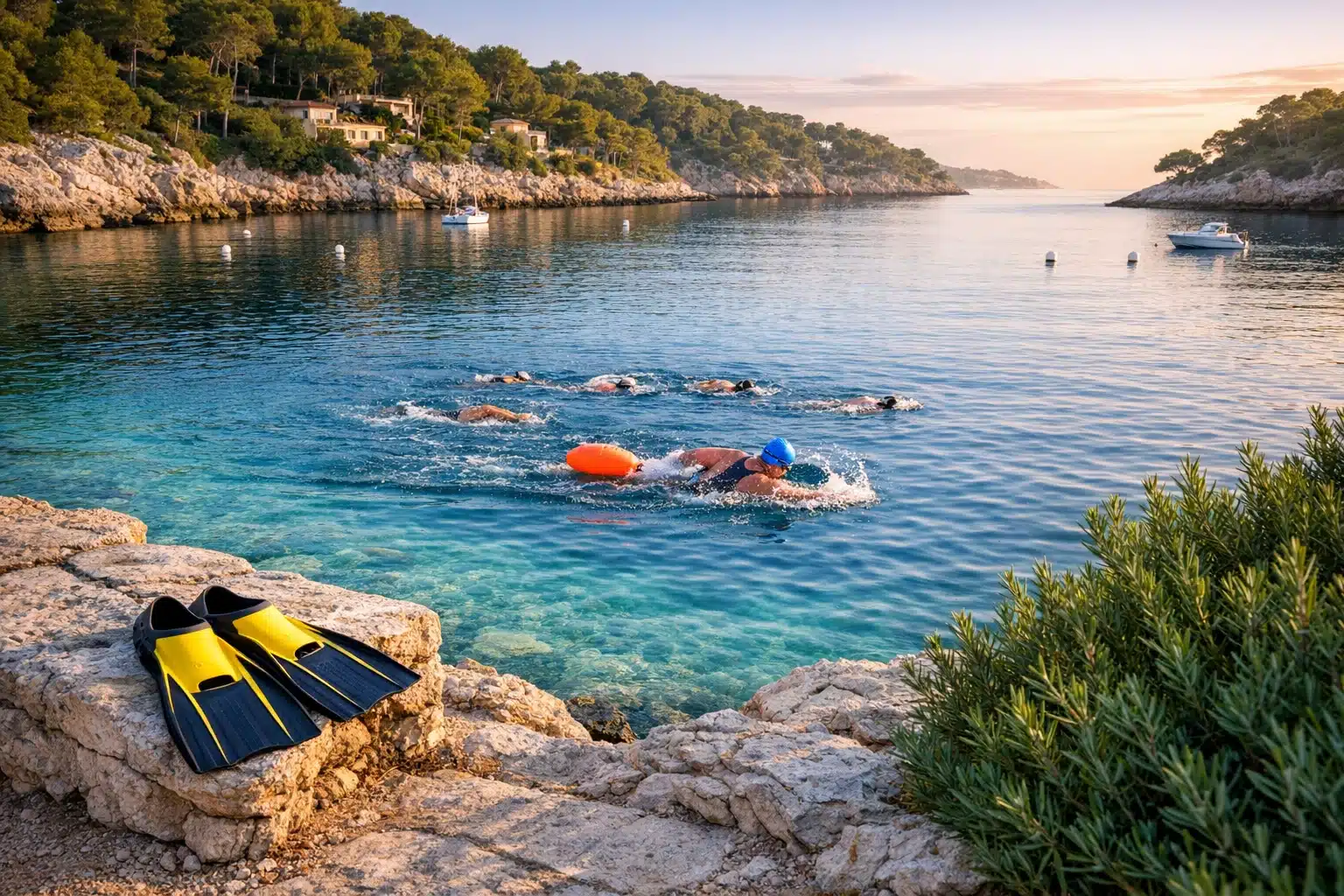
Explore the world of swimming
Swimming is one of those rare activities that can feel playful on a bright afternoon and deeply purposeful in a marked lane. It matters because it combines survival skill, exercise, recovery, and sport in a form that suits many ages and abilities. From a child learning to float to an adult rebuilding stamina, water offers resistance without the repeated impact common on land. This article begins with a clear outline, then explores technique, health, safety, and the habits that turn occasional laps into a lasting practice.
Article Outline
• Swimming as a life skill, cultural tradition, and modern sport
• Physical and mental benefits, with practical context for everyday health
• The main strokes, their differences, and the technique basics behind efficient movement
• Safety principles, learning progression, and useful equipment for pools and open water
• A final guide for readers who want to build a realistic routine and enjoy swimming over time
Swimming as a Life Skill, Recreation, and Competitive Sport
Swimming has a wider identity than many people first assume. It is not only a sport performed in Olympic pools or weekend meets. It is also a life skill, a recreational pastime, a rehabilitation tool, and in many places a cultural tradition tied to rivers, coasts, and community pools. That breadth is one reason swimming remains so relevant. A person may begin with a practical goal such as learning basic water safety, then discover the steady rhythm of lap training, the thrill of open water, or the social energy of club sessions.
Historically, swimming has been practiced for thousands of years. Ancient societies recorded it in art and writing, often treating it as a useful and even essential skill. In the modern era, organized swimming became a major competitive discipline, and it has been part of the Olympic Games since the earliest editions of the modern movement, with women’s events added later as the sport expanded. Today, swimming ranges from local learn to swim programs to elite international competition, showing how one activity can serve very different purposes without losing its core identity.
What makes swimming especially distinctive is its flexibility. A person can enter the water for fun, training, therapy, or confidence building. In a single week, the same pool might host toddlers in lessons, older adults doing gentle exercise, serious athletes swimming intervals, and friends simply cooling off after work. Few activities comfortably span such different needs.
Swimming also stands apart because the environment changes the experience. Water supports the body, slows movement, and gives constant feedback. Every kick and pull meets resistance. Every breath must be timed. The result is an activity that can feel quiet and meditative one day, then fiercely competitive the next. In that sense, swimming is almost a conversation with the water: if your movement is rushed or awkward, the water tells you immediately.
Its modern forms are equally diverse:
• Pool swimming emphasizes structure, measurable distances, and technical control.
• Open water swimming adds navigation, weather, and natural conditions.
• Competitive swimming prioritizes speed, turns, starts, and race strategy.
• Recreational swimming focuses more on comfort, enjoyment, and confidence.
That range matters for beginners and experienced swimmers alike. You do not need to become a racer to benefit from the sport, and you do not need to begin in childhood to enjoy it. Swimming meets people where they are, then quietly invites them to go a little farther.
Physical and Mental Benefits of Swimming
Swimming is often praised as a full body workout, and that description is well earned. Unlike exercises that mainly stress one region of the body, swimming involves the arms, shoulders, chest, back, core, hips, and legs in coordinated patterns. Water is far denser than air, so even simple movement creates resistance. That means a steady session can challenge strength and endurance at the same time. Yet because the body is buoyant in water, the joints usually experience less repeated impact than they would during activities such as running or jumping.
For many adults, this combination is the main appeal. Swimming can help build cardiovascular fitness while feeling gentler on knees, ankles, and hips. Public health guidance commonly recommends at least 150 minutes of moderate aerobic activity each week for adults, and swimming can contribute meaningfully to that target. Intensity can also be adjusted with unusual precision. A relaxed set of easy laps feels very different from a hard interval session, even though both happen in the same lane.
Its benefits are not only physical. Swimming can be mentally settling in a way that surprises new participants. The repeated patterns of stroke, breathing, and turning at the wall can create a focused rhythm that leaves little room for background stress. Many swimmers describe a session as mentally clarifying because attention narrows to movement, pace, and breath. That does not mean swimming is a cure for anxiety or low mood, but regular exercise is widely associated with better emotional well-being, and swimming fits naturally into that picture.
There are also practical reasons people choose it over other forms of training:
• It can be scaled from very gentle movement to high level conditioning.
• It suits solo exercise and group practice equally well.
• It develops aerobic capacity without relying on heavy external equipment.
• It can remain accessible across different life stages, from childhood to older adulthood.
Another advantage is posture and coordination. Efficient swimming depends on body alignment, timing, and controlled breathing. As technique improves, many swimmers become more aware of how they hold tension, rotate through the torso, and stabilize their core. This technical side makes the workout feel purposeful rather than random.
Calorie use in swimming varies greatly with stroke, intensity, body size, and skill level, so broad estimates should be treated carefully. Still, the larger point holds: swimming can be a serious training tool, a sustainable form of movement for general health, or a welcome reentry point for people returning to exercise. In a world crowded with short-lived fitness trends, that kind of long-term usefulness gives swimming unusual staying power.
The Main Strokes and the Technique Behind Efficient Swimming
At first glance, swimming may look simple: get across the pool and come back again. In practice, the sport is technical, and that is part of its fascination. Small changes in head position, hand entry, breathing timing, or kick rhythm can alter speed, comfort, and energy use. The four competitive strokes freestyle, backstroke, breaststroke, and butterfly each ask the body to solve movement in a different way. Learning their differences helps swimmers understand both the art and mechanics of the sport.
Freestyle, usually swum with the front crawl, is the fastest and most widely used stroke. It relies on a streamlined body position, alternating arm pulls, a flutter kick, and side breathing. Because it is efficient at many speeds, freestyle is often the first stroke taught for lap swimming. Good freestyle is less about splashing hard and more about reducing drag. A balanced body line, relaxed recovery, and effective catch make a major difference. The best swimmers seem to slide through the lane rather than fight it.
Backstroke uses a similar alternating pattern but is performed on the back. This changes orientation, breathing, and spatial awareness. Because the face stays above water, some learners find breathing easier. At the same time, swimming straight while looking upward requires practice. Backstroke encourages body rotation and can help swimmers understand how hips and shoulders work together.
Breaststroke is slower in racing terms but often appealing to recreational swimmers because the head can come forward more naturally. Its timing is highly specific: pull, breathe, kick, glide. When done well, it looks smooth and economical. When done poorly, it can become tiring and inefficient. The kick is especially technical and often takes time to learn properly.
Butterfly is the most demanding of the four. It uses simultaneous arm recovery, a dolphin kick, and wave-like body motion. It requires coordination, power, and rhythm, which is why beginners typically encounter it later. Yet butterfly also teaches an important lesson about all swimming: force alone is not enough. Timing matters more than raw effort.
Several technique principles apply across strokes:
• Body position should stay long and balanced to reduce drag.
• Exhaling into the water makes breathing calmer and more controlled.
• The kick supports alignment and rhythm; it should not always do all the work.
• Relaxation matters. Tension wastes energy quickly.
For developing swimmers, drills are valuable because they isolate one skill at a time. Kick sets improve balance and propulsion. Pull sets highlight arm mechanics. Single arm drills reveal timing errors. Video analysis, when available, can also be eye opening, since what a stroke feels like and what it looks like are often two very different things. Swimming rewards patience here. Technique rarely changes in one dramatic leap. It sharpens lap by lap, almost invisibly, until the water begins to feel less like resistance and more like a partner.
Safety, Learning Progression, and Essential Equipment
Swimming is enjoyable and beneficial, but it should never be separated from safety. Water can look calm while still demanding respect, and confidence is not the same as competence. This is one reason structured learning matters so much. Global public health agencies, including the World Health Organization, continue to identify drowning as a serious issue worldwide, with hundreds of thousands of deaths occurring each year. That statistic alone explains why swimming should be taught not merely as recreation, but as a practical life skill.
The learning process is most effective when it follows a progression. Beginners do better when they build comfort first, then control, then endurance. Rushing ahead often produces panic, fatigue, or poor habits. A sensible progression usually includes entering and exiting safely, blowing bubbles, submerging the face, floating on the front and back, gliding, kicking with support, and then combining breathing with coordinated arm movement. Adults can and do learn these skills successfully, even if early experiences with water were limited or uneasy.
Supervision is another essential piece. Children require close, active supervision around any body of water, and non swimmers should never be left to improvised flotation devices as a substitute for attention. For adults, the risks shift rather than vanish. Overestimating endurance, swimming alone in open water, ignoring weather, or treating cold water casually can all create dangerous situations.
Safety habits worth treating as standard include:
• Learn basic floating, treading water, and safe breathing before attempting longer swims.
• Follow pool rules and lane etiquette to reduce collisions and confusion.
• In open water, check currents, visibility, water temperature, and access points.
• Use a brightly colored tow float or cap for visibility when appropriate.
• Never assume that general fitness automatically translates into water competence.
Equipment should support learning, not replace it. The essentials are simple: a comfortable swimsuit, well fitting goggles, and in many settings a swim cap. Beyond that, training tools can help when used with purpose. Kickboards assist with leg work and body position. Pull buoys reduce the role of the legs so swimmers can focus on the upper body. Fins can improve propulsion and help learners feel streamlined, though they should not become a permanent crutch. More advanced swimmers may use paddles, snorkels, or tempo trainers, but these work best when technique is already reasonably stable.
Open water adds another layer of preparation. Unlike the pool, there are no lane ropes, black lines, or guaranteed walls nearby. Sighting, navigation, and environmental judgment become part of the skill set. The water may be beautiful, but it is never decorative background. Safety begins when swimmers treat it as the main reality of the activity, not an afterthought.
Conclusion: Building a Swimming Habit That Lasts
If you are the kind of reader who likes practical takeaways, this is where swimming becomes especially useful. It does not demand that everyone pursue the same goal. One person may want stress relief after work. Another may need low impact conditioning during injury recovery. A parent may be focused on water confidence for a child, while an older adult may simply want a sustainable way to stay active. Swimming has room for all of them, which is why it often becomes less of a phase and more of a habit.
The best way to begin is modestly. Many people quit not because swimming failed them, but because they tried to do too much too soon. Two or three short sessions per week are enough to establish rhythm. A beginner might start with a pattern such as easy warm up, a few technique drills, several short lengths with rest, and a calm finish. As comfort improves, distance, pace, and variety can increase. The structure does not need to be complicated to be effective.
A sustainable routine often includes:
• One session focused on relaxed technique and breathing control
• One session built around short intervals for fitness
• One optional session devoted to easy continuous swimming or skill practice
• Planned recovery, especially after harder efforts
• Small goals, such as smoother turns, more even pacing, or greater confidence in deeper water
For readers who feel intimidated, it helps to remember that progress in swimming is rarely loud. Improvement often appears quietly: fewer stops at the wall, calmer breathing, cleaner body position, more trust in the water. Those changes may seem small, but they are the foundation of real competence. In that sense, swimming teaches patience as much as fitness.
It also rewards community. Lessons, masters groups, recreational clubs, and local pool sessions can make the sport easier to maintain. Shared lanes, friendly advice, and visible progress from others often keep motivation alive better than solitary ambition alone. At the same time, swimming also offers solitude when needed. There is something deeply satisfying about the sound of bubbles, the black line below, and the steady return to the wall.
For the target audience of curious beginners, returning adults, and health minded readers, the message is simple: swimming is worth learning well. It offers exercise with range, technique with depth, and safety skills with obvious real world value. You do not need to chase medals to justify your time in the pool. You only need a reason to start, a willingness to learn, and enough patience to let the water teach you what efficient movement feels like. Once that happens, swimming stops being just another activity and becomes a skill you carry for life.