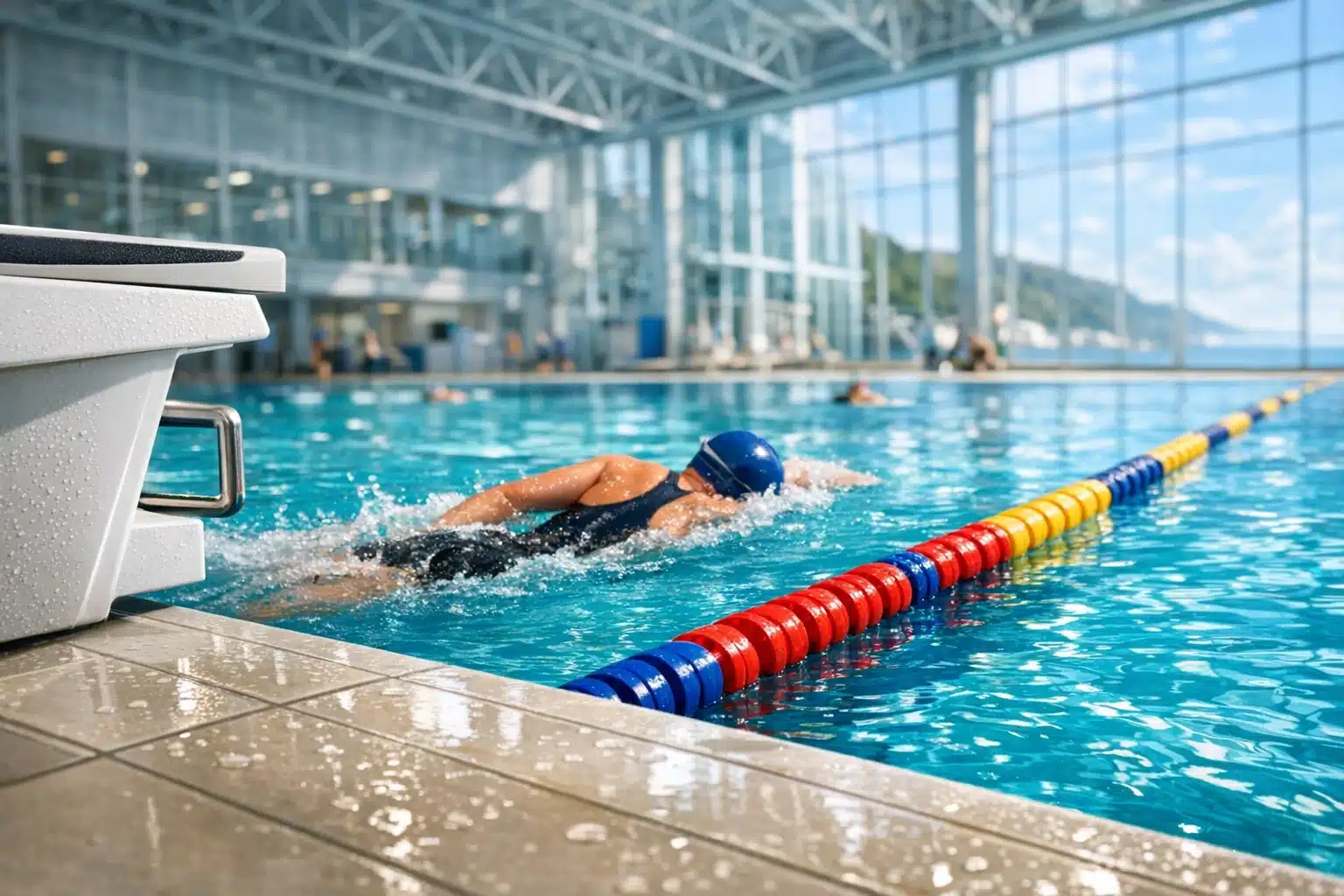
Explore the world of swimming
Why Swimming Matters and How This Article Is Structured
Swimming sits at a rare crossroads where sport, survival, relaxation, and lifelong fitness meet in the same stretch of water. A child learning to float, a triathlete chasing seconds, and an older adult protecting joint health can all find something valuable in the pool. Because it blends technique with endurance, it rewards patience as much as power. This article maps that broad landscape, from history and health benefits to training habits, safety, and the culture that keeps people coming back.
The human relationship with water is ancient. Rock art in the Sahara, often linked to the so-called Cave of Swimmers, suggests that people were depicting swimming thousands of years ago. In practical terms, moving through water began as a survival skill and gradually became recreation, military training, therapy, and organized sport. Competitive swimming entered the first modern Olympic Games in 1896 for men, while women’s events were added in 1912, marking a broader shift toward formal rules, standardized pools, and measurable performance. What once happened in rivers, lakes, and coastal waters became a discipline of lanes, clocks, and carefully practiced turns. Even so, the emotional core has not changed very much. Entering water still feels like crossing into a different physical world, where movement slows, sound softens, and breathing becomes deliberate.
To make the topic useful rather than abstract, the article follows a clear path:
• first, the broad value of swimming and its place in daily life;
• next, the physical and mental benefits supported by practical evidence;
• then, a comparison of major strokes and the techniques that make them work;
• after that, training methods, equipment choices, and progression for beginners and experienced swimmers;
• finally, safety, etiquette, access, and a concluding guide for readers deciding how to build swimming into their own routine.
This structure matters because swimming is often misunderstood in two opposite ways. Some see it only as elite sport, full of stopwatches and punishing sets. Others treat it as effortless exercise simply because the water feels gentle. Reality sits in the middle. Swimming can be intensely demanding, yet it is also adaptable enough for rehabilitation, general health, and leisure. That flexibility is what makes the subject so relevant today. In a time when many people want exercise that supports cardiovascular health, respects the joints, and breaks the monotony of land-based workouts, swimming offers a compelling answer.
The Physical and Mental Benefits of Swimming
Few activities train the body as evenly as swimming. Unlike many land sports, it asks the upper body, core, hips, and legs to cooperate in a single chain of motion. The water also provides resistance in every direction, which means even gentle movement demands effort. At the same time, buoyancy reduces impact on joints. A person standing in water up to the chest bears far less body weight than on land, which helps explain why swimming is often recommended for people managing arthritis, recovering from injury, or returning to exercise after a long break. That combination of support and resistance is one of the sport’s greatest strengths.
From a cardiovascular perspective, regular swimming can contribute to the same broad goals associated with other forms of aerobic exercise. Public health guidance commonly recommends at least 150 minutes of moderate-intensity activity per week for adults, and lap swimming can count toward that target. Energy expenditure varies by stroke, pace, body size, and fitness level, but moderate to vigorous sessions often burn a meaningful number of calories over an hour. More important than the exact number on a watch or app is consistency. A swimmer who completes three thoughtful sessions every week will usually gain more than someone who attacks the pool once a month with heroic intentions and then disappears.
The mental side is equally significant. Water changes perception. Noise becomes muffled, screens vanish, and breathing settles into a rhythm. For many people, that rhythmic pattern creates a meditative effect. There is a reason swimmers often describe a session as a reset button rather than merely a workout. Repeating strokes length by length can reduce mental clutter, especially when the body is moving at a sustainable pace. In this sense, swimming resembles running or cycling, yet it offers a stronger feeling of enclosure and sensory focus. The lane becomes a narrow private world where worries cannot follow at full speed.
Swimming also serves different populations unusually well:
• children gain water confidence and essential safety skills;
• office workers counteract long hours of sitting with full-body movement;
• older adults can exercise with less pounding on knees and hips;
• athletes in other sports use pool sessions for conditioning or recovery.
There are trade-offs, of course. Access to a pool or safe open water is not universal, technique can be frustrating at first, and beginners may find breathing patterns awkward. Still, the benefit-to-barrier ratio is favorable. Compared with some gym routines that isolate muscles or demand specialized strength from the start, swimming lets people progress in layers: floating, gliding, breathing, then building endurance. That gradual ladder is a major reason it remains valuable across decades of life rather than during only one athletic phase.
Strokes, Technique, and the Art of Moving Efficiently Through Water
Swimming rewards efficiency more than brute force. On land, a runner can sometimes push harder and overpower a mistake in form for a while. In water, poor mechanics immediately become expensive. A dropped elbow, a rushed breath, or a bent body line creates drag, and drag is the hidden opponent in every lane. That is why technique matters so much. Skilled swimmers do not appear fast only because they are strong; they look smooth because they waste less energy resisting the water around them.
The four main competitive strokes each have a distinct personality. Freestyle, usually performed as front crawl, is the fastest and generally the most efficient over distance. Its alternating arm recovery and flutter kick allow continuous propulsion, making it the default choice for fitness swimmers, distance racers, and triathletes. Backstroke shares the alternating rhythm of freestyle but shifts orientation and breathing comfort, since the face remains above the surface. Many learners find it relaxing, though keeping a straight line without lane-rope guidance can be surprisingly tricky. Breaststroke is slower, with a glide phase and a simultaneous kick that many recreational swimmers enjoy because the head can surface more naturally. Butterfly is the most demanding of the four, requiring timing, mobility, and coordinated power; when executed well, it looks less like exercise and more like choreography written in splashes.
Technique can be broken into a few universal ideas:
• body position: a long, balanced line reduces resistance;
• breathing: calm timing prevents panic and protects rhythm;
• catch and pull: the hand and forearm should anchor water rather than slap at it;
• kick: useful support should complement the stroke instead of creating chaos;
• rotation or timing: each stroke has a specific sequence that keeps force connected.
Consider freestyle as an example. Efficient swimmers keep the head neutral, the hips near the surface, and the breath small. Instead of lifting the face forward, they rotate to the side just enough to inhale, then return the gaze downward. A common beginner mistake is trying to sprint every length with windmill arms. That usually leads to sinking legs, rushed breathing, and exhaustion after a short distance. Slowing down often improves speed in the medium term because it allows the swimmer to feel the water and hold shape.
Comparisons between strokes also reveal why one style may suit a particular goal better than another. For fitness and continuous laps, freestyle usually gives the best return on time. For mobility and posture awareness, backstroke offers a refreshing contrast. For coordination and controlled pacing, breaststroke can be valuable. For developing power and rhythm, butterfly has few equals, though it is not the easiest place to begin. The beauty of swimming lies here: every stroke teaches something different, and each one changes the conversation between body, breath, and water.
Training, Equipment, and Building Progress From Beginner to Advanced Swimmer
A good swimming plan begins with honesty. Not everyone needs a race schedule, a smart watch full of metrics, or a collection of specialized gear. Many people simply need a repeatable routine that makes them more confident and less tired in the water. For a beginner, that might mean two or three sessions per week focused on short repeats, rest intervals, and basic technique. For an experienced swimmer, it may involve structured sets with pace targets, stroke variation, and aerobic or threshold work. The principle is the same in both cases: progress comes from manageable consistency, not from dramatic one-day efforts.
A practical starter session can be simple. Begin with easy lengths to loosen the shoulders and settle the breath. Follow with drills that isolate one skill, such as side breathing, kick timing, or body rotation. After that, complete a main set of short repeats with rest, for example several lengths at a steady pace rather than one long struggle. Finish with an easy cooldown. This format works because it teaches control. A swimmer who pauses between repeats can preserve technique long enough to learn from the session instead of merely surviving it.
Equipment should support learning rather than distract from it. A basic kit often includes:
• goggles that seal comfortably without squeezing too hard;
• a cap for hair control and slightly reduced drag;
• a kickboard for isolated leg work;
• a pull buoy to emphasize upper-body mechanics;
• fins, used carefully, to help body position and ankle mobility;
• a training snorkel, which can simplify breathing while drilling alignment.
There is a useful comparison to be made between pool swimming and open-water swimming. The pool is controlled, measurable, and ideal for skill development. Distances are known, walls provide natural breaks, and lane lines create order. Open water is less predictable and often more emotionally demanding. Sighting replaces black lines on the pool floor, temperature matters more, and waves can disrupt rhythm. Yet many swimmers find open water deeply rewarding because it restores a sense of adventure. A lake at dawn or a calm sea at sunset can make a lane pool feel almost mechanical by comparison.
Advanced progress usually depends on three ingredients: technical refinement, aerobic development, and intelligent recovery. Dryland strength training can help, especially for shoulder stability, core control, and general resilience, but it should complement rather than replace good mechanics in the water. Sleep, nutrition, and recovery days matter too. Because swimming feels smooth on the joints, people sometimes underestimate fatigue and overload the shoulders. Sensible progression is therefore essential. Add volume gradually, vary intensity across the week, and treat form as the foundation rather than the decoration. In swimming, polished basics are never truly basic; they are the engine.
Safety, Etiquette, and a Practical Conclusion for New and Returning Swimmers
Swimming carries immense benefits, but it also demands respect. Water is welcoming until it is not. That is why safety must sit beside technique from the very beginning. Learning to float, tread water, and exit a pool confidently matters just as much as learning a pretty freestyle stroke. In broader public health terms, this is not a minor issue. Global health organizations regularly report hundreds of thousands of drowning deaths each year worldwide, a reminder that water competence is both a personal skill and a community responsibility. Supervision, barriers around home pools, and formal lessons for children all make a measurable difference.
For adults, safety often looks less dramatic but is equally important. Swim where lifeguards are present when possible. Respect posted rules about lane direction, diving areas, and water conditions. In open water, avoid swimming alone, use a visible tow float where appropriate, and understand currents, temperature, and weather before entering. Cold water, in particular, can shock even confident athletes. A strong pool swimmer may feel suddenly ordinary in a choppy lake, and that humility is healthy. Water does not care about ego, only preparation.
Etiquette also improves the experience for everyone. Shared lanes work best when swimmers choose a suitable speed, leave reasonable space at the wall, and avoid stopping in the middle of an active lane. These habits sound small, yet they shape whether a public pool feels stressful or welcoming. For nervous beginners, a friendly environment can be the difference between returning next week and giving up entirely. Swimming culture is often built through such modest acts of consideration.
Here is the key takeaway for the target audience, especially beginners, casual fitness swimmers, and people returning after years away: you do not need to master every stroke or train like a racer to benefit from swimming. Start with comfort in the water. Add technique one piece at a time. Build endurance through short, repeatable sessions. Ask for instruction when breathing or body position feels confusing. Progress in the pool rarely arrives as a sudden breakthrough; it usually appears quietly, in the moment when one more length feels calm instead of chaotic.
In the end, swimming offers something rare in modern life. It can be practical and poetic at once. It teaches survival, supports health, sharpens discipline, and creates moments of almost weightless stillness between strokes. If you are deciding whether to begin, return, or deepen your practice, the answer is simple: start where you are, learn carefully, and let the water teach you how to move forward.