Explore the world of swimming
Whether you first meet the water in a school pool, a hotel lane, or the rolling edge of the ocean, swimming has a way of feeling both ancient and immediate. It is part survival skill, part athletic craft, and part moving meditation. The body learns to cooperate with resistance instead of fighting it, while the mind grows quieter with each measured breath. That unusual combination makes swimming relevant to health, sport, safety, and everyday life.
This article follows a clear route before diving deeper into each topic.
- It begins with the physical and mental value of swimming.
- It then explains the main strokes and the mechanics that shape efficient movement.
- Next comes training, equipment, and practical ways to improve.
- It also covers safety, etiquette, and the special demands of open water.
- Finally, it closes with a reader-focused conclusion on how swimming can fit different ages, goals, and lifestyles.
Why Swimming Matters for Fitness, Health, and Daily Life
Swimming remains one of the most versatile physical activities because it combines aerobic exercise, muscular work, coordination, and breath control in one environment. Unlike many sports that ask the body to absorb repeated impact, swimming spreads effort through the water. That matters for people who want a hard workout without the pounding that often comes with running, court sports, or high-impact classes. Water supports a large portion of body weight, which can make movement more comfortable for older adults, people returning from injury, and those managing joint discomfort. At the same time, the water does not make exercise easy. In fact, it adds constant resistance in every direction, so even simple movements demand controlled effort.
From a cardiovascular perspective, swimming can contribute meaningfully to the activity goals commonly recommended for adults, such as 150 minutes of moderate exercise per week. Lap swimming raises heart rate, challenges the lungs, and can improve endurance over time. Depending on stroke, pace, and body size, an hour of swimming may burn roughly 400 to 700 calories, which places it in the same broad conversation as other serious workouts. The exact number varies, but the principle is clear: water can humble even strong athletes. A few fast lengths often reveal how quickly technique and conditioning interact.
The mental side deserves equal attention. Many swimmers describe the sport as calming because it creates a rhythm of glide, pull, kick, and breath. There is less screen noise, less conversational clutter, and often a welcome sense of enclosure. A pool can feel almost like a moving library, quiet but full of purpose. Research on physical activity consistently shows that regular exercise can support mood, reduce stress, and improve sleep, and swimming fits naturally within that larger pattern.
Its practical value also extends beyond fitness.
- It is a life skill linked to personal safety around water.
- It can be recreational, social, or highly competitive.
- It suits many body types and can be scaled from gentle movement to elite training.
- It offers year-round options through indoor pools, outdoor facilities, lakes, and coastal settings.
That broad usefulness explains why swimming appears in school programs, rehabilitation plans, family vacations, triathlon training, and Olympic competition alike. Few activities travel so easily between leisure and discipline. One day it is a slow recovery session; the next, it becomes a demanding interval workout. For many readers, that flexibility is exactly the point. Swimming does not ask everyone to chase medals. It simply offers a durable, rewarding way to move well through life.
Understanding the Main Strokes and the Technique Behind Efficient Movement
To an untrained eye, swimming can look like a simple act of moving forward through water. In practice, it is a technical skill shaped by body position, timing, propulsion, and breathing. The four main competitive strokes are freestyle, backstroke, breaststroke, and butterfly, and each teaches something different about movement. Freestyle is usually the first stroke people learn for lap swimming because it is comparatively efficient and adaptable. When swimmers say “doing laps,” they often mean freestyle. It relies on a streamlined body position, alternating arm recovery, steady kicking, and side breathing. Good freestyle feels less like splashing through water and more like sliding across it with intent.
Backstroke shares some structural features with freestyle, but the swimmer remains face-up. That makes breathing easier for beginners, though body alignment can be harder to judge without a visual line forward. It encourages balance, shoulder mobility, and awareness of rotation. Breaststroke is slower in racing terms, yet it is popular recreationally because the head can rise more often and the pace can feel controlled. The trade-off is that breaststroke requires careful timing between the pull, breath, kick, and glide. Poor timing turns it into a tiring stop-start effort. Butterfly, by contrast, is the most demanding stroke for many swimmers. It uses a simultaneous arm action and dolphin kick, requiring strength, rhythm, and flexibility. When done well, it looks dramatic and smooth, almost like the swimmer is being lifted by the water. When done poorly, it feels like negotiating with a very stubborn tide.
Beyond stroke names, several technical principles apply across all styles.
-
Body position matters. A horizontal, balanced line reduces drag and makes every kick and pull more effective.
-
Breathing must be timed, not rushed. Lifting the head too high often causes the hips and legs to sink.
-
Propulsion works best when the hands and forearms “hold” the water instead of slapping at it.
-
Consistency beats force. Smooth repetition usually travels farther than raw effort spent badly.
Water is about 800 times denser than air, so small technical errors become surprisingly expensive. A dropped elbow, a stiff ankle, or a late breath can waste energy every length. That is why coaching cues often sound precise: lengthen the spine, rotate from the hips, press the chest lightly, finish the stroke. These details are not cosmetic. They help turn effort into forward motion.
Comparing strokes also reveals how different goals shape technique. Freestyle is generally fastest and best for sustained training. Breaststroke offers a more deliberate rhythm and is often preferred for relaxed swimming. Backstroke can be kind to the neck and useful for balance in training plans. Butterfly builds power and body awareness, though it demands patience to learn. Together, the strokes form a toolkit. Even swimmers who never race benefit from understanding them, because technique is what transforms swimming from exhausting survival into efficient, enjoyable travel through water.
Training, Equipment, and Practical Ways to Improve in the Pool
One reason swimming appeals to such a wide audience is that progress can be measured in many ways. Some swimmers track distance, others focus on time, and many simply want a smoother, less tiring experience in the water. Improvement usually comes from a combination of frequency, technique work, and manageable structure. Swimming once in a while can still be enjoyable, but regular sessions produce the most noticeable change. Two or three swims per week are enough for many people to build familiarity, fitness, and confidence. The key is not heroic volume. It is repeatable practice.
A balanced session often includes four parts: warm-up, drills, main set, and easy recovery. The warm-up prepares the shoulders, hips, and breathing rhythm. Drills isolate one skill at a time, such as kicking with a board, fingertip drag for freestyle recovery, or single-arm backstroke to improve rotation. The main set provides the day’s training challenge, perhaps short intervals for speed or longer repeats for endurance. An easy finish helps lower effort and reinforce relaxed technique. This structure works because swimming is highly technical. If fatigue arrives before form develops, swimmers often rehearse bad habits instead of good ones.
Equipment can support learning, though it should not replace skill. Common tools include:
-
Goggles, which improve visibility and comfort in chlorinated or open water environments.
-
A well-fitted swimsuit or jammers, which allow unrestricted movement.
-
A kickboard, useful for isolating leg work and body position.
-
A pull buoy, which helps swimmers focus on upper-body mechanics.
-
Fins, which can build ankle flexibility and help beginners feel streamlined movement.
-
A pace clock or waterproof watch, which makes interval training more precise.
However, tools are only as useful as the intention behind them. A swimmer using fins for every set may feel faster without actually learning better propulsion. Likewise, a pull buoy can mask poor balance if it becomes a permanent crutch. Progress is usually strongest when equipment serves a lesson, not an identity.
Comparisons between beginner and advanced training also reveal an important truth. Experienced swimmers often make hard work look calm because they waste less motion. A new swimmer may fight through 500 meters with uneven breathing, while a trained swimmer can cover much more distance using less visible strain. That difference is not magic. It is economy. Efficiency grows through repetition, feedback, and patience.
For readers starting out, a simple progression works well. Begin with shorter repeats and generous rest. Learn to exhale underwater instead of holding the breath. Focus on long, balanced body lines before chasing speed. If possible, ask for feedback from a coach or join a lesson group, because swimming is one of those activities where a small correction can feel like a door opening. Suddenly the water stops feeling like an obstacle and starts behaving like a partner.
Safety, Etiquette, and the Different Demands of Pool and Open-Water Swimming
Swimming is enjoyable precisely because water invites freedom, but that freedom works best when it is paired with caution. Safety is not a dull add-on to the sport. It is part of being a competent swimmer. Globally, drowning remains a serious public health concern, which is one reason formal swimming instruction matters so much. Knowing how to move through water for exercise is not always the same as knowing how to respond to fatigue, cold, panic, currents, or unexpected depth. Strong swimming begins with respect for the environment.
In a pool, many risks are manageable when routines are clear. Swimmers should understand lane direction, starting etiquette, spacing, and the difference between recreational play areas and training lanes. Simple habits prevent frustration and accidents:
-
Choose a lane that matches your speed rather than the one that looks emptiest at first glance.
-
Rest at the corner of the lane so others can continue turning at the wall.
-
Look before pushing off to avoid collisions.
-
Do not dive unless the area is clearly designated as safe for diving.
-
Shower if required and follow facility rules on caps, toys, or reserved spaces.
These details may seem minor, yet they shape the experience for everyone. A well-run lane feels almost musical: each swimmer keeping time, leaving space, and reading the shared rhythm. Poor etiquette, by contrast, turns even a good workout into stop-and-go confusion.
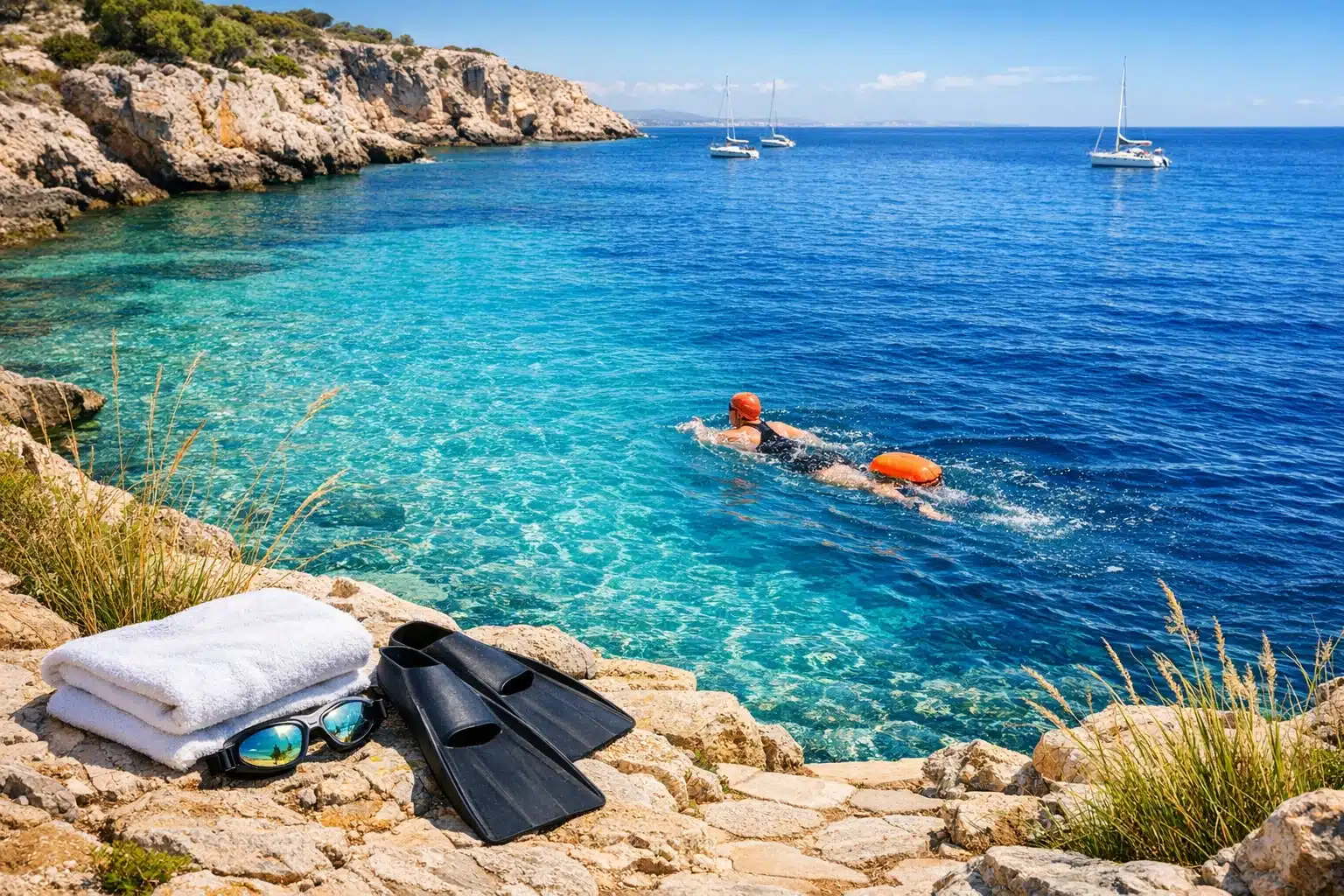
Open-water swimming adds another layer of complexity. Lakes, rivers, and oceans are beautiful, but they are not controlled environments. Visibility can be poor, temperature can change quickly, and currents may affect even experienced athletes. Distances also become harder to judge without pool walls marking progress. In open water, safety planning should include swimming with a partner or group, using a brightly colored cap or tow float, checking weather and local conditions, understanding entry and exit points, and knowing when not to go in. Cold water deserves special respect because it can impair breathing and coordination far faster than many people expect.
There is also a psychological difference between pool and open-water swimming. Pools offer lines, clocks, and predictability. Open water offers space, silence, and uncertainty. Some people find that liberating; others find it unsettling. Neither response is wrong. What matters is skill matching the environment. A person who comfortably swims many pool lengths may still need gradual exposure before feeling secure in open water.
For families and beginners, the best approach is steady, informed learning. Swim where lifeguards are present when possible. Teach children that confidence around water should never become carelessness. Learn basic rescue principles without turning yourself into a second victim. In the end, the most impressive swimmer is not always the fastest one. It is often the person who reads conditions well, respects limits, and comes back safely for the next session.
Conclusion: Making Swimming a Lifelong Part of Your Routine
If you are the target reader for this article, you probably fall into one of several groups: someone curious about swimming for fitness, a beginner hoping to feel less awkward in the water, a returning swimmer who wants structure, or a recreational athlete looking for a new challenge. The encouraging news is that swimming makes room for all of these starting points. It does not require an elite background to be valuable. It rewards consistency more than dramatic talent, and it offers benefits that extend well beyond the pool deck.
Across the sections above, a clear picture emerges. Swimming supports cardiovascular health, develops muscular endurance, and offers a lower-impact alternative to many land-based workouts. It teaches technical discipline through the major strokes and asks the swimmer to pay attention to details that matter: breathing, balance, alignment, and rhythm. It becomes more enjoyable when training is structured and when equipment is used thoughtfully rather than automatically. It also demands humility, especially in unfamiliar water, because safety and judgment are inseparable from skill.
For many readers, the best next step is refreshingly simple. Start small and keep the barrier low. One or two consistent swims per week can build momentum. A short lesson series can solve problems that months of guesswork may not fix. Choosing a realistic goal helps too. That goal might be:
-
swimming 20 uninterrupted minutes with relaxed breathing,
-
learning a technically sound freestyle,
-
using swimming as cross-training for another sport,
-
becoming comfortable enough in water to enjoy travel or family time more fully,
-
or eventually trying a masters session, triathlon, or open-water event.
What makes swimming especially compelling is that it can remain relevant for decades. A teenager may pursue race times, an office worker may use it to reset after long hours at a desk, and an older adult may value its combination of movement and reduced impact. The same pool can hold all of those stories at once. That is part of its charm. Each lane contains a slightly different reason for being there, yet the water meets everyone with the same honest resistance.
So if swimming has been sitting at the edge of your plans, this is a good moment to step in. Not with pressure, and not with grand promises, but with curiosity and regular practice. Learn the basics well. Respect the environment. Let technique grow gradually. Over time, the unfamiliar becomes natural, and the water that once felt demanding begins to feel like a place where strength, calm, and progress can coexist.