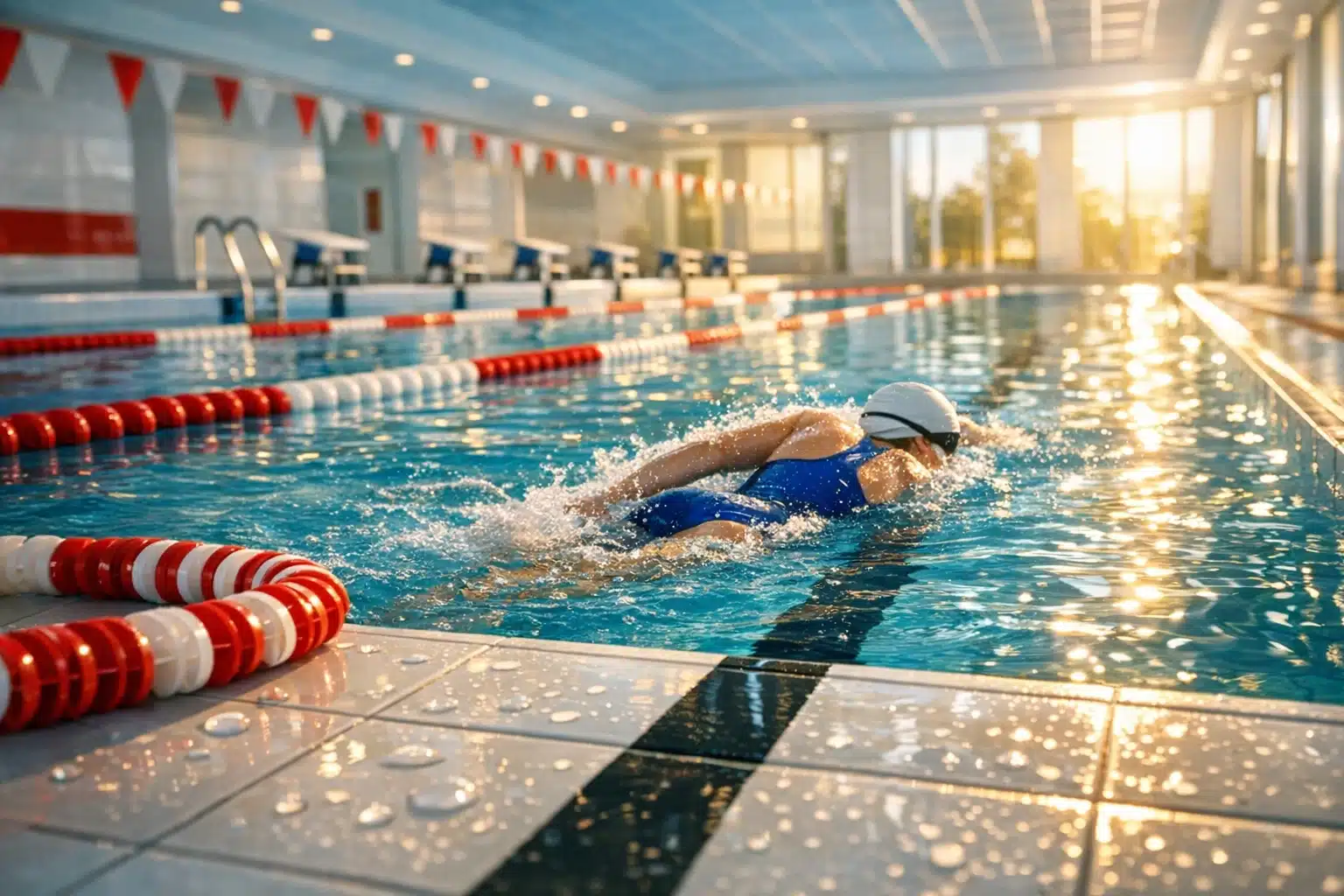
Explore the world of swimming
Swimming is one of those rare activities that feels playful and disciplined at the same time. It can be a lifesaving skill, a competitive sport, a form of therapy, and a practical way to stay active across different ages and fitness levels. From calm lap pools to rough open water, it teaches body control, confidence, and endurance in an environment that is always moving. This article maps the subject clearly, so readers can understand why swimming matters and how to approach it well.
Outline
- The many roles swimming has played, from survival skill to modern sport
- The physical and mental benefits that make it valuable across life stages
- The core techniques, strokes, and learning steps that shape good swimming
- Training methods, useful equipment, and the safety habits every swimmer needs
- A practical conclusion for beginners, returning swimmers, and lifelong water lovers
The Many Faces of Swimming: From Survival Skill to Global Sport
Swimming is older than stadiums, stopwatches, and lane ropes. Long before it became an Olympic event, it was a matter of survival, travel, work, and adaptation. Ancient artwork from Egypt and references from Greece and Rome suggest that people learned to move through water thousands of years ago. In some cultures, swimming was essential for fishing, river crossing, or military readiness. In others, it was tied to bathing traditions and public life. That long history matters because it explains why swimming still resists being put into a single box. It is not only a sport, and it is not only exercise. It is also a life skill with obvious practical value.
Modern swimming now stretches across many settings. A beginner may first meet it in a community pool, where the water is marked, measured, and supervised. A triathlete meets it as the opening leg of a race, when pacing and composure matter as much as fitness. An open-water swimmer experiences something very different: currents, temperature shifts, sighting challenges, and the strange beauty of distance without walls. Competitive swimmers, meanwhile, train with precision in events ranging from 50 meters to 1500 meters, where a fraction of a second can decide medals.
Part of swimming’s broad appeal comes from its variety. The four main competitive strokes each create a distinct rhythm and demand:
- Freestyle is typically the fastest and most efficient for long-distance movement.
- Backstroke allows steady breathing while challenging coordination and alignment.
- Breaststroke is often seen as approachable, but its timing is technically exacting.
- Butterfly is powerful and dramatic, though it requires strength, timing, and resilience.
Swimming also sits in an interesting place between nature and design. Pools are engineered for consistency, yet water itself never becomes static. It presses back against every hand entry, every kick, every rushed breath. Because water is far denser than air, even small technical changes produce noticeable results. That makes swimming humbling for beginners and endlessly interesting for experienced athletes. It is one of the few activities where efficiency can feel almost artistic. A skilled swimmer appears to move quietly, but that quietness is built on balance, timing, and countless repeated motions.
As a global sport, swimming gained major visibility through the Olympic Games, where it has been part of the modern program since 1896 for men and 1912 for women. Yet the deeper significance of swimming goes well beyond medals. It remains a bridge between recreation and readiness, between health and competition, between joy and discipline. That range is exactly why the subject continues to matter in schools, fitness centers, rehabilitation settings, beaches, lakes, and neighborhood pools around the world.
What Swimming Does for the Body and Mind
Swimming is often praised as a full-body workout, and that description is justified. Unlike activities that emphasize one main motion pattern, swimming asks the arms, shoulders, back, core, hips, and legs to work together in a coordinated sequence. It also challenges the cardiovascular system in a meaningful but often manageable way. Because the body is supported by water, the joints usually experience less impact than they would during running or jumping. For many people, that combination is the main attraction: swimming can be demanding without being punishing.
Public health guidance in many countries recommends at least 150 minutes of moderate-intensity aerobic activity each week for adults. Swimming can help meet that target, and it does so in a format that many people find refreshing rather than repetitive. Depending on body size, stroke choice, and pace, lap swimming can burn a substantial number of calories, often somewhere in the rough range of 400 to 700 per hour. Hard interval sessions can go higher. Those numbers should never be treated as guarantees, but they help explain why swimming is useful for general fitness, weight management, and endurance building.
The physical advantages extend beyond calorie burn. Water provides resistance in every direction, so even steady, non-explosive movement develops muscular endurance. Buoyancy also changes the loading pattern on the body. In chest-deep water, a person may bear significantly less body weight than on land, which is one reason aquatic exercise is commonly used in rehabilitation and recovery settings. People with arthritis, those returning from injury, and older adults often find that the water gives them room to move with less discomfort.
The mental side deserves equal attention. Many swimmers describe the pool as a place where noise fades and focus sharpens. There is a repetitive, almost meditative quality to counting laps, syncing breath with stroke, and hearing only the splash and exhale. Some research has linked regular physical activity, including swimming, with reduced stress and improved mood. While swimming is not a replacement for professional mental health care, it can be a valuable part of a broader wellbeing routine.
Different groups benefit in different ways:
- Children can build water confidence, coordination, and safety awareness.
- Adults with desk-heavy routines can improve posture, mobility, and aerobic fitness.
- Older swimmers may appreciate the low-impact nature of the activity.
- Athletes in other sports often use swimming for cross-training and recovery.
Compared with cycling, swimming usually demands greater breath control. Compared with running, it often reduces impact stress. Compared with gym circuits, it can feel less fragmented because the whole session happens in one flowing medium. That does not make it automatically better than every other exercise, but it does make it unusually versatile. Few activities can serve a cautious beginner, a rehabilitation patient, a national-level competitor, and a retiree looking for sustainable movement with equal credibility. Swimming earns its reputation not by promising miracles, but by remaining useful in many real-world circumstances.
Technique, Strokes, and the Learning Curve
Swimming looks simple from the deck. A person enters the water, starts moving, and somehow covers the length of the pool. Once you try to do it well, however, the illusion disappears. Swimming is a technical activity, and the water gives immediate feedback. Lift your head too high, and your legs sink. Hold your breath too long, and tension builds. Pull too wide, and forward motion leaks away. This is one reason beginners often feel frustrated at first: fitness alone does not solve a technical problem. The encouraging news is that small adjustments can create dramatic improvements.
At the heart of good swimming are a few shared principles. Body position matters because a more horizontal shape usually produces less drag. Breathing matters because panic and poor timing interrupt rhythm. Rotation matters, especially in freestyle and backstroke, because it helps connect the torso to the stroke rather than forcing the arms to do all the work. A balanced kick matters too, though many new swimmers overestimate how much power should come from the legs during relaxed swimming. The water is not conquered through force. It is negotiated through timing.
Freestyle is commonly the first stroke people learn for distance. It is fast, versatile, and widely used in fitness swimming. Yet freestyle is full of details: a stable head position, a clean hand entry, an underwater pull that catches rather than slips, and an exhale that begins before the mouth turns for air. Backstroke shares some of these ideas but removes the challenge of side breathing, replacing it with the challenge of swimming straight while looking upward. Breaststroke uses a different rhythm, with a glide phase that rewards patience. Butterfly is usually introduced later because its dolphin kick and simultaneous arm recovery demand strong coordination.
A sensible learning progression often looks like this:
- First, become comfortable floating, exhaling into the water, and recovering balance.
- Next, learn streamlined body position and simple kicking drills.
- Then add arm movements in short, controlled repetitions.
- Finally, connect breathing, timing, and distance in complete strokes.
Common mistakes are worth naming because they happen to almost everyone. New swimmers often rush, believing speed will keep them afloat. In reality, calm alignment usually helps more. Many also hold unnecessary tension in the neck and shoulders, which makes breathing harder and the stroke less efficient. Another frequent issue is inconsistent practice. Swimming rewards repetition, and long gaps between sessions can make the water feel unfamiliar again.
Technique also changes with purpose. A sprinter uses a different tempo than a distance swimmer. A triathlete may conserve energy and sight forward occasionally in open water. A recreational swimmer might choose a stroke that feels sustainable rather than fast. There is no single perfect style for every context. What matters is matching the technique to the goal while keeping movement efficient, safe, and repeatable. When that happens, swimming shifts from struggle to flow, and the pool starts to feel less like an obstacle and more like a conversation.
Training, Equipment, and Safety Habits That Matter
Good swimming is built through consistent practice, not random effort. Many people begin by simply counting laps, which is fine at first, but progress usually comes faster with structure. A balanced swim session often includes a warm-up, a skill-focused drill set, a main set with a clear purpose, and an easier finish. The purpose of the day might be endurance, speed, breathing control, stroke technique, or recovery. This structure matters because swimming can become deceptively repetitive; having intent keeps the work useful.
A practical training week does not have to be elaborate. Someone swimming for general fitness might do two or three sessions, each lasting 30 to 45 minutes. A newer swimmer could alternate short swims and rest, building comfort before distance. More experienced athletes often use intervals, such as repeating 100-meter or 200-meter efforts with measured recovery. Drills also matter. Catch-up drill can help lengthen freestyle timing, kick sets can improve body position, and pull sets can highlight upper-body mechanics, though no single drill solves everything.
Equipment should support learning rather than distract from it. The basics are simple:
- Goggles improve visibility and reduce irritation from pool water.
- A well-fitted swimsuit allows movement without constant adjustment.
- A swim cap is useful for comfort, hygiene, and reducing drag.
- A kickboard can isolate leg work.
- A pull buoy helps emphasize upper-body positioning.
- Fins can increase propulsion and reveal alignment issues, but they should be used thoughtfully.
More advanced tools, such as paddles, snorkels, and tempo trainers, can be valuable when used correctly, though they are not essential for most recreational swimmers. Technique remains the main engine of progress.
Safety deserves more attention than it often gets. Water is enjoyable, but it does not forgive carelessness. In pools, swimmers should know lane etiquette, respect posted rules, and avoid diving into shallow areas. In open water, the checklist becomes longer: check weather, understand currents, wear a bright cap, consider a tow float for visibility, and avoid swimming alone. Rip currents, cold shock, and sudden fatigue are real hazards, even for people who are fit in controlled settings. Formal lessons and supervised practice can reduce risk significantly, especially for children and for adults who never learned confidently.
There is also a cultural side to safety. A strong swimmer is not the person who ignores limits; it is the person who reads conditions honestly. That means stopping when cramps start, getting out during storms, resting when technique falls apart, and asking for help without embarrassment. In a pool, the black line on the bottom offers certainty. In a lake or ocean, that certainty disappears, and judgment becomes part of the skill set. Training builds ability, but safety habits protect the chance to keep enjoying the sport over time.
Conclusion: Why Swimming Belongs in Everyday Life
Swimming deserves attention not only because it is impressive to watch, but because it remains useful in ordinary life. For beginners, it offers a chance to learn something practical and empowering. For busy adults, it provides a way to train the heart, muscles, and lungs without the repeated impact that can make other forms of exercise hard to sustain. For parents, it represents both recreation and an important layer of water safety for children. For older adults, it can be one of the most accessible ways to keep moving with confidence. That is an unusually wide audience for a single activity.
If you are new to swimming, the smartest starting point is not speed or distance. It is comfort. Learn to float, to breathe out smoothly in the water, and to move a short distance without rushing. If you already know the basics but feel stuck, focus on one technical element at a time instead of trying to fix everything in a single session. If fitness is your goal, consistency will matter more than heroic workouts. Two or three steady swims each week usually do more than one punishing effort followed by silence.
Swimming also rewards patience in a special way. Progress is not always loud. Sometimes improvement appears as a calmer breath, a cleaner turn, a longer glide, or the surprising moment when a distance that once felt intimidating becomes routine. That quiet progress is part of its charm. The water does not hand out easy victories, yet it often gives clear evidence when skill and confidence are growing.
For readers deciding whether swimming is worth the effort, the answer depends less on ambition than on intention. You do not need to race, chase records, or master every stroke to benefit from it. You only need a reason to begin and a willingness to learn gradually. Swimming can be practical, social, meditative, rehabilitative, and competitive, depending on what you need from it. Few activities offer that kind of flexibility without losing their core identity.
In the end, swimming is a conversation between the body and the water. The better you listen, the better it goes. Whether your aim is safety, health, recreation, or performance, the sport meets you where you are and gives you room to grow. That is why it continues to matter, and why it remains worth exploring for almost anyone willing to step in.