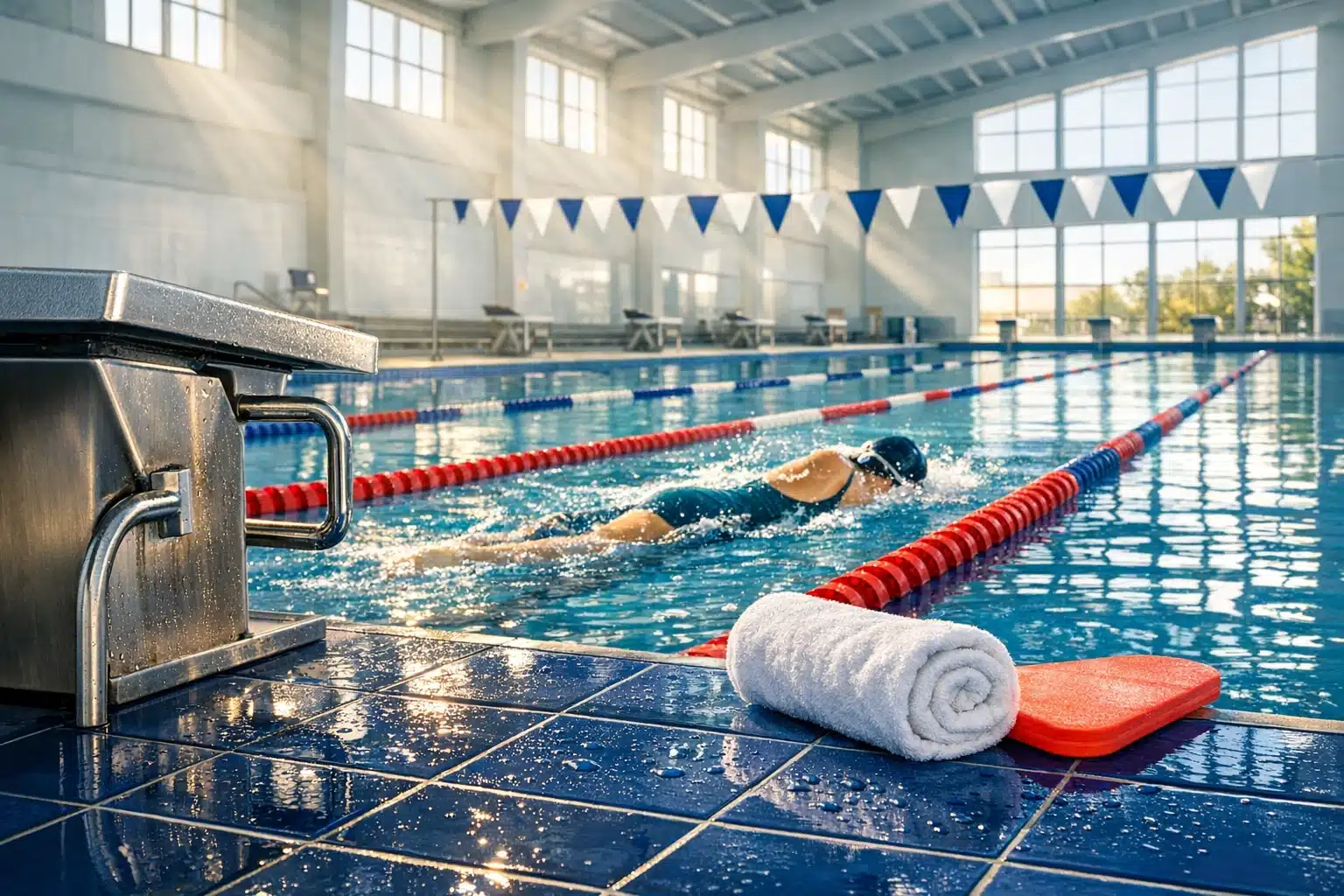
Explore the world of swimming
Swimming sits at the rare crossroads of sport, survival skill, and simple pleasure, which is why it stays relevant from childhood lessons to active older age. It strengthens the heart, trains the lungs, and challenges nearly every major muscle group without the repetitive pounding that makes some land sports hard to sustain. Just as importantly, it builds confidence in an environment that can feel playful one minute and unforgiving the next. This article explores how swimming works as exercise, technique, safety practice, and lifelong recreation.
The discussion begins with the broader value of swimming, then moves into stroke mechanics and the differences between them. After that, it looks at training and fitness benefits, explains essential safety principles, and ends with the culture and long-term appeal of the sport. Whether your goal is to learn your first confident lap, improve conditioning, or simply understand the attraction of the water, this guide is designed to meet you at poolside and point the way forward.
- Why swimming matters beyond competition
- How the main strokes compare in technique and effort
- What regular training does for the body and mind
- How to stay safe in pools and open water
- How swimming becomes a lifelong habit
The Many Roles Swimming Plays in Modern Life
Swimming is often introduced as a sport, but that description is too narrow. It is also a life skill, a form of exercise, a rehabilitation tool, a leisure activity, and for many people a reliable way to manage stress. Few physical activities cover so much ground at once. A child may begin swimming to learn water safety, a teenager may join a team for competition, an adult may return to it for joint-friendly cardio, and an older swimmer may keep going because the water makes movement feel freer than it does on land. The same pool can serve all of them, which says a lot about the breadth of the activity.
One reason swimming has such wide appeal is that it balances challenge with support. Water provides resistance in every direction, so even a simple movement asks the body to work. At the same time, buoyancy reduces impact on joints, which makes swimming especially attractive to people who find running, jumping, or heavy land-based workouts uncomfortable. This balance is part of why swimming appears so often in fitness programs, rehabilitation settings, and cross-training plans. It can help people build endurance and strength without the repetitive shock associated with some other sports.
There is also a practical side that should never be overlooked: basic swimming ability can increase personal safety around water. Lakes, rivers, beaches, and backyard pools are part of everyday life in many regions. Knowing how to float, breathe calmly, tread water, and move to safety is not just useful; it can be critical. That makes swimming different from activities that are purely recreational. Learning it can be both enjoyable and deeply functional.
- It supports cardiovascular fitness without heavy impact.
- It teaches skills that matter in real-world water environments.
- It suits many ages, body types, and training goals.
- It can be social, competitive, meditative, or all three at once.
On an emotional level, swimming carries a distinct atmosphere. The world sounds different when your ears dip below the surface. Breathing becomes rhythmic, movement becomes deliberate, and time sometimes feels softened around the edges. That does not mean every session is tranquil; hard training sets can be brutally honest. Still, even demanding swims have a kind of clean simplicity. You push, you glide, you breathe, and the water tells the truth about your technique immediately. In a noisy age, that directness is part of the appeal.
Understanding the Main Strokes and How They Compare
If swimming were a language, the four competitive strokes would be its main dialects: freestyle, backstroke, breaststroke, and butterfly. Each has its own rhythm, learning curve, and physical demand. Freestyle, often used as shorthand for front crawl, is usually the first stroke people learn for lap swimming because it is efficient and adaptable. The body stays long and horizontal, the flutter kick helps maintain balance, and alternating arm recovery allows continuous motion. For distance and general fitness, freestyle is often the most practical choice because it lets swimmers maintain speed with relatively economical energy use.
Backstroke offers a different experience. Because the face remains out of the water, breathing is less stressful for many beginners, yet the stroke presents its own technical puzzle: swimming straight while looking at the ceiling. Body position matters a great deal, and hips that sink can turn smooth movement into drag-heavy effort. Backstroke tends to feel gentler on breathing but less intuitive for navigation. It is also useful for balancing the body, since it asks swimmers to open the chest and maintain stable rotation.
Breaststroke is frequently seen as approachable, but its timing makes it more technical than it appears. The pull, breath, kick, and glide must happen in sequence. When the timing clicks, the stroke feels almost musical. When it does not, it feels like braking between every movement. Breaststroke is often comfortable at easy speeds and is popular in recreational swimming, but it can place extra stress on knees if the kick is forced or poorly aligned.
Butterfly is the most dramatic stroke of the group and usually the most demanding. It relies on coordinated arm recovery, a dolphin kick driven from the core, and carefully timed breathing. To watch a skilled butterfly swimmer is to see power shaped into rhythm; to swim it badly is to discover how quickly water punishes inefficiency. Butterfly is effective for building strength and body awareness, but it usually requires more technical foundation than the other strokes.
- Freestyle: efficient, versatile, ideal for fitness and distance.
- Backstroke: breathing-friendly, posture-focused, harder to steer.
- Breaststroke: rhythmic and controlled, but very timing-dependent.
- Butterfly: powerful and advanced, with high energy demand.
Across all strokes, a few principles remain constant. Good body position reduces drag, controlled breathing lowers tension, and relaxed efficiency almost always beats frantic effort. Water is around 800 times denser than air, so small technical flaws become big energy leaks. A dropped elbow, a mistimed breath, or a rushed kick can cost more than beginners expect. That is why drills matter. They slow the process down long enough for swimmers to feel what effective movement actually is. Technique is not decoration in swimming; it is the engine that makes the whole sport work.
Training Benefits: Fitness, Endurance, and Full-Body Conditioning
Regular swimming can improve cardiovascular health, muscular endurance, coordination, and movement quality all at once. Unlike many forms of exercise that emphasize one quality over another, swimming constantly blends systems together. The heart and lungs work to sustain effort, the arms and shoulders pull against resistance, the core stabilizes the body, and the legs contribute propulsion and balance. Even easy sessions ask multiple regions of the body to cooperate. That integrated demand is one reason swimming feels so complete as a workout.
For general health, swimming fits well within widely recommended physical activity targets. Public health guidance commonly suggests at least 150 minutes of moderate-intensity activity per week for adults, and swimming can meet that goal effectively. Depending on body size, pace, and stroke choice, a person may burn roughly 400 to 700 or more calories in an hour of swimming, though the exact number varies a great deal. More important than the number itself is the profile of the effort: swimming lets many people work hard without the same impact stress they might experience during running or court sports.
Training structure matters. Many beginners make the mistake of treating every swim as a continuous, medium-hard grind. That approach often leads to sloppy technique and stalled progress. Better sessions usually have layers.
- A warm-up to raise body temperature and settle breathing
- Technique drills to sharpen body position and stroke timing
- An aerobic main set for endurance
- Shorter, faster repeats for speed or power when appropriate
- An easy cooldown to lower effort gradually
This structure helps swimmers improve with intention instead of simply collecting tired laps. It also makes progress easier to measure. A swimmer might track how many strokes are needed per length, how quickly they recover between repeats, or whether a pace feels easier after several weeks of practice. These small signals often show improvement before dramatic stopwatch changes appear.
Swimming is also an excellent cross-training tool. Runners may use it to maintain fitness while giving joints a break. Cyclists can develop upper-body endurance that their primary sport does not demand as strongly. Team-sport athletes may use the pool for conditioning during recovery periods. For people returning from inactivity, water can make the first steps back into movement feel less intimidating. There is something generous about the pool in that way: it asks for effort, but it often meets the body halfway. When practiced consistently, swimming can build not only better fitness, but also better patience, because improvement comes from layering small gains until they become unmistakable.
Safety, Learning Progression, and Smart Habits in the Water
Swimming becomes more rewarding as confidence grows, but confidence should never be confused with carelessness. Water is enjoyable, yet it demands respect. Safe swimming starts with basic competence: learning how to float, breathe without panic, tread water, and move to an exit point. Formal lessons help because they create a sequence. Instead of being told to “just relax,” learners are guided through skills in a controlled order, which is far more effective. A good instructor builds familiarity first, then technique, then endurance.
For beginners, the early progression often looks simple on paper and surprisingly emotional in practice. Putting the face in the water, exhaling steadily, rolling to breathe, and trusting buoyancy can feel unnatural at first. That is normal. Fear often shrinks as predictability increases. When a swimmer knows what comes next and has repeated the movement enough times, tension begins to loosen. In that sense, learning to swim is partly physical and partly psychological. The body learns the skill, and the mind learns not to fight the environment.
Safety rules change somewhat between pools and open water. A pool offers walls, marked depths, usually clearer visibility, and often a lifeguard. Open water is more variable. Currents, waves, cold temperature, poor sightlines, boat traffic, and changing weather all add complexity. Even strong pool swimmers can be surprised by the difference. A calm-looking lake may hide uneven footing or sudden chill. The ocean can turn a relaxed swim into a tactical exercise very quickly.
- Swim where supervision or a trusted buddy is available.
- Check depth, water conditions, and local rules before entering.
- Use bright gear in open water for better visibility.
- Do not overestimate stamina, especially in cold water.
- Teach children close-range water safety, not distant supervision.
Equipment can help, but it should not replace skill. Kickboards, pull buoys, fins, goggles, and bright caps all have their place. They can improve comfort, isolate technique, and support training goals. Still, the foundation remains calm breathing, sound judgment, and honest self-assessment. Many incidents happen not because a person never learned anything, but because they assumed they could handle more than conditions allowed. Smart swimmers stay humble. They warm up, rest when needed, follow posted guidance, and adapt the plan when the environment changes. That mindset is not timid; it is what makes long-term enjoyment possible.
From Laps to Lifestyle: Competition, Community, and Long-Term Enjoyment
Swimming can begin as a practical lesson and grow into a lasting part of identity. For some people, that path leads to competition. Age-group clubs, school teams, Masters programs, triathlon training groups, and open-water events give swimmers clear goals and a sense of belonging. Competitive swimming is precise by nature. Pools are measured, times are recorded to tiny fractions, and improvement is often visible in seconds or even tenths. That structure appeals to people who like measurable progress. At the elite level, the sport becomes a study in efficiency, race strategy, and mental control, where tiny technical gains can separate finalists from the rest of the field.
Yet competition is only one chapter in the larger story. Plenty of committed swimmers have no interest in racing. They swim for routine, recovery, conversation before dawn, or the private satisfaction of finishing a set that once seemed impossible. Community forms in quieter ways too. Regular swimmers learn lane etiquette, share space with strangers, trade local tips, and slowly recognize the familiar cast of characters who always seem to appear at the same hour. The pool can become a kind of neighborhood that happens to smell faintly of chlorine.
Building a lasting swimming habit usually depends less on motivation than on design. People stick with swimming when the routine is realistic. Two planned sessions every week beat an ambitious seven-day schedule that collapses after ten days. Clear, modest goals also help. One swimmer may aim to complete 20 continuous minutes without stopping. Another may want to improve freestyle breathing. Someone else may be returning after years away and simply wants to feel comfortable in the water again.
- Choose a schedule that fits real life, not an idealized version of it.
- Rotate easy and hard sessions to avoid burnout.
- Use small technical goals instead of chasing speed every day.
- Find a pool, lake group, or class that makes consistency easier.
There is also a seasonal and emotional flexibility to swimming that keeps it relevant over time. It can be social or solitary, structured or loose, indoor or outdoor, calm or fiercely competitive. Some days it feels like training. Other days it feels like therapy with lane lines. That range is rare. A person can change jobs, age, recover from injury, move cities, or shift priorities, and swimming still often finds a way to fit. That is why it lasts. It is not only a sport people do; for many, it becomes a durable way of living well inside their own effort.
Conclusion for New and Returning Swimmers
If you are curious about swimming, the smartest place to start is not with speed, fancy gear, or ambitious distance goals. Start with comfort, sound technique, and a routine you can genuinely keep. Swimming rewards patience more than bravado, and even small improvements in breathing, balance, and confidence can change the entire experience. For fitness seekers, it offers a demanding full-body workout with less impact than many land sports; for families and beginners, it adds a practical layer of water safety that matters beyond exercise. In the long run, swimming is valuable because it can grow with you, meeting different needs at different stages of life while still remaining unmistakably itself: simple, challenging, and deeply refreshing.