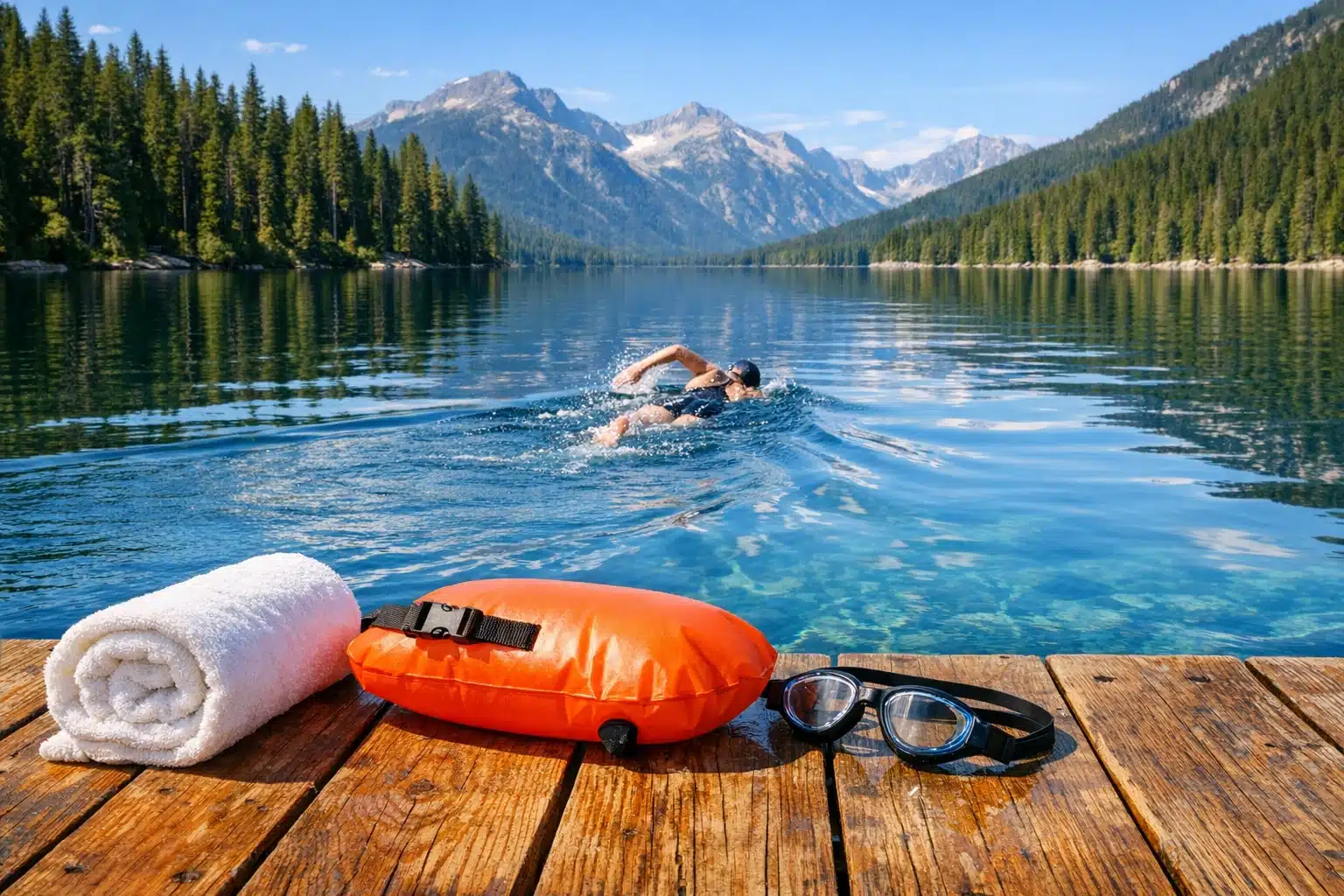
Explore the world of swimming
Swimming is one of the few activities that can feel meditative and intense in the same hour. Its relevance goes far beyond sport: it builds water safety, supports cardiovascular health, and offers a low-impact form of exercise for people at many stages of life. In pools, lakes, and coastal waters, it also teaches control under pressure and respect for the environment. This article maps the basics, the benefits, and the practical skills that turn swimming into a lasting habit.
Outline
This article follows five main parts so readers can move from broad understanding to practical action. First, it looks at why swimming matters as both a life skill and a global sport. Second, it explains the main strokes and the technical choices that make movement through water efficient. Third, it covers training, conditioning, and equipment, comparing casual exercise with structured performance work. Fourth, it explores health benefits, common risks, and water safety. Fifth, it turns to the human side of swimming: access, motivation, routine, and how beginners can become confident long-term swimmers.
- Why swimming matters in everyday life and sport
- How the four main strokes differ in rhythm, mechanics, and difficulty
- What training methods and gear actually help
- Why safety, recovery, and technique matter as much as effort
- How to start, improve, and stay consistent over time
Swimming as a Life Skill and a Global Sport
Swimming occupies a rare place in human activity because it is useful, athletic, social, and in many cases essential. A person may enter the water to race, recover from an injury, cool off in summer, or simply feel less afraid near a shoreline. That range matters. Unlike some sports that live mostly inside organized competition, swimming begins with survival. Water competency can reduce panic, improve judgment, and help people respond more calmly in real conditions. Public health agencies and safety organizations have long treated swimming instruction as more than recreation for exactly this reason.
As a sport, swimming has also become one of the most measured and technically refined disciplines in the world. In a standard 50-meter Olympic pool, success is shaped by details that seem tiny until a race is decided by hundredths of a second: the angle of entry, the efficiency of a turn, the timing of a breath, the strength of an underwater kick. Yet that elite precision sits on top of something remarkably democratic. Children learn to float. Adults return to the pool after years away. Seniors use water exercise to stay active with less joint stress than running often produces. Few activities can be both an introduction to safety and a path to high performance.
Swimming is also global in a practical sense. It fits school programs, municipal recreation centers, beach cultures, triathlon training, adaptive sports, and rehabilitation settings. In some countries it is woven into everyday education; in others it is more dependent on access to facilities, coaching, and family income. That difference is important because barriers to swimming are real. Pools cost money to build and maintain, lessons may be unevenly available, and some communities have less access to safe aquatic spaces. When people talk about expanding swimming participation, they are not just discussing exercise; they are discussing public infrastructure, health equity, and confidence around water.
There is also a psychological appeal that helps explain its staying power. Water changes ordinary movement into something quieter and more deliberate. The outside world goes muffled, breathing becomes rhythmic, and each length of the pool offers a measurable task. For one swimmer that can feel like discipline; for another it feels like relief. In both cases, swimming asks for presence. You cannot drift far mentally if your timing, breath, and body line need to stay coordinated. That blend of purpose and calm is part of what keeps people coming back.
Understanding the Main Strokes and the Logic of Technique
To a new swimmer, all strokes can look like variations of splashing and forward motion. In reality, each stroke solves the same problem in a different way: how to move efficiently through water while balancing propulsion, drag, breathing, and timing. Water is dense compared with air, so technique matters more than many beginners expect. A small flaw in body position can make a swimmer feel as if the pool has suddenly become heavier.
Freestyle, usually swum as front crawl, is the fastest and most commonly taught stroke for fitness and racing. Its appeal lies in continuous propulsion. The alternating arm pull and flutter kick allow a relatively steady rhythm, and side breathing lets the swimmer take in air without lifting the head too high. When freestyle is done well, the body stays long and near the surface, reducing drag. When done poorly, the hips sink, the kick becomes frantic, and every breath disrupts momentum.
Backstroke uses a similar alternating pattern, but the swimmer is face up. Many learners find it easier for breathing because the mouth stays clear of the water, yet it introduces another challenge: orientation. Without seeing forward, swimmers must count strokes or use ceiling cues to approach the wall. Backstroke also demands a stable core, because side-to-side wobbling can waste energy.
Breaststroke is slower but highly distinctive. It uses a simultaneous arm movement and a whip-like kick, followed by a glide. That glide is the whole personality of the stroke. It rewards timing over aggression. People often assume breaststroke is easy because it feels less frantic, but efficient breaststroke requires coordination and careful knee and ankle action. Butterfly, by contrast, is powerful and demanding. Both arms recover over the water together, the body undulates, and the dolphin kick drives rhythm from the core. It is beautiful when mastered and exhausting when forced.
A useful comparison for beginners looks like this:
- Freestyle: fastest, efficient, excellent for general fitness
- Backstroke: good for posture and shoulder awareness, easier breathing
- Breaststroke: slower tempo, strong timing component, popular for recreational swimming
- Butterfly: high power demand, advanced coordination, strong upper body and core challenge
Across all strokes, the technical foundations remain strikingly similar. Good swimmers reduce drag, keep a balanced body line, and apply force backward rather than thrashing in every direction. Breathing should support movement, not interrupt it. Kicking should stabilize as much as propel. The most useful lesson is simple but not glamorous: efficiency beats drama. Water responds better to clean lines than to heroic effort.
Training, Conditioning, and Equipment for Better Swimming
Swimming training can look deceptively simple from the pool deck. People swim up and down, rest, and repeat. Inside that pattern, however, there is a wide range of goals and methods. A person training for general health may need steady aerobic work and basic technique practice. A competitive swimmer may divide sessions into warm-up, drills, sprint sets, threshold work, kicking, and recovery. Open-water swimmers often add sighting practice, pacing strategy, and adaptation to currents or waves. The water may look calm, but the planning behind improvement is often detailed.
One of the most important distinctions is between swimming for completion and swimming for quality. Many beginners focus on getting through a session, which is understandable. Over time, though, technique and structure matter more than simply accumulating distance. Ten tired laps with poor form can reinforce bad habits. By contrast, shorter repeats with rest can sharpen body position, improve breathing, and make the swimmer faster with less waste.
A balanced training week often includes several elements:
- Easy aerobic swimming to build endurance
- Drills to improve catch, balance, rotation, or kick timing
- Moderate to hard intervals to develop speed and stamina
- Recovery work to reduce fatigue and keep technique from unraveling
- Dryland strength and mobility for shoulders, core, hips, and ankles
Dryland training deserves special attention because swimming uses the whole body even when the motion appears smooth and graceful. Core stability helps transfer force. Shoulder strength supports repeated pulling. Hip mobility affects kicking. Even ankle flexibility can change how effectively a kick pushes water backward. That said, more strength is not automatically better. Swimmers benefit most when strength improves control and endurance rather than just raw force.
Equipment can help, but it should solve a problem rather than create dependence. Goggles improve comfort and visibility. Swim caps reduce drag slightly and keep hair managed. Kickboards isolate leg work, while pull buoys reduce lower-body demand so swimmers can focus on the pull. Fins can improve body position and feel for the water, though overuse may hide technical flaws. Paddles increase resistance and should be used carefully, especially by swimmers with shoulder issues. For beginners, the best investment is often not the most gear but better instruction.
There is also a useful comparison between pool swimming and open-water training. Pools offer controlled conditions, lane lines, walls for rest, and easy measurement. Open water adds navigation, weather, temperature changes, and contact with unpredictable conditions. Neither is inherently superior. The pool is a laboratory; open water is an ecosystem. Strong swimmers often learn from both.
Health Benefits, Common Risks, and the Importance of Water Safety
Swimming is widely recommended because it combines cardiovascular work, muscular endurance, and relatively low joint impact. For many people, especially those managing arthritis, excess body weight, or recovery from certain injuries, water provides support that land exercise cannot. The buoyancy reduces loading on knees and hips, while the resistance of water still makes movement demanding. A casual lap session can feel smooth on the joints and surprisingly serious for the lungs. Many adults also find that swimming helps them meet general physical activity goals, such as the commonly recommended 150 minutes of moderate exercise per week.
The benefits are not only physical. Swimming can create a strong mental reset because it narrows attention. Breathing patterns become deliberate, distractions soften, and progress is easy to measure in laps, time, or comfort in the water. Some swimmers love the silence between strokes; others enjoy the discipline of trying to hold a pace. In both cases, the activity can support stress management and routine. Water has a way of turning scattered energy into a more ordered rhythm.
Still, swimming is not automatically safe just because it is healthy. Water demands respect. Fatigue, cold, panic, poor supervision, overconfidence, and unfamiliar environments can all turn a pleasant swim into a dangerous one. Drowning remains a serious global public health issue, and many incidents occur quickly and without dramatic warning signs. That is why swimming ability should be paired with judgment, not treated as a license to ignore conditions.
Good safety habits include:
- Learning floating, treading water, and safe breathing before chasing speed
- Never assuming open water behaves like a pool
- Swimming with supervision or a partner when conditions are uncertain
- Respecting weather, currents, depth changes, and water temperature
- Stopping early when technique collapses from fatigue
There are also health-related precautions worth noting. Swimmers with shoulder pain may need technique analysis rather than simply more rest. Poorly maintained pools can irritate the eyes or skin. Overtraining can lead to chronic fatigue and reduced performance, especially in competitive settings. New swimmers may even experience frustration when breath control feels awkward at first. That is normal. Water exposes tension quickly. The solution is patient progression, not panic.
In short, swimming offers a rare mix of accessibility and challenge, but its rewards are greatest when paired with safety knowledge. Confidence in water should be built like any other skill: layer by layer, with practice, supervision, and honest awareness of limits.
From Beginner to Lifelong Swimmer: Access, Motivation, and Practical Progress
Starting swimming as an adult can feel strangely humbling. A person may be fit on land, successful at work, and comfortable in many settings, then step into a lane and discover that breathing every few strokes feels like solving a puzzle at sprint speed. That beginner discomfort is common and worth normalizing. Swimming has a steeper early learning curve than many gym-based activities because technique determines comfort almost immediately. The good news is that progress often arrives in visible steps. One week a swimmer cannot relax the exhale; a few sessions later, two lengths feel calm and repeatable.
For beginners, the most practical path is usually simple: get instruction, practice regularly, and focus on a few fundamentals instead of trying to master everything at once. Those fundamentals include floating, body alignment, a steady exhale into the water, and a stroke rhythm that does not collapse when breathing begins. Once these are stable, endurance grows more naturally. People often think they need more fitness first, when what they really need is less drag and less tension.
Motivation also improves when sessions are structured but not punishing. A sustainable routine might include two or three swims per week, each with a clear purpose. For example:
- Session one: easy technique work and short repeats
- Session two: steady aerobic swimming with generous rest
- Session three: mixed drills, kicking, and a few faster efforts for variety
Access plays a major role in long-term participation. A nearby pool, affordable lessons, welcoming staff, and lane times that match real schedules can make the difference between intention and habit. Community programs, school instruction, and inclusive facilities matter because they widen who gets to become comfortable in water. Swimming should not be treated as a niche skill reserved for the already confident. It becomes safer and more valuable the more widely it is shared.
There is also a cultural side to becoming a swimmer. Pools have etiquette, rhythms, and small rituals: rinsing off before entering, circling correctly in a shared lane, resting at the wall without blocking others, and knowing when to choose a slower lane. These details may seem minor, yet they make the space feel less intimidating. Once people understand the environment, they tend to relax and return.
Over the long term, swimming remains appealing because it can evolve with the person doing it. A teenager may race. A busy parent may use it for efficient exercise. An older adult may value the mobility and low impact. Another swimmer may trade the ceiling lights of an indoor pool for sunrise over a lake. The setting changes, the pace changes, the reasons change, but the skill keeps giving something useful back.
Conclusion for Readers Ready to Get in the Water
If you are curious about swimming, the smartest way to begin is not with heroic distance goals but with skill, comfort, and consistency. Learn how water supports the body, practice one or two key techniques at a time, and treat safety as part of the sport rather than an afterthought. For fitness-focused readers, swimming offers a durable, full-body option that can sit alongside walking, strength work, or cycling. For parents, students, and adult beginners, it provides something even more valuable: confidence in an environment that deserves respect. Whether your aim is health, performance, or simple peace of mind, swimming rewards patience more than ego, and that is exactly why it can remain meaningful for a lifetime.