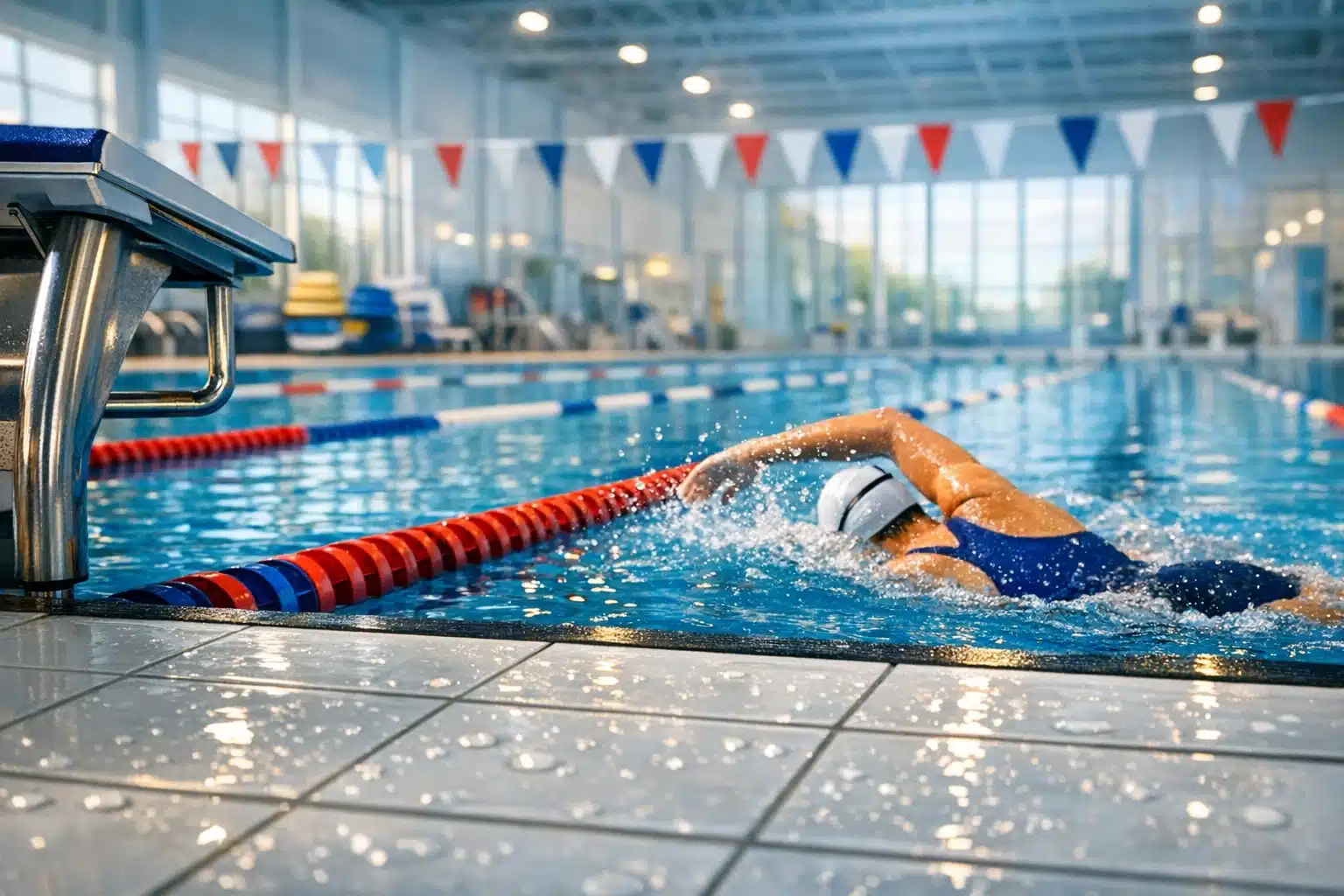
Explore the world of swimming
Swimming sits at the crossroads of sport, survival skill, therapy, and recreation, which is why it remains one of the most widely practiced physical activities in the world. A calm pool lane, a windy shoreline, or a child learning to float can each reveal something different about movement, confidence, and control. This article explores how swimming works, why it benefits body and mind, and what makes it relevant for beginners, athletes, and lifelong learners alike.
Outline
- The foundations of swimming and the reasons it matters across ages and lifestyles
- The major strokes, core techniques, and practical differences between them
- The physical and mental health benefits that make swimming uniquely valuable
- How to learn, train, and stay safe in pools and open water environments
- Swimming as a culture, a competitive arena, and a lifelong habit
The foundations of swimming: why this skill matters far beyond the pool
Swimming is often introduced as a sport, but that description is too narrow to capture its full importance. It is also a basic safety skill, a form of exercise with broad appeal, and a way to engage with water environments that humans have lived beside for thousands of years. Ancient civilizations, including the Egyptians and Greeks, recorded swimming in art and literature. In the modern era, the activity evolved into organized recreation, military training, lifesaving education, and elite competition. Today, it continues to matter because it meets practical needs and personal goals at the same time.
Part of swimming’s value lies in the physical properties of water itself. Water supports the body through buoyancy while also creating resistance in every direction. That combination makes movement feel strangely gentle and demanding all at once. On land, gravity and impact dominate the experience of exercise. In water, the body is cushioned, yet every stroke must push against a dense medium. This is one reason swimming appeals to such a wide range of people, from children learning coordination to adults seeking low-impact conditioning.
It also occupies a rare place among sports because it can be both individual and communal. A swimmer in a lane may look solitary, counting breaths and strokes in quiet concentration, yet pools are deeply social spaces. Lessons, team practices, lap swimming hours, rehabilitation sessions, and family recreation all share the same environment. One person may be training for a triathlon, another may be rebuilding strength after injury, and another may simply be learning not to fear deep water.
Modern competitive swimming has long held international significance. Men’s swimming appeared in the first modern Olympic Games in 1896, and women’s events joined in 1912. Standard competition pools are typically either 50 meters long for long-course events or 25 meters for short-course races. These details show how structured and measurable the sport can be, but outside competition, swimming remains refreshingly flexible.
- It can be learned young and practiced into older age.
- It can support recreation, performance, therapy, or water safety.
- It adapts well to different body types and fitness levels.
If running often feels like a straight line and cycling feels like momentum, swimming feels more like conversation. The water answers every movement immediately. Push carelessly, and it resists. Move with rhythm, and it carries you. That direct feedback is one reason so many people find swimming not only useful, but deeply absorbing.
Understanding the strokes: technique, rhythm, and the character of each style
To an observer, swimming may appear simple: arms move, legs kick, body travels. In practice, technique shapes everything. Efficiency, speed, comfort, and endurance depend on details such as body position, breathing timing, stroke length, and coordination. The four main competitive strokes are freestyle, backstroke, breaststroke, and butterfly, and each has a distinct rhythm and purpose.
Freestyle, usually swum as front crawl, is generally the fastest and most common stroke for fitness swimming. Its alternating arm action and flutter kick allow continuous forward motion, and side breathing lets the swimmer maintain a steady pace. Because it is efficient at moderate to high speeds, freestyle is widely used in training, racing, and triathlon. For beginners, however, the challenge is often not power but relaxation. Many new swimmers tense their neck, lift their head too high, or kick too hard. Good freestyle tends to look long and balanced rather than frantic.
Backstroke is sometimes described as freestyle turned skyward, but it comes with different demands. Because the swimmer faces upward, breathing is easier, yet orientation is harder. There is no floor line in open water and no direct view of where one is going. In the pool, backstroke rewards body alignment, shoulder mobility, and a steady kick. Many swimmers enjoy it because it opens the chest and offers a break from face-down breathing patterns.
Breaststroke is slower but highly technical. Its simultaneous arm pull and whip kick create a distinct glide phase. For casual swimmers, breaststroke often feels approachable because the head can rise naturally during the stroke cycle. Yet competitive breaststroke is complex and precise, with strict rules governing timing and turns. Small mistakes in kick shape or timing can dramatically reduce efficiency.
Butterfly is the most visually dramatic of the four. Its two-arm recovery and dolphin kick demand timing, flexibility, and strength. It is often the stroke that impresses spectators first, but swimmers know it is not brute force alone that makes butterfly work. Without rhythm, it becomes exhausting almost immediately. With rhythm, it resembles a wave rolling through the body.
- Freestyle: best for sustained fitness, speed, and general training volume
- Backstroke: useful for posture variety and easier breathing patterns
- Breaststroke: often favored for recreational swimming and technical control
- Butterfly: powerful, demanding, and valuable for advanced coordination
Technique matters because water punishes inefficiency more than many land activities do. A dropped elbow, a mistimed breath, or a sinking hip can cost energy every second. This is why even experienced swimmers continue refining drills such as catch-up freestyle, single-arm backstroke, breaststroke kick isolation, or dolphin kick practice. In swimming, tiny improvements often create surprisingly noticeable gains. A smoother stroke can feel like finding an extra gear that was there all along, hidden beneath splash and effort.
Health and fitness benefits: what swimming does for the body and mind
Swimming is frequently praised as a full-body workout, and that description is accurate, but it still understates the range of benefits involved. Unlike some activities that emphasize either muscular strength or cardiovascular endurance, swimming develops several qualities at once. The heart and lungs work continuously, major muscle groups contribute to propulsion and stability, and the joints experience less repetitive impact than they often would during running or court sports.
From a cardiovascular standpoint, swimming can help people work toward widely accepted physical activity goals, such as the common public health recommendation of at least 150 minutes of moderate aerobic exercise per week. A steady lap session can raise heart rate, challenge breathing efficiency, and improve endurance over time. Because intensity can be scaled easily, swimming works for many experience levels. Slow laps with rest intervals suit beginners, while structured sets, sprint repeats, and pace work give trained swimmers a demanding session.
Muscularly, swimming asks the body to coordinate rather than isolate. The shoulders, back, chest, core, glutes, and legs all contribute, though the emphasis changes by stroke. Freestyle and backstroke reward shoulder endurance and trunk rotation. Breaststroke depends heavily on timing and leg action. Butterfly requires strong core engagement and powerful undulation. This distributed effort is one reason swimmers often develop balanced endurance rather than local fatigue in a single area.
Water also changes the exercise experience. Because buoyancy reduces load on the joints, many people with stiffness, excess body weight, or recovery needs find swimming more comfortable than impact-heavy training. Exercise in water is not automatically easy, but it can be more forgiving. For some older adults and some people returning from injury, that difference is what makes regular movement possible again. Aquatic therapy and water-based exercise programs frequently build on this principle.
There are also mental and emotional benefits worth noting. Repetitive laps can have a meditative quality. The sound of bubbles, the line at the bottom of the pool, and the cycle of inhale and exhale create a focused environment that can reduce mental clutter. Not everyone finds swimming relaxing, especially at first, but many regular swimmers describe it as one of the few forms of exercise that combines effort with calm.
- It supports heart and lung conditioning.
- It strengthens multiple muscle groups through resistance.
- It can reduce impact stress compared with many land-based activities.
- It offers routine, focus, and a break from screen-heavy daily life.
Energy expenditure varies widely depending on stroke, pace, body size, and efficiency, but even moderate recreational swimming can demand substantial effort. In simple terms, the water makes every meter earned. That is part of the appeal. Swimming does not just ask the body to work; it asks the body to organize itself, breathe deliberately, and move with control. Done regularly, it builds not only fitness, but a quieter kind of resilience.
Learning, training, and safety: from first lessons to confident open-water habits
Swimming is one of those activities in which confidence and competence grow together. A person rarely begins by moving beautifully through the water. Most start by learning to float, submerge the face, exhale underwater, and trust that balance can exist in an unfamiliar environment. For beginners, these early steps matter more than speed. A strong foundation reduces fear, improves technique later, and makes practice more enjoyable.
Good instruction usually follows a clear progression. First come water comfort and breath control. Then follow body position, kicking, basic arm actions, and coordinated movement. Only after these are stable does distance begin to matter. This sequence is important because many self-taught swimmers develop habits that feel workable but waste energy, such as holding the breath, kicking from the knees, or lifting the head every stroke. Lessons, video feedback, or even occasional coaching can save months of frustration.
Training also benefits from structure. Rather than swimming the same easy pace every session, many swimmers improve faster with varied workouts. A balanced session may include a warm-up, drills, main sets, and a cool-down. Drills sharpen technique, while intervals build fitness and pacing awareness. Equipment can help, though it should support learning rather than replace it.
- Goggles improve visibility and comfort.
- A swim cap can reduce drag and keep hair managed.
- Kickboards isolate leg work.
- Pull buoys emphasize arm action and body position.
- Fins can help with ankle flexibility and propulsion awareness.
Safety deserves equal attention. In pools, the basics include lane awareness, diving only where permitted, and respecting lifeguard instructions. In open water, the demands rise quickly. Lakes, rivers, and oceans introduce currents, waves, limited visibility, cold exposure, marine life, and changing weather. A strong pool swimmer is not automatically prepared for open water. Navigation alone changes the experience, since swimmers must occasionally lift their eyes to sight landmarks or buoys without losing rhythm.
Simple habits make a meaningful difference. Swim with supervision or a partner when possible. Use bright caps or tow floats in open water for visibility. Check water temperature and local conditions before entering. Learn the signs of fatigue and cold stress instead of trying to push through them. Parents should treat formal water safety education and constant supervision as complementary, not interchangeable.
Pool and open-water swimming also differ psychologically. A pool is measured, predictable, and lined. Open water is broader, less certain, and often more emotional. Some people find it exhilarating, others unsettling. Both settings can be rewarding, but they ask for different forms of respect. Learning to swim well is not about becoming reckless in water. It is about becoming calm, capable, and honest about conditions. That combination is what turns skill into real confidence.
Swimming as culture, competition, and lifelong practice
Swimming is easy to underestimate if we view it only through fitness trackers or race times. In reality, it is also a culture with its own rituals, communities, and milestones. For some people it begins with childhood lessons and never fully leaves. For others it arrives later, perhaps through triathlon, rehabilitation, travel, or a desire to move without pounding joints. Either way, the activity has a way of becoming more than exercise. It becomes a place people return to.
Competitive swimming offers one visible branch of that culture. Club teams, school programs, university meets, masters groups, and international championships create a clear pathway for performance-minded athletes. Race distances range from short sprints to long endurance events, and swimmers train not only for speed but for turns, starts, pacing, and race strategy. In major competitions, hundredths of a second can separate medals. That level of precision is part of what makes the sport fascinating. A swimmer may spend months refining a breakout from the wall or a single phase of a breaststroke pullout because small technical gains matter enormously.
Yet swimming’s broader culture extends far beyond elite competition. Community pools serve as social anchors in many towns. Adult beginners discover that learning later in life is not unusual. Masters swimming has become an important space for adults who want coached practices without the pressure of being young or professional. Paralympic swimming also demonstrates the sport’s adaptability, with classification systems designed to support fair competition among athletes with different impairments. These examples show that swimming is not one narrow lane; it is a network of lanes, beaches, lakes, and goals.
There is also a quieter cultural layer: the habits and feelings attached to water. Early morning swimmers know the sharp smell of chlorine before sunrise, the hush that settles over a pool deck before the first dive, the odd peace of hearing only splashes and breath. Open-water swimmers know another atmosphere entirely, where the horizon replaces ceiling lights and every stroke feels slightly more adventurous. In those moments, swimming is less about metrics and more about presence.
- It can be a competitive pursuit with exact standards and measurable results.
- It can be a community activity that builds routine and connection.
- It can remain meaningful across decades, not just during youth.
That lifelong quality may be swimming’s greatest strength. Many sports narrow as bodies age or schedules change, but swimming often remains available in some form. A person may stop racing and still keep lap swimming. A former beginner may become a confident holiday swimmer, then a parent teaching water comfort to a child, then an older adult using aqua exercise to stay mobile. The water meets people at different chapters. It does not ask for the same pace forever, only continued engagement. That is why swimming endures: it grows with the swimmer.
Conclusion for readers who want to start, improve, or reconnect with the water
Swimming rewards curiosity more than perfection. If you are a beginner, start with comfort, breath control, and proper instruction rather than distance alone. If you already swim, refining technique, varying your training, and respecting safety can make the experience more effective and more enjoyable. For fitness seekers, parents, competitors, and returning adults alike, swimming offers an unusual blend of practicality, challenge, and calm. Few activities train the body, sharpen awareness, and build confidence in such a direct way. The next useful step is simple: get in the water with purpose, and let skill grow one length at a time.