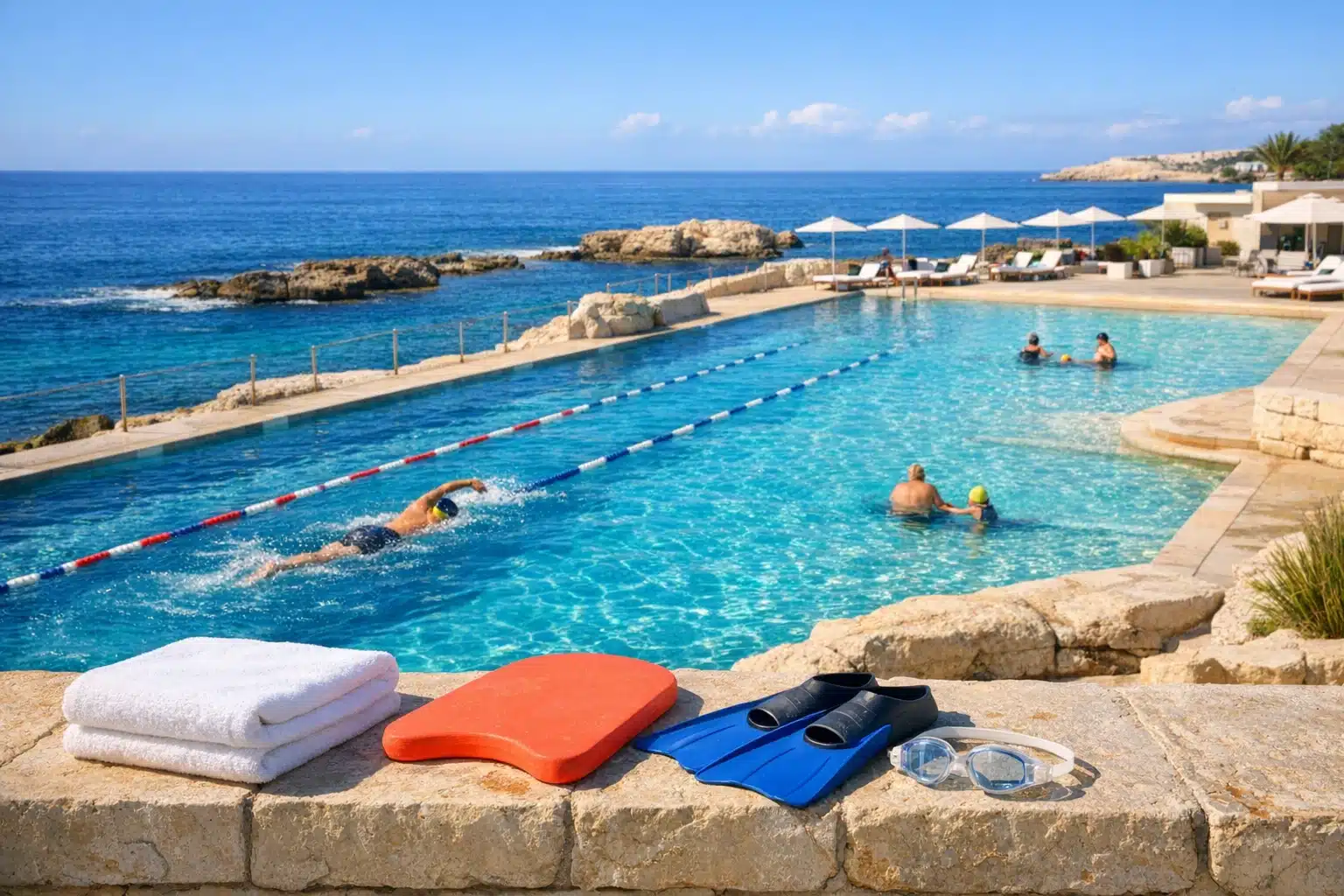
Explore the world of swimming
Introduction and Article Outline
Swimming is one of those rare activities that feels simple at first glance yet opens into a world of skill, discipline, and freedom once you enter the water. It matters because it blends fitness, safety, recreation, and sport in a way few pursuits can match. From toddlers learning to float to older adults protecting joint health, its benefits reach almost every stage of life. This guide explores why swimming remains so widely valued and how readers can understand it more deeply.
Outline:
• The broad value of swimming in modern life
• Physical and mental health benefits, with useful comparisons to other exercises
• The main strokes and the technique principles that shape efficient movement
• Equipment, training habits, and essential safety practices
• The role of swimming across age groups, communities, and long-term fitness goals
Few environments change the body’s experience of movement as dramatically as water. On land, gravity announces itself with every step, jump, and pivot. In a pool, that burden softens, resistance comes from every direction, and the body must learn to cooperate with buoyancy rather than overpower it. That shift is part of swimming’s appeal. It asks for strength, but also patience. It rewards effort, but it punishes tension. A relaxed swimmer often moves farther than a stronger but frantic one.
Swimming is also relevant far beyond competition. For many families, it is a safety skill before it is a sport. For office workers, it can be a joint-friendly alternative to pounding miles on pavement. For older adults, it may offer a practical way to stay active without excessive impact. For children, it can build confidence that stretches well beyond the pool deck. That combination of utility and enjoyment helps explain why swimming appears in school programs, rehabilitation plans, elite athletics, and weekend leisure all at once. The following sections unpack those dimensions in detail, showing not just what swimming is, but why it continues to matter in such a wide range of lives.
Why Swimming Matters for Health, Fitness, and Mental Wellbeing
Swimming earns its reputation as a full-body workout because it combines aerobic effort with muscular resistance. Water is far denser than air, so every stroke asks the arms, legs, shoulders, back, and core to work against steady pressure. That resistance does not arrive in violent bursts; it is continuous, which is one reason swimming can build endurance while still feeling smooth. A swimmer may finish a session tired in the lungs, shoulders, and legs at the same time, which says a lot about how widely the effort is distributed.
One of swimming’s biggest advantages is that it is low impact. Running, basketball, and many gym-based workouts place repeated stress on joints through impact with the ground. Swimming reduces that pounding because the body is supported by water. This does not make it easy; it makes it different. People recovering from injury, managing arthritis, or carrying extra body weight often find that they can exercise in the pool more comfortably than they can on land. That practical difference can determine whether someone keeps a habit for months or gives it up after a week.
Swimming can also help adults meet widely recommended activity targets. Public health guidance commonly encourages at least 150 minutes of moderate aerobic activity per week, and lap swimming can contribute meaningfully to that goal. Depending on intensity, a swim session can challenge heart and lungs much like brisk cycling or fast walking, while recruiting more of the upper body than those activities typically do. In simple terms, it asks the whole system to cooperate.
The mental side matters just as much. Repetitive laps create a rhythm that many swimmers describe as calming. Breathing has structure, noise is reduced underwater, and attention narrows to stroke timing, body position, and the next wall. For some people, that pattern feels almost meditative. Benefits often reported by regular swimmers include:
• reduced stress after work
• improved sleep quality
• a clearer sense of routine
• the satisfaction of measurable progress
Not every workout has to feel like a battle. Swimming proves that demanding exercise can still feel fluid, quiet, and almost weightless. That is part of its staying power.
Understanding the Strokes and the Skill Behind Efficient Movement
To an untrained eye, swimming can look like a matter of moving arms, kicking hard, and hoping for forward motion. In reality, technique decides almost everything. Good swimmers are not simply stronger; they are more efficient. They reduce drag, hold better alignment, time their breathing carefully, and use the water as something to press against rather than something to fight. This is why a smaller swimmer with polished form can often glide past a stronger beginner who splashes dramatically but travels poorly.
The four competitive strokes each teach a different lesson. Freestyle, usually swum as front crawl, is the fastest and most widely used stroke for fitness and racing. Its alternating arm action and continuous flutter kick make it efficient over many distances, but only when body rotation and breathing are controlled. Backstroke uses a similar rhythm while placing the swimmer face-up, which many learners find less stressful for breathing. Breaststroke is usually slower, but it is popular because the head can rise more naturally and the stroke rhythm is easy to separate into clear phases. Butterfly is the most demanding of the four, requiring coordinated timing, upper-body power, and a strong wave-like body action.
Technique basics cut across all strokes. Strong swimmers typically focus on:
• body position that stays long and level
• a balanced head position rather than constant lifting
• controlled breathing timed to the stroke
• propulsion from both the pull and the kick
• streamlined push-offs and turns to preserve momentum
Comparisons between strokes are useful because they reveal trade-offs. Freestyle is usually the best choice for speed and cardio training. Breaststroke can feel friendlier to casual swimmers, though its timing is harder than many people expect. Backstroke improves posture awareness and shoulder rhythm but requires comfort navigating without seeing forward. Butterfly builds power and coordination, yet it exposes flaws quickly; if timing slips, the stroke becomes exhausting.
Learning technique is often humbling, but that is part of the charm. Swimming does not reward noise; it rewards refinement. A quieter stroke, a cleaner catch, or a better exhale underwater can change the entire feel of a session. Progress sometimes arrives not as a dramatic breakthrough, but as a lap that suddenly feels smooth, as if the water has stopped resisting and started cooperating.
Training, Equipment, and Safety: Building a Sustainable Swimming Practice
Swimming has a low barrier to entry in one sense and a high learning curve in another. You do not need a crowded list of gear to begin, yet you do need patience to build skill. A basic setup is simple: a swimsuit designed for movement, a pair of goggles that seal comfortably, and access to a safe place to swim. Many swimmers also use a cap for comfort or practicality, but it is not essential for everyone. Beyond the basics, training tools can support improvement without replacing sound technique.
Common training aids include:
• kickboards, which isolate leg work and body balance
• pull buoys, which support the legs and emphasize upper-body pulling
• fins, which help body position and ankle flexibility
• paddles, which increase resistance and highlight flaws in the catch
• pace clocks or waterproof watches for timing intervals
For beginners, structure matters more than intensity. A productive session might include a short warm-up, a few technique drills, several manageable swimming repeats, and an easy cooldown. That approach is usually more effective than trying to swim nonstop until exhaustion. A new swimmer who covers shorter distances with rest can often learn better habits than one who survives a longer struggle. Instructors and coaches frequently build sessions this way because fatigue tends to magnify poor form.
Safety deserves equal attention. Pool swimming is controlled compared with rivers, lakes, or the sea, but risk never disappears. Important habits include:
• learning the rules of the facility
• checking lane direction and sharing etiquette
• avoiding dives in shallow water
• respecting fatigue instead of pushing recklessly
• staying aware of cramps, cold, and dehydration
Open-water swimming requires an additional layer of caution. Visibility, current, waves, water temperature, and entry points all matter. Even skilled pool swimmers can be surprised by choppy conditions or the absence of walls and lane lines. That is why experienced guidance, bright visibility gear, and swimming with others are strongly recommended.
The best training plan is one a person can repeat consistently. Three moderate sessions each week often do more for progress than one heroic workout followed by long gaps. In swimming, sustainable habits beat occasional drama. The lane has a way of rewarding steady return.
Swimming Across a Lifetime: Recreation, Competition, Community, and Conclusion
One of swimming’s most impressive qualities is its ability to adapt to different stages of life. For children, it often begins as a safety skill and a confidence-building activity. Learning to float, kick, and breathe in a controlled setting can reduce fear and build trust in the body. For teenagers, swimming may become a school sport, a social outlet, or a disciplined training routine. For adults, it can shift again, serving as stress relief before work, cross-training for other sports, or a practical path back into exercise after years away.
That flexibility helps swimming remain relevant longer than many physically demanding activities. People who no longer want the impact of court sports or distance running often find that the pool still welcomes them. Masters swimming, community lessons, aqua fitness classes, triathlon programs, and rehabilitation-based water exercise all show how broad the swimming world really is. It includes racers chasing fractions of a second, parents teaching basic comfort in the shallow end, and older adults preserving mobility with calm, steady laps.
Competition adds another dimension, but it is not the only measure of value. Structured meets teach pacing, discipline, and resilience, yet recreational swimming offers rewards that are just as real. A person who learns to breathe more comfortably every third stroke, or finishes twenty uninterrupted minutes for the first time, has made meaningful progress. In this sport, private milestones often matter as much as public medals.
Swimming also creates a distinctive sense of community. Pools gather people with very different goals into shared space: the early-morning lap swimmer, the child in lessons, the coach with a stopwatch, the rehab patient rebuilding strength. Water can level status in interesting ways. In the lane, improvement still depends on attention, humility, and repetition.
Conclusion for readers: if you are new to swimming, returning after a long break, or looking for a form of exercise that balances challenge with sustainability, this is a strong place to start. It can teach safety, support health, sharpen discipline, and still leave room for joy. You do not need to become a racer to benefit from it. You simply need a willingness to learn, a respect for the water, and the patience to let small gains add up. Few activities offer so much in exchange for steady practice.