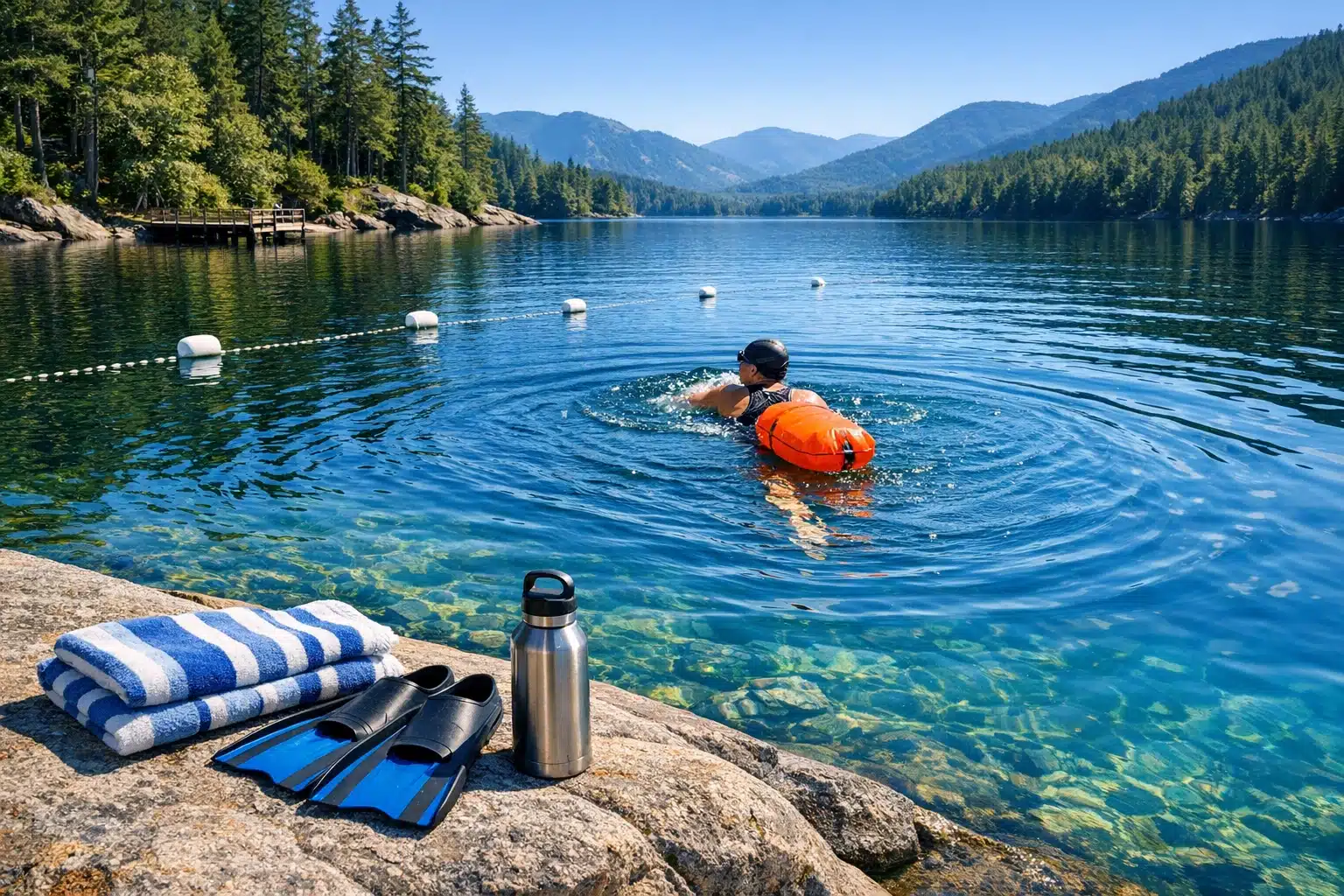
Explore the world of swimming
Swimming matters because it is one of the few activities that blends fitness, safety, recreation, and sport in a single skill. A child who learns to float gains confidence; an adult who returns to the pool often finds a low-impact path back to exercise. From Olympic lanes to quiet lakes, water invites discipline, curiosity, and calm. This article explores how swimming works, why it benefits the body and mind, and how beginners and committed swimmers can enjoy it more fully.
Outline
- The place of swimming in sport, culture, and daily life
- How swimming supports cardiovascular fitness, strength, and mental well-being
- A comparison of the main strokes and the technique behind efficient movement
- Training methods, equipment choices, and essential safety practices
- How different readers can build a lasting relationship with swimming
Swimming as a Life Skill, a Sport, and a Cultural Practice
Swimming sits in a rare category of human activity: it is useful, enjoyable, and deeply symbolic at the same time. At its most practical level, it is a safety skill. Knowing how to float, tread water, and move toward the edge of a pool or shore can reduce risk in everyday situations involving water. At another level, swimming is a global sport with clear rules, measurable performance, and a long competitive tradition. It has been part of the modern Olympic Games since 1896 for men and since 1912 for women, and it remains one of the most watched events because its appeal is immediate. Even a casual viewer can recognize speed, rhythm, and effort.
Yet swimming is not limited to competition. For millions of people, it belongs to the ordinary texture of life. It appears in school lessons, summer holidays, rehabilitation programs, military training, local clubs, and family outings. It also changes form depending on place. In a pool, swimming feels structured: black lines on the floor, marked distances, turns at the wall, and often the quiet etiquette of shared lanes. In open water, the experience becomes less predictable. A lake has temperature shifts. The sea adds currents, waves, and the strange beauty of an unfinished horizon. A river demands respect for flow. Each setting teaches a slightly different relationship with movement and attention.
Swimming also carries cultural meaning. In some communities, it is closely tied to national identity, coastal traditions, or school systems that prioritize water competence from an early age. In others, access to safe facilities can be limited, which turns swimming from a common pastime into a privilege shaped by geography, money, or infrastructure. That contrast matters. Learning to swim is not simply about sport; it is also about access, confidence, and public health.
A useful way to think about swimming is to see it through three connected lenses:
-
As survival: the ability to remain calm and move safely in water
-
As exercise: a full-body activity that can be adapted to many ages and abilities
-
As expression: a rhythm-based movement that can feel meditative, playful, or intensely competitive
This broad identity helps explain why swimming endures. Few activities can take a person from their first nervous grip on the pool edge to a lifelong routine that supports health, joy, and resilience. Water has a way of making effort feel both serious and strangely graceful, and that balance is part of swimming’s lasting power.
The Health Benefits of Swimming: Strength, Endurance, and Recovery
Swimming is often praised as a “full-body workout,” and that description is accurate, but it can also be too vague. What makes swimming especially valuable is the way several benefits happen at once. It challenges the heart and lungs, activates major muscle groups, improves coordination, and does so in an environment that reduces impact on the joints. Water’s buoyancy supports the body, which is why many people who struggle with land-based exercise find the pool more approachable. Someone recovering from certain injuries, managing joint discomfort, or easing back into movement after a long break may tolerate swimming more comfortably than running or jumping.
Cardiovascular fitness is one of the clearest gains. Swimming requires repeated muscular effort over time, and that pushes the heart and lungs to work more efficiently. Because water is far denser than air, even simple movements meet steady resistance. That means a swimmer is not only moving forward but also pressing against the environment with every pull, kick, and body rotation. The resistance is smooth rather than jarring, which helps explain why swimming can feel demanding without feeling harsh.
The activity also supports muscular endurance. Freestyle engages the shoulders, back, core, and legs in coordinated cycles. Breaststroke emphasizes timing and leg drive. Butterfly requires powerful upper-body and trunk control. Backstroke challenges posture and body alignment in a different way. Over time, these repeated patterns can improve stamina, body awareness, and movement efficiency. Calorie expenditure varies widely by pace, stroke, and body size, so it is better to think of swimming as a flexible training tool rather than a simple calorie formula.
Mental health deserves equal attention. The sensory quality of water can be calming. The sound becomes muted, breathing takes on a deliberate pattern, and visual distractions shrink to lane lines or open-water landmarks. For some people, this turns swimming into a moving reset button. It can reduce stress, create routine, and offer a sense of progress that is easy to measure: one more lap, smoother breathing, a more relaxed kick. The result is not magic, but it is meaningful.
Health organizations commonly recommend at least 150 minutes of moderate aerobic activity per week for adults, and swimming can count toward that goal. Its adaptability is part of its strength:
-
Beginners can alternate short swims with rest
-
Older adults can use it for gentle but effective conditioning
-
Athletes can add it as cross-training to reduce repetitive impact
-
People in rehabilitation settings may use supervised aquatic exercise as part of recovery
Swimming is not automatically easy, and it does require technique, patience, and access to safe water. Still, as a long-term habit, it offers one of the most balanced combinations of challenge and support available in exercise.
Understanding the Main Strokes: Technique, Efficiency, and Style
To an untrained eye, swimming may look like little more than arms and splashes, but each stroke is a carefully organized pattern of balance, timing, and propulsion. Technique matters because water punishes inefficiency. A small mistake in head position, breathing rhythm, or kick timing can drain energy quickly. That is why skilled swimmers often appear calm even when they are moving fast. The secret is not brute force alone; it is alignment, rhythm, and economy.
Freestyle, or front crawl, is typically the fastest and most common stroke in both training and competition. The body stays long and horizontal, the arms recover over the surface one at a time, and the swimmer rotates through the torso rather than staying flat. Good freestyle depends on a steady flutter kick, a high elbow catch underwater, and breathing that does not lift the head too far forward. When these parts work together, the stroke feels less like fighting water and more like sliding through it.
Backstroke shares some mechanics with freestyle but flips the body onto the back. That changes orientation and breathing. Since the face remains out of the water, many beginners find breathing easier, but directional control becomes trickier because the swimmer cannot see where they are going. Backstroke also rewards strong body alignment; if the hips sink, the stroke becomes drag-heavy and tiring.
Breaststroke is often seen as a beginner-friendly stroke because the head can rise regularly and the pace is naturally more measured. However, technically sound breaststroke is complex. The arm pull, breath, kick, and glide must be timed carefully. The kick is distinctive, using a whip-like motion from bent knees and turned-out feet. When done well, breaststroke looks compact and efficient. When done poorly, it becomes one of the slowest and most fatiguing strokes.
Butterfly is the most visually dramatic and, for many swimmers, the most demanding. Both arms recover together, and the body moves in an undulating pattern powered by the core and a dolphin kick. Butterfly punishes poor timing almost immediately. Yet it also demonstrates the elegance of coordinated movement in water: powerful, rhythmic, and unmistakable.
A simple comparison helps clarify their differences:
-
Freestyle: fastest, efficient for distance, widely used in fitness swimming
-
Backstroke: good for posture awareness, easier breathing, unique orientation challenge
-
Breaststroke: slower pace, precise timing, popular for recreational swimmers
-
Butterfly: highest technical and physical demand, excellent for power and rhythm
For beginners, the best stroke is not always the fastest or the easiest-looking one. It is the stroke that builds confidence while teaching control. Many coaches begin with floating, kicking, and breathing drills before full-stroke work because strong fundamentals transfer across all four styles. Once a swimmer learns to streamline the body, exhale calmly, and keep movements connected, the pool opens up. What first seemed like a set of difficult mechanics starts to feel more like language: different strokes, different accents, one shared conversation with water.
Training, Equipment, and Safety: Building Good Habits in the Water
Swimming rewards consistency more than dramatic effort. A person who swims two or three times a week with attention to technique will usually improve more reliably than someone who charges through one exhausting session and disappears for a month. Good training begins with a simple principle: match the session to the swimmer’s current ability. That sounds obvious, yet many people either underestimate the value of basics or overestimate their readiness for hard sets. In the water, both mistakes show up quickly in the form of poor breathing, sloppy body position, and early fatigue.
A balanced session often includes a warm-up, skill work, a main set, and an easy finish. For example, a beginner might start with relaxed kicking and easy lengths, then practice breathing drills or body rotation, followed by short repeats with rest between each effort. A more experienced swimmer may use intervals to train pace control, endurance, or speed. Tools such as kickboards, pull buoys, fins, and paddles can help when used thoughtfully, though none of them replaces sound technique.
The basic gear list is refreshingly short:
-
A comfortable swimsuit that allows unrestricted movement
-
Goggles that seal well and do not distract during a set
-
A swim cap if required by the facility or preferred for comfort
-
A towel and water bottle, because swimmers still need hydration
Beyond equipment, safety deserves constant attention. In pools, that means learning lane etiquette, checking depth before diving, and respecting lifeguard instructions. In open water, the stakes rise. Conditions can change fast, visibility can be limited, and cold water can affect breathing and coordination. Swimming alone in open water is a poor gamble. Safer practice includes using a visible tow float, checking local conditions, swimming with others, and understanding entry and exit points before getting in.
Formal lessons are valuable not just for children but for adults as well. Many adults carry anxiety into the water, often because they were never taught properly or had a negative early experience. A good instructor can break the skill into manageable parts: floating, exhaling underwater, recovering balance, and moving a short distance without panic. That progression matters. Confidence in swimming is not built by being told to relax; it is built by repeated success in small, controlled steps.
The smartest swimmers tend to follow a few practical rules:
-
Do not ignore fatigue, cold, or cramping
-
Warm up before harder efforts
-
Prioritize technique before speed
-
Treat open water with humility, not bravado
In the end, good swimming habits are less about flashy gear and more about patience, awareness, and respect for the environment. Water can be welcoming, but it always asks for attention in return.
Conclusion for Readers: Finding Your Own Place in the Water
If you are reading this as a beginner, the most helpful idea to keep is simple: swimming does not need to begin with elegance. It begins with familiarity. The first wins may be tiny ones, such as putting your face in the water without tension, floating for a few seconds, or finishing two lengths without stopping. Those moments matter because they create trust, and trust is the foundation of every future improvement. No stopwatch is required for that stage, only patience.
If you are a recreational swimmer, the pool offers more than casual exercise. It can become a steady anchor in a crowded week. Twenty or thirty focused minutes can deliver movement, mental space, and a visible sense of progress. You might vary strokes to avoid monotony, practice smoother turns, or build endurance one set at a time. The pleasure of swimming often grows as technique improves, because efficiency changes the experience from struggle to flow.
If you are an athlete or a goal-driven learner, swimming offers endless refinement. There is always another layer to explore: a cleaner catch, a stronger kick, better pacing, smarter recovery, or improved race strategy. Because water gives immediate feedback, progress can feel precise. The clock notices everything, but so does the body. A stroke that once felt hurried can become controlled. A breath that once interrupted momentum can settle neatly into rhythm.
Swimming also remains valuable across life stages. Children gain safety and confidence. Adults find sustainable conditioning. Older swimmers often appreciate the combination of mobility work and cardiovascular training. Even people who never plan to compete can benefit from being comfortable in water, especially in a world full of pools, beaches, boats, and unexpected moments near water.
For the target audience of this article, the message is encouraging rather than dramatic. You do not need to chase elite performance to gain something real from swimming. Start where you are, learn the basics well, and let skill grow through repetition. A pool lane, a local lesson, or a supervised open-water session can become the start of a long and useful practice. Swimming asks for attention, but it gives back variety, resilience, and a rare kind of quiet effort that stays with you long after you leave the water.