Exploring Football: Updates and strategies in football.
Football matters because it is at once a street-corner pastime, a global business, and a shared language that crosses borders with ease. One clever pass, one urgent press, or one last-minute goal can link schoolyards, packed arenas, and late-night viewers in the same emotional beat. This article explores why the game became so influential, how strategy shapes results, and which modern forces are changing the way it is played and watched.
Outline: the discussion moves from football’s cultural reach to match tactics, then to training and technology, before examining major competitions and the issues likely to define the sport’s next decade.
The Global Reach of Football and Why It Endures
Football has become the world’s most widely followed sport for reasons that are both simple and profound. At the basic level, the game is accessible. A match can begin with little more than a ball and an open patch of ground. That low barrier to entry matters. Many sports require expensive equipment, specialized facilities, or a highly organized structure before play can even start. Football, by contrast, can thrive in cities, villages, schools, beaches, and parks. A wall can become a goal, a jacket can mark a touchline, and a group of friends can create a contest in minutes.
Its formal scale is just as impressive. FIFA includes more than 200 member associations, and the men’s and women’s World Cups are among the most watched sporting events on the planet. FIFA reported that the 2022 men’s World Cup reached billions of people globally, with the final attracting a huge audience on its own. Those numbers show more than popularity; they show how football operates as a shared cultural event. Supporters who may disagree on politics, language, or lifestyle can still speak fluently about pressing, finishing, defending, and drama under pressure.
Football also lasts because it balances structure and surprise. The rules are easy to learn, but the outcomes are hard to predict. A stronger team can dominate possession and still lose to a fast counterattack or a brilliantly taken set piece. That uncertainty gives the game a rare emotional texture. Every match contains a tension between plan and chaos, patience and risk.
Several factors explain its staying power:
• It is easy to start playing.
• It creates strong local and national identities.
• It combines athletic skill with strategic depth.
• It is supported by vast media, club, and youth systems.
There is an economic side too. Elite leagues generate billions in revenue through broadcasting, sponsorships, ticket sales, and merchandise, while lower-level clubs often serve as community anchors. In some towns, the local club is not just an entertainment option; it is a weekly meeting point and a source of belonging. That broad social range is rare. Football can be glamorous under floodlights and deeply ordinary on a muddy weekend pitch, and somehow it remains fully itself in both settings.
Tactics and Match Strategy: How Space, Tempo, and Shape Decide Games
Modern football is often described through formations such as 4-3-3, 4-2-3-1, or 3-5-2, but those numbers only tell part of the story. Formations are starting maps, not fixed destinies. What truly matters is how a team uses space, controls tempo, and reacts when possession changes hands. A side may defend in a compact 4-4-2, build play in a 3-2 structure, and attack with five players spread across the last line. To a casual viewer, that movement can seem fluid and spontaneous. To coaches, it is carefully designed.
One of the biggest tactical changes in recent years has been the focus on pressing and counter-pressing. Teams no longer think only about what to do with the ball; they also plan exactly how to win it back within seconds of losing it. High pressing can force mistakes near goal, shorten the field, and create quick scoring chances. The trade-off is obvious: if the press is beaten, large spaces may open behind the defensive line. That is why elite coaches train pressing as a group action, not an individual sprint. The angle of the run, the cover shadow, the spacing between midfielders, and the timing of defenders stepping up all matter.
At the other end of the spectrum, some teams prefer a lower defensive block and a more direct transition game. This approach is not automatically negative or passive. When organized well, it can be efficient and dangerous. A disciplined team can absorb pressure, protect central areas, and attack quickly through fast wingers or a strong target forward. In tournament football especially, where margins are thin and recovery time is limited, pragmatic structure often competes well against elaborate possession systems.
Several tactical ideas now shape top-level matches:
• Positional play tries to place players in zones that stretch the opponent and create passing lanes.
• Rest defense keeps a team balanced behind the ball so it is not exposed during attacks.
• Inverted full-backs move inside to support midfield control.
• Set pieces are treated as major strategic moments rather than afterthoughts.
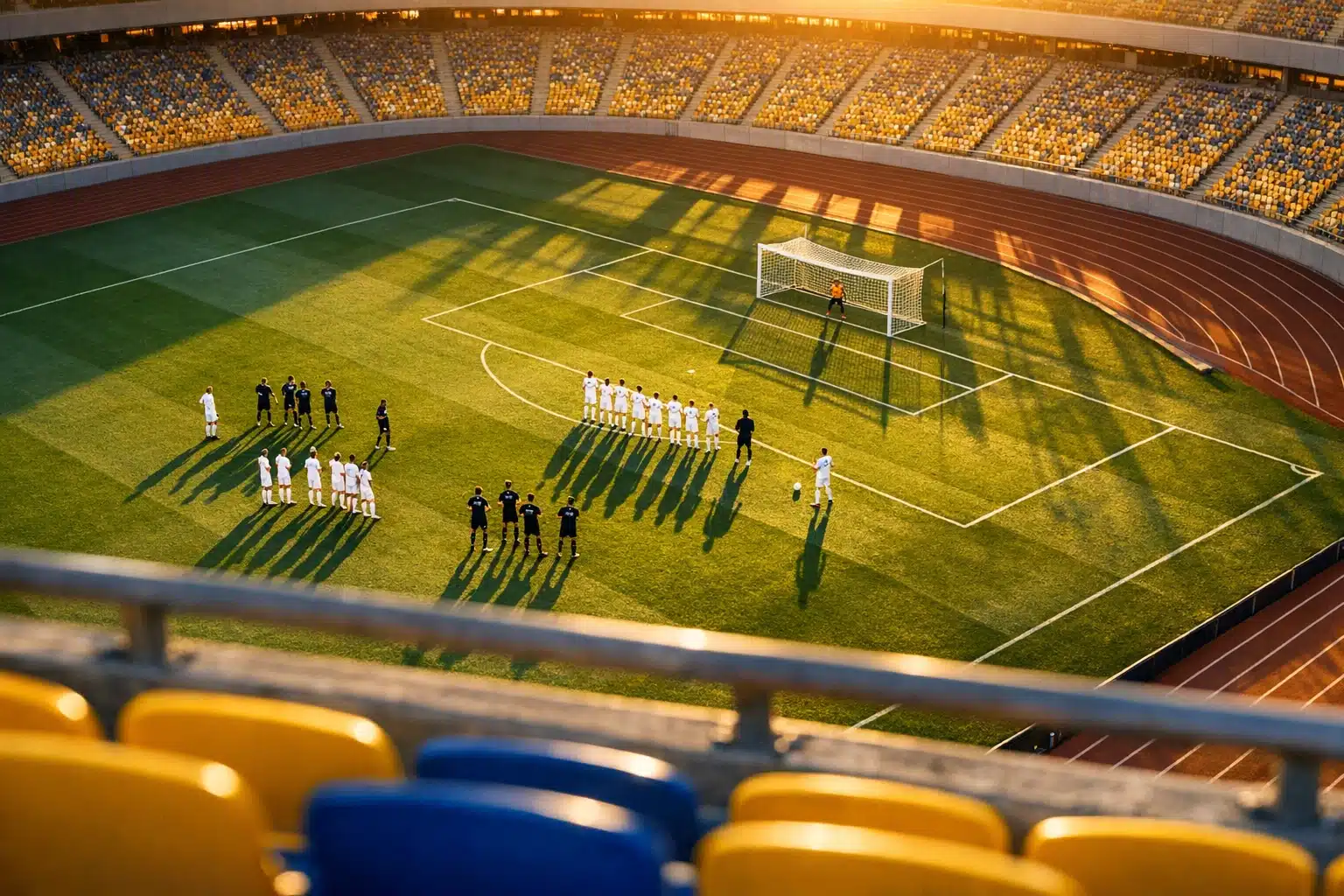
Set pieces deserve special attention because they account for a meaningful share of goals in many leagues. Corners, wide free kicks, and long throws are now analyzed with the same seriousness as open-play patterns. Analysts study screens, near-post runs, blocker movements, and second-ball positioning. In a sport where one goal often changes everything, these details are not cosmetic. They are decisive.
The beauty of football tactics lies in comparison. One coach may seek territorial control through patient passing, while another accepts less possession in exchange for speed and verticality. Neither philosophy is automatically superior. The better approach is the one that fits the players, the opponent, and the moment. Football strategy is less like solving a single equation and more like playing chess in the rain: plans matter, but so does adaptation.
Training, Analytics, and the Making of the Modern Footballer
The image of football as pure instinct has never been entirely true, but the modern game has made preparation far more visible. Today’s footballer is shaped by coaching, sports science, nutrition, video analysis, and recovery protocols that would have seemed extraordinary a generation ago. Talent remains essential, of course. A soft first touch, sharp vision, or natural timing in the tackle cannot simply be manufactured. Yet the modern environment is built to refine every edge around that talent.
Physical demands illustrate the point. At elite level, outfield players often cover around 10 to 13 kilometers in a match, but raw distance does not tell the full story. High-intensity runs, repeated sprints, quick decelerations, and sudden changes of direction place huge stress on the body. A winger may accelerate dozens of times. A midfielder may scan constantly and adjust position every few seconds. A defender may spend long stretches reading danger before making one crucial recovery sprint. Training therefore has to balance endurance, explosiveness, tactical rehearsal, and injury prevention.
Sports science now sits close to the center of football operations. Clubs use GPS trackers, heart-rate data, sprint metrics, and wellness reporting to manage workload. Analysts study how much running a player performs, but also when and at what intensity. Coaches can then decide whether to push, rotate, or protect. This has become even more important in an era of crowded schedules, long travel, and year-round competition. The introduction of five substitutions in many competitions has also changed game management, allowing teams to maintain intensity and reduce fatigue-related drop-offs.
Common elements of modern performance support include:
• Individualized strength and conditioning plans.
• Nutrition tailored to training load and recovery needs.
• Video sessions focused on positioning and decision-making.
• Sleep, hydration, and soft-tissue recovery monitoring.
Analytics has expanded beyond fitness. Recruitment departments now use data points such as expected goals, expected assists, progressive passes, pressure regains, duel success, and box entries to assess players. These numbers do not replace scouting; they sharpen it. A scout may notice that a midfielder looks calm under pressure, while the data helps confirm how often he receives the ball in tight areas and still progresses play. Used well, analytics reduces guesswork. Used poorly, it turns a living sport into a spreadsheet. The best clubs understand that both evidence and context matter.
Technology has also changed officiating and review. Video Assistant Referee systems, goal-line technology, and semi-automated offside tools have aimed to reduce clear errors, even if debates about delay and interpretation remain. That tension feels very football-like: the sport wants fairness, but it also wants flow. In the end, the modern player competes in a more informed environment than ever before. Preparation has become quieter, smarter, and more exacting, and the difference between winning and falling short is often hidden in those details.
Leagues, Tournaments, and the Competitive Drama That Keeps Fans Hooked
Football’s calendar is one of the reasons the sport never drifts far from public attention. Domestic leagues provide weekly rhythm. Cup competitions inject sudden jeopardy. Continental tournaments raise the quality bar. International football adds patriotic emotion and a sense of occasion that ordinary club matches cannot fully replicate. Together, these layers create a year-round narrative machine. A club can be fighting for a title in one month, protecting tired legs for Europe in the next, and rebuilding after a difficult transfer window by autumn.
The league format rewards consistency. Over a long season, strong squads, reliable coaching, and tactical adaptability usually rise to the top. Knockout football is different. It is shaped by short-term decision-making, momentum, and nerve. A team that manages a two-leg tie intelligently or survives one difficult half in a final can write history. That contrast is part of what makes football so compelling. Leagues often identify the most complete team. Cups often spotlight the most resilient one.
For supporters, competitions also carry different emotional textures:
• Domestic leagues build routine, rivalry, and long-term identity.
• Cup matches bring upset potential and sharp, concentrated drama.
• Continental tournaments test clubs against unfamiliar styles.
• International events turn players into national symbols almost overnight.
Recent updates in football have made these competitions even more discussed. Expanded tournament formats, more detailed broadcast analysis, and the use of video review have changed how fans experience matches. The transfer market has become a permanent conversation rather than a side note, with recruitment strategies now analyzed almost as intensely as lineups. Women’s football has also gained wider visibility, larger audiences, and stronger professional structures in many countries, which is one of the most important developments in the sport’s broader growth.
The cultural role of clubs should not be underestimated either. A club badge can represent neighborhood pride, family tradition, migration history, or class identity. Derby matches are rarely just about points. They are memory, ritual, and local storytelling. Even neutral viewers are drawn in because the atmosphere can feel like theatre with cleats: songs rolling down from the stands, tension hanging in the air, and the sense that every misplaced pass has consequences.
At the highest level, football is also a major media product. Broadcasters build entire weekends around matchdays, while social media turns goals, errors, and tactical debates into instant global conversation. Yet for all the commercial polish, the game still depends on uncertainty. A lower-division side can knock out a giant. A backup striker can become the hero of a cup run. A tournament favorite can be undone by one set piece and a fearless underdog. That possibility keeps fans returning. Football gives structure to the week, but it never guarantees the ending.
The Future of Football: Innovation, Pressure, and the Search for Balance
Football’s future will likely be defined by a constant negotiation between growth and restraint. The sport is expanding in revenue, reach, and visibility, but every gain brings fresh questions. More matches can mean more income, yet they also increase fatigue and injury risk. More technology can improve accuracy, yet it may slow emotion-rich moments that once unfolded without interruption. Bigger global audiences can strengthen investment, but they may also widen the gap between wealthy clubs and the rest. Football is not running out of energy; it is trying to decide how to use it wisely.
Player welfare is one of the clearest issues ahead. Top professionals now move through packed schedules of league matches, domestic cups, continental competitions, international breaks, and commercial travel. The body can adapt only so far. Managers rotate squads more than in the past, but the calendar remains demanding. If the sport wants higher intensity, it must also respect recovery. That means smarter scheduling, stronger squad development, and serious attention to long-term health rather than short-term spectacle alone.
Another major theme is competitive balance. Financial power shapes recruitment quality, coaching depth, academy resources, and even bench strength. Well-run smaller clubs can still thrive, but sustained success is harder when the economic gap grows too wide. Football needs its giants, because they attract attention and raise standards, but it also needs unpredictability. If too many outcomes feel prewritten, part of the magic goes flat. Promotion pathways, youth development, and sensible regulation all matter here.
Key questions for the next era include:
• How can schedules remain ambitious without overloading players?
• How should technology assist officials without dominating the match?
• How can grassroots access improve while elite costs continue to rise?
• What structures best support the continued growth of women’s football?
Sustainability is also becoming harder to ignore. Travel, stadium operations, and event logistics all carry environmental costs. Clubs and organizers are increasingly expected to think about energy use, transport planning, and material waste. This is not a side issue anymore; it is part of how institutions are judged. At the same time, football still has enormous power to create positive community effects through school programs, local facilities, and social inclusion efforts.
The most hopeful sign is that the sport remains adaptable. Football has already absorbed tactical revolutions, commercial expansion, and technological change without losing its emotional core. A child still learns the same basic thrill of controlling a ball under pressure. A crowd still rises in the same instant when a winger beats a defender. The field may be surrounded by more cameras, more data, and more money than ever before, but the game’s heartbeat is familiar. The challenge now is to protect that heartbeat while allowing the sport to evolve with intelligence rather than speed alone.
Conclusion for Fans, Players, and Curious Readers
Football stays relevant because it brings together simplicity and complexity in a way few activities can match. You can enjoy it as pure spectacle, but the deeper you look, the more you notice: tactical choices, physical preparation, emotional pressure, and the wider systems that shape every result. For regular fans, understanding these layers makes matches richer. For new readers, it offers a clear way into the sport without draining away the fun. The best way to follow football is to keep both lenses open at once, one for the beauty of the moment and one for the ideas beneath it.