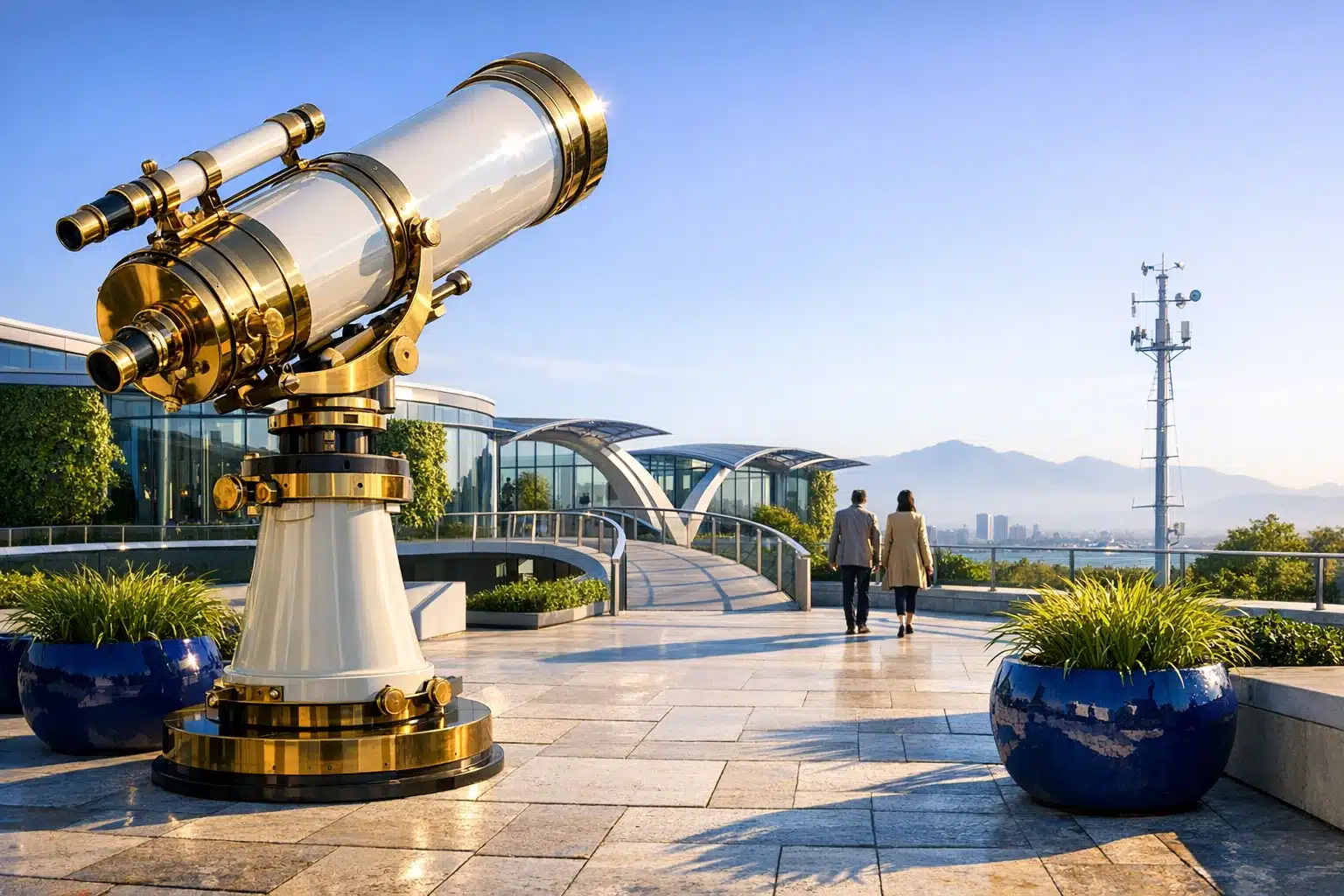
Exploring Science: Latest discoveries and advancements in Science.
Introduction: Why Modern Science Feels Different
Science no longer advances in isolated bursts; it now moves through networks of data, machines, labs, and global collaboration. A telescope in orbit can inform a hospital algorithm, while a battery experiment can influence climate policy and manufacturing. That overlap makes modern discovery exciting, but also harder to follow without a clear map. This article begins with that map, showing where major breakthroughs are happening and why they matter beyond the lab.
One reason science feels unusually dynamic is that the tools of discovery have improved at nearly every level. Sensors are more precise, supercomputers are more accessible through cloud infrastructure, and global research teams can compare results in near real time. Genome sequencing that once cost fortunes can now be done at a fraction of its early price, and space telescopes collect data at a depth that earlier generations could only imagine. Even fields that seem far apart now work like neighboring rooms in the same building. Materials science affects energy storage, energy storage affects transportation, transportation affects emissions, and emissions shape climate modeling. Modern science is less a shelf of separate books and more a busy station where many lines meet.
This article follows five connected paths so readers can see both the detail and the bigger pattern. It starts with the structure of modern discovery, then moves into artificial intelligence and advanced computing, explores biotechnology and medicine, connects space science with climate and energy research, and ends with practical takeaways for people trying to understand where science is headed. A simple outline helps:
• how collaboration and instrumentation changed research
• why AI speeds analysis without replacing judgment
• where biology and medicine are seeing tangible progress
• how space, climate, and energy science now influence one another
• what readers, students, and professionals should watch next
The goal is not to produce hype. It is to show how current advances actually work, what they can realistically do, and where caution still matters.
Artificial Intelligence, Computing, and the New Engine of Discovery
Artificial intelligence has become one of the most important scientific tools of the last decade, not because it creates truth by itself, but because it helps researchers find patterns at speeds humans cannot match alone. In earlier eras, scientists often spent years sorting measurements, reviewing literature, and testing candidate ideas one by one. Today, machine learning systems can scan enormous datasets, classify images from microscopes, prioritize chemical compounds for testing, and model relationships that would be invisible in a spreadsheet. A famous example is protein structure prediction. For decades, determining the three-dimensional shape of a protein was difficult, slow, and expensive. Then AI systems such as AlphaFold demonstrated that prediction could be done at scale, and the resulting database expanded to include hundreds of millions of protein structures. That did not end laboratory work, but it changed the starting line. Researchers could ask sharper questions sooner.
The comparison between older and newer workflows is striking. Traditional discovery often looked like a long corridor of trial and error. The modern version is more like a series of smart filters. In materials science, algorithms can suggest promising battery chemistries before a team mixes chemicals on a bench. In astronomy, AI helps sort through huge sky surveys to flag transient events, such as supernova candidates, that deserve immediate attention. In medicine, image-recognition systems can assist radiologists by highlighting suspicious regions on scans, though final interpretation still requires trained clinicians and careful validation. Laboratories are also becoming more automated. Robotic platforms can run repeated experiments, adjust conditions, and feed results back into optimization software. The effect is not magical; it is procedural. More cycles can be completed in less time, which means better odds of finding useful signals.
Still, AI in science deserves sober handling. Models can inherit bias from training data, generate false confidence, or produce plausible but inaccurate outputs. Large language models can summarize papers and draft code, yet they can also hallucinate citations or misunderstand technical nuance. That is why strong scientific practice still depends on replication, peer review, transparent methods, and domain expertise. The healthiest comparison is not “human versus machine,” but “human with better instruments.” The calculator did not end mathematics, and the telescope did not replace astronomy. In much the same way, AI is becoming part of the scientific toolkit:
• accelerating literature review
• narrowing experimental targets
• improving pattern detection in noisy data
• enabling simulations too complex for manual analysis
Its value is highest when paired with skepticism, measurement, and accountable decision-making.
Biotechnology and Medicine: From Reading Life to Editing It
If AI is changing how science thinks, biotechnology is changing what science can directly touch. Biology has moved from observation to intervention with remarkable speed. A generation ago, sequencing a human genome was a historic undertaking that took years and immense funding. Today, sequencing is far faster and far cheaper, which has opened the door to precision medicine, pathogen tracking, and large-scale studies of human variation. That drop in cost matters because it changes who can participate. More hospitals, research centers, and public health systems can generate and analyze biological data. At the same time, tools such as CRISPR have transformed gene editing from a specialist concept into a practical platform. The first regulatory approvals of CRISPR-based treatments for sickle cell disease marked a major turning point. They showed that gene editing could move from the lab bench into clinical use for certain conditions, even if access, cost, and long-term monitoring remain serious challenges.
Another major shift has come from platform technologies rather than one-off inventions. Messenger RNA, or mRNA, became widely known through vaccines, but its scientific importance extends beyond a single emergency. The appeal of a platform is flexibility: once researchers understand the delivery system and manufacturing process, the same general framework can be adapted for different targets. That can shorten development time and improve responsiveness to new threats. Single-cell sequencing has also changed biological research by allowing scientists to study how individual cells differ within the same tissue. Instead of treating an organ as a uniform block, researchers can see a crowded city of distinct cell states, interactions, and developmental paths. Organoids, which are simplified tissue models grown from stem cells, provide another leap. They do not fully replicate the human body, but they give scientists a more realistic system than flat cell cultures for studying disease mechanisms and drug response.
The exciting part is obvious, but the comparison with older medicine is worth spelling out. Traditional care often relied on broad categories: one diagnosis, one standard treatment, one expected response. Modern biomedical science is pushing toward finer resolution. Two patients with the same visible disease may have different genetic drivers, different immune responses, and different treatment outcomes. That insight is improving cancer care, rare disease diagnosis, and infectious disease monitoring. Yet progress is uneven. Advanced therapies can be expensive, manufacturing is complex, and ethical questions do not disappear because the science is impressive. Researchers and policymakers still need to address:
• equitable access to genomic medicine
• privacy and control of sensitive biological data
• fair representation in clinical studies
• realistic communication about benefits and risks
Biotechnology is not a clean triumphal march. It is a powerful, fast-moving field whose greatest successes will depend on careful translation into real-world healthcare.
Space, Climate, and Energy: Big Systems, Shared Evidence
Some of the most fascinating advances in science happen when researchers study systems so large that no single lab can hold them: the atmosphere, the oceans, the interior of stars, or the energy grid of a modern country. Space science offers a vivid example. The James Webb Space Telescope has provided unusually detailed observations of distant galaxies, star-forming regions, and exoplanet atmospheres, helping scientists test ideas about how the early universe evolved. Not every early interpretation will survive further analysis, and that is exactly how science should work. Data arrives, hypotheses sharpen, and claims are revised. Meanwhile, planetary missions continue to enrich our understanding of Mars, icy moons, and the chemical diversity of the solar system. These discoveries may seem remote from daily life, yet the same engineering and data-processing methods that support astronomy often influence imaging, sensors, and communications closer to home.
Climate science shows even more direct relevance. Advances in satellites, ocean buoys, atmospheric monitoring, and high-resolution models have greatly improved our ability to measure environmental change. Scientists can now identify methane super-emitters from space, track wildfire smoke across continents, and estimate how heat, drought, and heavy rainfall are shifting in different regions. This is not just about publishing reports; it affects agriculture, insurance, urban planning, and public infrastructure. Compared with older climate models, newer systems can incorporate more variables at finer scales, which helps communities prepare for actual risks rather than abstract averages. The relationship between climate science and energy research is especially important. Understanding emissions leads to better targets for mitigation, and mitigation depends on technologies that can scale.
Energy science has responded with progress on several fronts. Solar technology continues to improve, with perovskite-silicon tandem cells achieving laboratory efficiencies above many standard silicon designs, even though durability remains a hurdle. Battery research is expanding beyond one chemistry, with lithium iron phosphate, sodium-ion designs, and solid-state concepts all drawing attention for different reasons. Nuclear fusion remains a long-term challenge, but repeated ignition results at the National Ignition Facility showed that a previously symbolic milestone could be achieved in practice under controlled conditions. That does not mean commercial fusion is around the corner; it means the scientific barrier is more concrete than before. Across space, climate, and energy, one lesson stands out:
• better measurement changes public understanding
• better models improve decision quality
• better materials expand what infrastructure can do
When the evidence gets sharper, the future stops being vague and becomes something engineers, planners, and citizens can actually work with.
Conclusion: What These Advances Mean for Readers, Students, and Decision-Makers
For the target audience of this article, whether that means students choosing a field, professionals trying to stay current, educators shaping lessons, or curious readers who simply want a clearer view of the world, the biggest takeaway is this: science is no longer easy to divide into neat categories. Biology uses computation. Climate research depends on satellite engineering. Medicine draws on chemistry, data science, and manufacturing. Space exploration feeds advances in sensors and imaging. That blending can feel overwhelming at first, but it is also the reason so many discoveries now move from theory to application faster than they once did. The pace is not just the result of smarter people or bigger headlines. It comes from improved tools, more shared data, better collaboration, and a growing ability to test ideas across disciplines.
A practical response starts with habits of attention. Readers do not need to become specialists in every domain, but they do benefit from learning how to evaluate scientific claims. A strong report usually explains methods, acknowledges uncertainty, and places findings in context rather than pretending that every result is a revolution. It also helps to watch for the difference between an early demonstration and a mature technology. A promising battery chemistry in a paper is not the same as a robust supply chain. A medical breakthrough in a trial is not the same as equitable access in hospitals. A space observation can be astonishing without instantly rewriting every textbook. Keeping that distinction in mind protects readers from hype while preserving genuine excitement.
If there is a final image worth carrying forward, it is this: modern science resembles a city at night, with thousands of lights switching on in different neighborhoods at once. Some lights mark foundational work that may take years to matter publicly. Others signal immediate change in health, energy, agriculture, and computing. For readers and decision-makers, the goal is not to chase every flash. It is to recognize the patterns:
• breakthroughs often come from connected fields
• good tools accelerate discovery but do not replace evidence
• useful science depends on trust, access, and responsible communication
• the most important advances are those that can be tested, scaled, and shared
That perspective makes science easier to follow and far more valuable. Instead of a stream of disconnected headlines, it becomes a coherent story about how knowledge is built and how society chooses to use it.