Technology Trends and Practical Innovations for Everyday Life
Technology used to feel like something that happened in laboratories, trade shows, and glossy ads, far away from the kitchen table. Now it sits in pockets, on wrists, inside cars, and behind doorbells, quietly shaping daily routines in ways many people barely notice until the power goes out or the Wi-Fi slows to a crawl. That shift matters because useful innovation is no longer measured only by speed or novelty, but by how well it helps people save time, stay healthy, work smarter, and make better decisions.
This article looks beyond product launches and buzzwords to focus on technologies ordinary people can actually use. The outline below maps the main themes, and the sections that follow explain how current trends compare with older tools, where the real benefits appear, and what trade-offs deserve attention before anyone upgrades.
Outline
- How smart devices are changing homes and domestic routines
- Why artificial intelligence is becoming a practical everyday assistant
- What digital tools mean for health, safety, and personal mobility
- How work, learning, and money are being reshaped by connected systems
- How everyday users can adopt technology wisely without chasing every trend
Smart Homes and Connected Devices: Convenience With Conditions
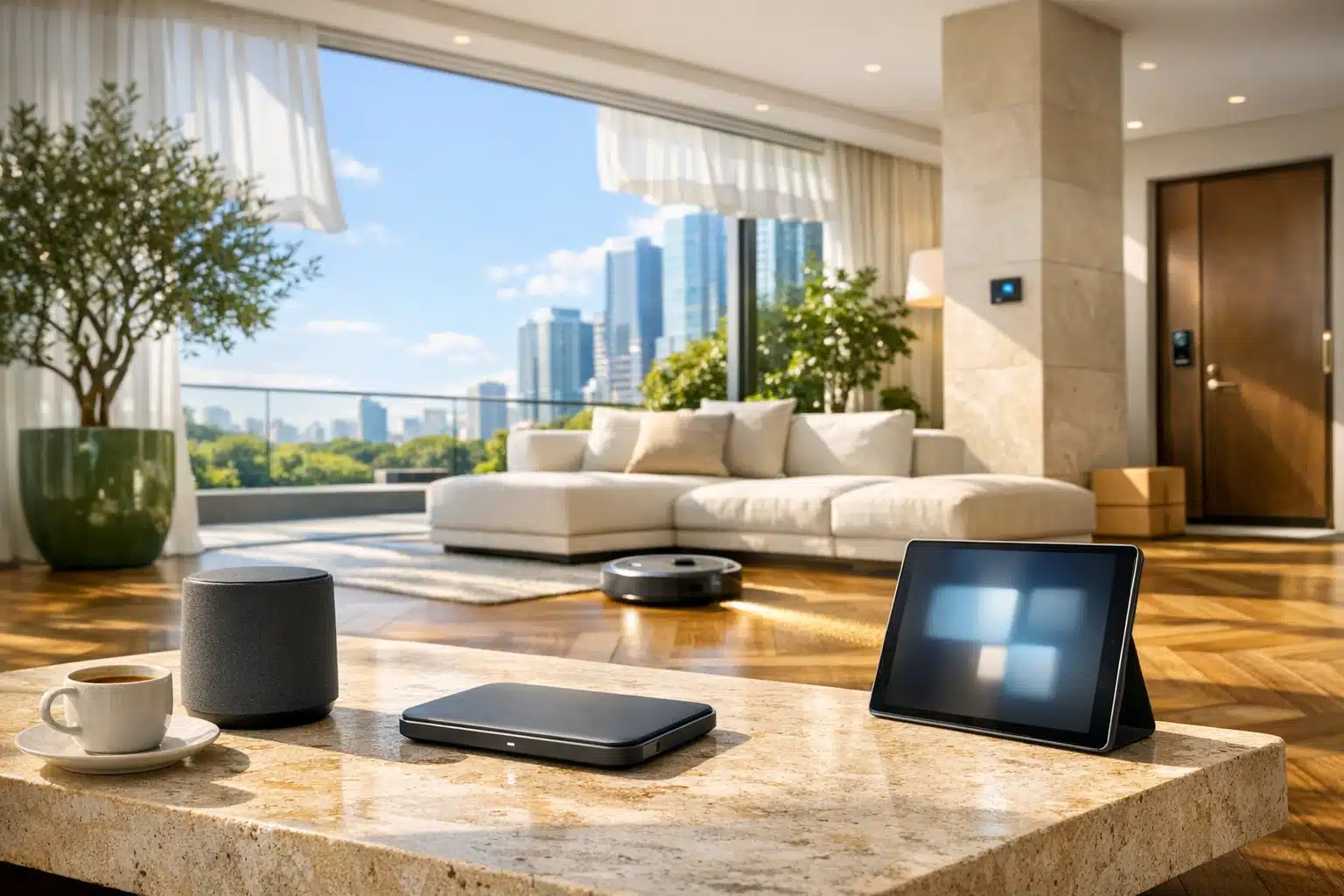
The smart home is one of the clearest examples of technology shifting from novelty to normal life. A decade ago, connected living often meant a single voice speaker on a countertop and a lot of marketing promises. Today, it can include thermostats that learn patterns, lights that respond to schedules, robot vacuums that map rooms, plugs that measure energy use, and video doorbells that let people check a package delivery from miles away. Industry estimates place global Internet of Things connections in the tens of billions, which shows how thoroughly sensors and connected devices have entered homes, offices, and public spaces.
What makes these devices practical is not that they feel futuristic, but that they reduce small daily frictions. A smart thermostat, for example, can make heating and cooling more efficient when it is set up properly and paired with realistic schedules. Smart lights can improve accessibility for older adults or people with mobility limitations because controls are available by voice, phone, or wall switch. Leak sensors can alert homeowners to water problems before a small drip becomes a major repair bill. In that sense, smart technology acts less like a dramatic invention and more like an extra set of quiet habits built into the home.
Still, not every connected product is worth buying. Traditional appliances often did one job well for many years with little maintenance. Smart versions add automation, but they can also add software updates, subscription fees, compatibility issues, and privacy concerns. A basic coffee maker from fifteen years ago rarely needed a password reset. A connected one might ask for an app, an account, and permission settings before it brews the first cup. That comparison matters because convenience should not come at the cost of reliability.
When evaluating smart home products, a few practical criteria matter more than flashy demonstrations:
- Choose devices that still work manually if the internet fails.
- Look for support for open standards such as Matter when possible.
- Check how long the manufacturer provides security updates.
- Review privacy settings, especially for cameras, microphones, and cloud storage.
- Ask whether the product solves a recurring problem or merely adds one more screen to check.
The strongest smart home systems are often the least dramatic. They dim lights at bedtime, lower heating when nobody is home, alert users to unusual motion, and help reduce wasted energy. The weakest ones are like loud guests at dinner: they demand attention, interrupt routines, and make simple tasks feel strangely complicated. For everyday users, the lesson is clear. A connected home becomes valuable when it behaves like good design, almost invisible when it works well, and immediately useful when life gets busy.
Artificial Intelligence in Daily Life: From Background Helper to Creative Partner
Artificial intelligence has moved quickly from a technical specialty into mainstream use, but most people encounter it in ordinary forms long before they open a chatbot. Email spam filters, map routes, search suggestions, voice transcription, fraud detection, and smartphone photo sorting have all relied on forms of AI for years. What changed recently is visibility. Generative AI systems can now write drafts, summarize documents, translate speech, answer questions, produce images, and help users brainstorm in plain language. The shift feels dramatic because people no longer need to understand code or complex menus to use advanced computing power. They can simply ask.
That ease of use creates genuine value. Students can use AI tools to organize notes or explain unfamiliar concepts in simpler language. Office workers can draft routine emails, reformat reports, summarize meetings, and turn rough ideas into first-pass presentations. Small business owners can generate product descriptions, compare ad copy variations, and respond faster to customer questions. On phones, AI can improve photo quality, remove background noise from calls, and enable real-time translation. For accessibility, these advances are especially meaningful. Speech-to-text, image description, captioning, and predictive input can make digital spaces easier to navigate for many users.
The comparison with older automation is useful. Traditional software worked like a checklist: if X happens, do Y. It was powerful but rigid. Modern AI is more flexible because it can infer patterns from large datasets and respond in natural language, yet that flexibility comes with uncertainty. An AI system may produce a polished answer that sounds confident while containing errors, invented references, or missing context. That is why good use of AI depends on supervision. It is best treated as a fast assistant, not an unquestioned authority.
For practical use, AI tends to be strongest in tasks such as:
- Creating first drafts that a human can edit and verify
- Summarizing long text, meetings, or research notes
- Translating and rephrasing content for different audiences
- Finding patterns in large documents or datasets
- Supporting accessibility through captioning, transcription, and text simplification
It is weaker when users expect perfect factual reliability, deep emotional judgment, or expert accountability. Privacy also matters. Some tools send prompts and files to remote servers, which may be inappropriate for sensitive personal, medical, or business information. Bias remains a concern as well, because AI systems can reflect imbalances in their training data. The practical future of AI is therefore not a story of machines replacing all human effort. It is a story of people learning when to delegate, when to verify, and when to keep the final decision firmly in human hands. Used well, AI feels less like a robot takeover and more like having a very fast intern who never sleeps but definitely needs editing.
Health, Safety, and Mobility: Technology That Travels With You
Some of the most meaningful technology trends are no longer fixed to desks or living rooms. They move with people throughout the day. Wearables, telehealth platforms, navigation tools, driver assistance systems, and health apps have turned phones and watches into personal dashboards for activity, location, reminders, and risk detection. This matters because everyday life is mobile. People commute, exercise, care for family members, shop on the move, and often manage appointments between dozens of other tasks. Technology that supports health and safety in motion can provide tangible benefits, especially when it saves time or catches a problem early.
Wearable devices offer a useful comparison with older health tracking methods. A simple pedometer once counted steps and little more. Today, many consumer wearables estimate heart rate, sleep duration, exercise intensity, recovery trends, and in some models even irregular rhythm alerts or fall detection. These features are not substitutes for professional diagnosis, and manufacturers usually state that clearly, but they can encourage earlier attention to patterns that might otherwise go unnoticed. A person who sees a persistent drop in sleep quality or a change in resting heart rate may be more likely to adjust habits or consult a clinician. Telemedicine adds another layer of practical value by reducing travel time for suitable appointments, follow-ups, and basic consultations.
Mobility has changed just as dramatically. Real-time navigation now does far more than replace paper maps. It estimates arrival times, reroutes around congestion, flags road closures, and sometimes integrates public transit, cycling, walking, parking, or charging stops. For drivers, advanced assistance features such as lane departure warnings, blind-spot monitoring, adaptive cruise control, and automatic emergency braking can improve safety when used correctly. For electric vehicle owners, apps help locate chargers, track battery range, and plan trips more confidently. None of this removes the need for attention, but it does reduce guesswork.
A practical way to think about these tools is to separate assistance from authority:
- Wearables can reveal trends, but they do not replace medical evaluation.
- Navigation apps can optimize routes, but they cannot see every hazard or local condition.
- Driver assistance can support attention, but it does not make a car self-driving.
- Health portals improve access to records, but they still depend on clear communication with professionals.
The best mobility and health technologies are helpful precisely because they know their role. They remind, track, estimate, and alert. They create a safety net woven from sensors, software, and communication. Yet that net has gaps, which means people still need judgment. In practice, the smartest users are not the ones who trust every screen. They are the ones who use digital tools to become more informed, more prepared, and slightly harder to surprise on a chaotic Tuesday morning.
Work, Learning, and Money in a Connected World
Technology has not simply added digital versions of old routines; it has reorganized how work gets done, how skills are built, and how money moves. Cloud platforms, collaboration tools, online classrooms, digital wallets, and instant payment systems have changed expectations across households and businesses alike. Many people now assume that files will sync automatically, meetings can happen from anywhere, classes can be revisited on demand, and bills can be paid in seconds. That expectation is powerful because once convenience becomes normal, older systems begin to feel slow even when they are still functional.
In work, the clearest shift is from location-based productivity to network-based productivity. Office work once depended heavily on being in the same room as the files, the printer, and the team. Now shared documents, project boards, video calls, messaging tools, and e-signatures allow distributed teams to collaborate across time zones. This has obvious benefits: wider hiring pools, faster document turnover, and more flexibility for workers balancing family responsibilities or long commutes. At the same time, digital work can blur boundaries. The same tools that allow freedom can also create a culture of constant notifications and invisible overtime. Good digital workplaces therefore need norms, not just software.
Education shows a similar pattern. Online learning has expanded access to tutorials, certificates, language courses, coding classes, and university content. A learner with a phone and a stable internet connection can reach resources that once required a campus library or a specialist instructor. That said, access is not the same as completion. Students still need structure, feedback, and motivation. Blended models often work best because they combine the flexibility of digital platforms with the accountability of teachers, peers, and deadlines. In other words, technology can open the door, but people still have to walk through it.
Money has also become more digital, and the practical effects are immediate. Contactless cards, mobile wallets, peer-to-peer transfers, online banking alerts, and budgeting apps make transactions faster and easier to track. For many households, the ability to categorize spending or receive instant fraud notifications is genuinely useful. Yet digital finance raises stakes for security. A lost wallet is a problem; a compromised account can be a cascade.
Basic digital hygiene is no longer optional:
- Use strong, unique passwords or a trusted password manager.
- Enable multi-factor authentication wherever it is available.
- Be cautious with links in messages that create urgency or fear.
- Keep devices and banking apps updated for security fixes.
- Review account activity regularly instead of waiting for trouble.
The larger trend is not just digitization. It is dependence. People increasingly rely on stable connections, secure identities, and interoperable systems to earn, learn, and spend. That makes resilience important. Convenience is wonderful, but only when users also have backup habits, recovery options, and a healthy suspicion of anything that looks too smooth to be true.
Conclusion: Choosing Technology That Earns Its Place
For everyday users, the most useful question is not, “What is the newest device?” but, “What problem does this solve in my real life?” That shift in mindset cuts through a great deal of noise. Technology trends move quickly, and marketing often treats every update as a revolution, yet practical innovation usually wins in quieter ways. It shortens a task, improves access, reduces waste, strengthens safety, or lowers mental load. A smart plug that helps control energy use, an AI assistant that speeds up routine writing, a wearable that nudges someone toward better habits, or a secure payment app that prevents fraud can all matter more than flashier breakthroughs that rarely leave the demo stage.
The target audience for this topic is broad because nearly everyone now lives inside a technology environment, whether they actively follow it or not. Students need reliable digital tools for research and learning. Workers need systems that support focus rather than constant interruption. Families need devices that are safe, durable, and easy to manage. Older adults may value accessibility, clarity, and simplicity more than novelty. Small business owners often need affordable tools that save time without creating new layers of technical maintenance. Different users have different priorities, but the same practical filters apply.
Before adopting a new tool, it helps to ask a short set of grounded questions:
- Will this save time consistently, or only during the first week of excitement?
- Does it respect privacy and receive security updates?
- Can it still function if the internet, app, or subscription changes?
- Is it easy for the actual user, not just for the person buying it?
- Will it remain useful after the novelty fades?
Looking ahead, the most important technology trends are likely to involve stronger integration, better accessibility, cleaner energy use, and more on-device intelligence that reduces delay and improves privacy. Repairability and long-term software support will matter more as consumers grow weary of replacing perfectly good hardware. Interoperability will matter too, because people do not want ten separate apps managing ten separate corners of life. The ideal future is not a louder one packed with glowing screens. It is a calmer one, where technology feels dependable, understandable, and appropriately modest. For readers trying to decide what deserves attention, that is the simplest guide of all: choose tools that earn their place, fit your habits, and leave your day a little lighter than they found it.