Tennis Basics: Rules, Equipment, and Tips for Beginners
Tennis is easy to admire from the stands, yet it becomes far more interesting once you understand what shapes each rally. A newcomer soon notices that court lines, scoring patterns, and racket choices can completely change the rhythm of a match. This guide explains the essentials in clear language, helping new players follow the action and step onto court with more confidence. Keep reading for a practical tour of the rules, gear, and training habits that make early progress feel far less confusing.
Outline
- The first section explains the court, the scoring system, and the rules that organize singles and doubles play.
- The second section covers equipment, from rackets and strings to shoes, balls, and the differences between court surfaces.
- The third section focuses on beginner development, including technique, movement, practice structure, and a short conclusion aimed at new players.
1. Understanding the Rules, Court Layout, and Scoring System
Tennis becomes much easier to enjoy once the basic map of the game is clear. At its core, the sport is a contest in which two players, or two teams of two, hit a ball over a net and try to land it inside the opponent’s court without giving away an easy reply. The dimensions of the court provide the framework for everything that follows. A full tennis court is 78 feet long. For singles, the playing width is 27 feet, while doubles uses the wider 36-foot layout. The net stands 3 feet high at the center, creating a target that is low enough to tempt aggression but high enough to punish sloppy contact.
The lines matter because they define where serves and groundstrokes are allowed to land. Singles players use the inner sideline, while doubles players may use the outer sideline as well. A serve must travel diagonally into the correct service box, and the server gets two attempts. If both attempts miss, the result is a double fault and the point is lost immediately. During a rally, the ball can bounce only once before it must be returned. If it lands outside the lines, hits the net and fails to cross, or bounces twice, the point ends.
Scoring is one of tennis’s most famous quirks. Points within a game are counted as 15, 30, 40, and then game. If both players reach 40, the score becomes deuce. From deuce, one player must win two consecutive points: first to gain advantage, then to win the game. This structure creates pressure that feels very different from sports with simple running totals. A player who is trailing can still swing momentum with only a few sharp points, and that uncertainty keeps matches alive. Sets are usually won by reaching six games with a margin of at least two. If the set reaches 6-6, many formats use a tiebreak, typically first to seven points with a two-point margin.
A match is usually played as best of three sets, although some professional events for men have used best of five. Recreational tennis is often more flexible, with shortened sets or match tiebreaks to fit time and energy. That flexibility is one reason tennis works so well for learners: the structure can be formal or casual without losing its identity.
-
Singles emphasizes movement, endurance, and precise placement.
-
Doubles rewards teamwork, quick reactions, and smart net positioning.
-
Service games often feel different from return games because the server begins each point with an attacking opportunity.
Beginners should also know that many casual matches rely on the honor system. Players call lines on their own side of the court and are expected to do so fairly. That tradition gives tennis a distinct character. Even at a friendly level, the sport asks for both competitiveness and self-control. Once these rules settle into place, a match no longer looks like random hitting. It starts to resemble a conversation: serve, reply, pressure, recovery, risk, and, sometimes, one clean winner that ends the exchange like a period at the end of a sentence.
2. Tennis Equipment and How It Shapes the Way You Play
Equipment in tennis is not just decoration or branding. It directly influences comfort, consistency, and how quickly a player can build sound technique. For beginners, the most important item is the racket, and choosing one wisely can make the first months of practice much more enjoyable. Modern adult rackets commonly weigh between roughly 255 and 320 grams unstrung. Lighter frames are easier to swing and generally more forgiving for newer players, while heavier models can offer extra stability for those with stronger technique and better timing. Head size also matters. Many learners benefit from a mid-plus or oversized racket, often in the range of about 100 to 105 square inches, because the larger hitting area offers a more forgiving sweet spot.
Strings affect feel more than many first-time players expect. A tighter string bed can provide more control, while lower tension often gives easier power and a softer response. New players usually do well with a balanced setup instead of an extreme one. There is little benefit in copying the exact specifications of professionals, because elite competitors generate pace and spin in ways that recreational athletes usually do not. A setup that feels comfortable through a full practice session is often more valuable than one that looks impressive on paper.
The ball is the next essential piece of the puzzle. Standard tennis balls are pressurized for lively bounce, but beginners may also use slower training balls, often marked by color categories such as red, orange, or green in development programs. These balls move more slowly through the air and bounce at more manageable heights, which helps learners rally earlier and build timing without feeling rushed. That progression is widely used in coaching because success breeds rhythm, and rhythm encourages repetition.
Footwear deserves special attention. Tennis involves starts, stops, side shuffles, and abrupt directional changes, so general running shoes are not always ideal. Tennis shoes are designed with more lateral support to help manage side-to-side movement. The correct pair also depends somewhat on court type. Hard courts can be demanding on the body and on shoe soles, clay courts reward sliding control, and grass courts are faster and often lower bouncing, though they are far less common for everyday public play.
Court surface changes the character of the sport in a noticeable way:
-
Hard courts usually produce a medium to fast pace and a reliable bounce, making them common for clubs, schools, and public facilities.
-
Clay courts tend to slow the ball and create higher bounces, which can extend rallies and place greater emphasis on patience and movement.
-
Grass courts are traditionally faster and lower bouncing, often favoring quick reactions and efficient serving.
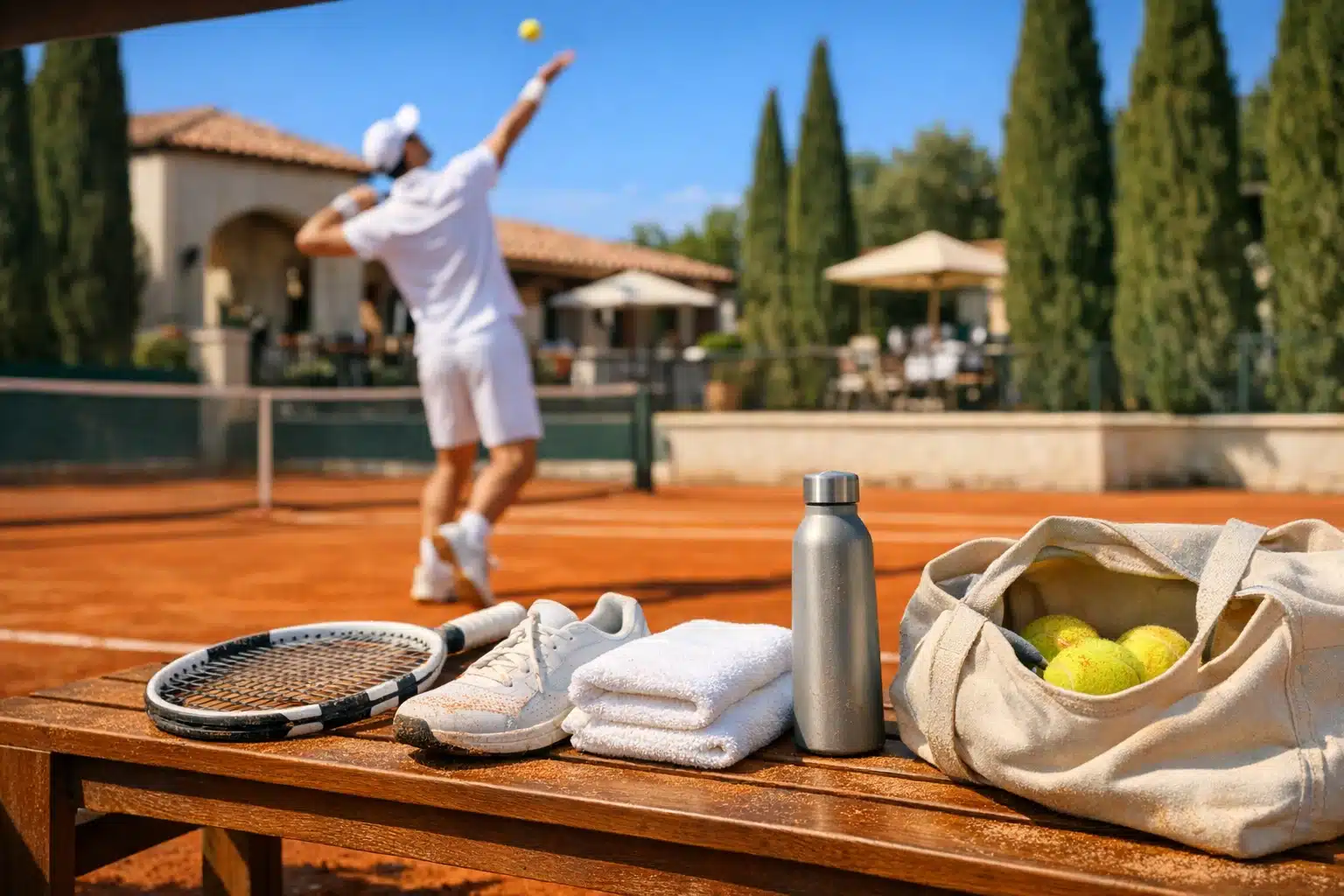
Other useful items include moisture-absorbing grips, vibration dampeners, hats for sunny sessions, wristbands, and a water bottle that is actually used instead of forgotten in the bag. Clothing should allow full shoulder and hip movement, since restricted motion can quietly damage stroke mechanics. For players with an eye on value, the smartest starting kit is modest rather than elaborate: a beginner-friendly racket, proper shoes, a few cans of balls, and comfortable attire. Tennis has a polished image, but the game itself does not demand luxury. It asks for tools that fit the player, not the advertisement.
3. Practical Tips for Beginners: Technique, Practice, and Building Confidence
The early stage of learning tennis can feel awkward because the sport asks the body to perform several tasks at once. You track a moving ball, adjust your feet, prepare the racket, time the contact, and decide where to send the shot, often in just a second or two. That complexity is exactly why beginners improve fastest when they simplify the process. The first goal is not to hit dramatic winners. It is to make repeatable contact and recover for the next ball. In other words, learn to stay in the conversation before trying to deliver the final line.
Start with the basics of ready position and footwork. A balanced athletic stance, light movement on the feet, and small adjustment steps are more important than many newcomers realize. Players often blame the racket when the real problem is being late to the ball. Good preparation usually means turning the shoulders early, setting the racket in position before contact, and keeping the swing controlled enough to repeat. On both forehand and backhand sides, beginners should aim for a smooth path rather than a violent swipe. Clean contact in front of the body usually produces better results than trying to overpower the shot.
The serve deserves patience. It is the only shot fully under the player’s control, yet it is also the most technical stroke in the sport. Instead of chasing speed, focus on a steady toss, a relaxed motion, and a finish that stays balanced. A reliable serve that lands in play starts more points than a powerful attempt that disappears long or into the net. The same logic applies to returns. A simple blocked or guided return is often enough to begin the rally and put pressure back on the server.
Beginners also benefit from clear practice priorities:
-
Work on consistency before power.
-
Practice cross-court rallies, since the net is lower in the middle and the target area is longer.
-
Use cooperative drills as well as competitive points, because repetition teaches timing faster than constant winner hunting.
-
Record short practice clips occasionally to check stance, spacing, and swing path.
-
Warm up gradually and stop before fatigue turns every swing into a rushed guess.
A simple weekly structure can help a new player progress without burnout. One session might focus on rallying and stroke mechanics, another on serves and returns, and a third on point play with a friend or coach. Even 45 to 60 minutes of organized practice can be productive if the goals are narrow and realistic. Improvement in tennis rarely arrives in a straight line. Some days the ball seems magnetized to the strings; on others it feels as if the court has quietly tilted against you. That is normal. Because the sport is so dependent on timing, small differences in energy, spacing, and concentration can change the entire session.
Mental habits matter too. New players often become discouraged by unforced errors, yet errors are not proof of failure; they are part of the language of the sport. A better habit is to judge a practice by decision quality and effort instead of by a few ugly mishits. Did you move your feet? Did you recover to position? Did you choose a sensible target under pressure? Those are stronger signs of growth than one accidental highlight shot. Over time, confidence comes less from hype and more from familiarity. The court stops feeling enormous. The bounce becomes easier to read. The serve toss lands where you expect it. Suddenly, what once felt chaotic starts to feel playable.
Conclusion for New Players
If you are just starting out, tennis does not require perfect technique, expensive gear, or encyclopedic knowledge of every rule. What it does reward is curiosity, steady repetition, and the willingness to learn one layer at a time. Understand the court and the scoring, choose practical equipment, and build habits that favor control, balance, and patience. With that foundation, the game becomes more inviting every week. The first clean rally, the first confident serve, and the first match you can truly follow are small milestones, but they are the moments that turn interest into a lasting sport.